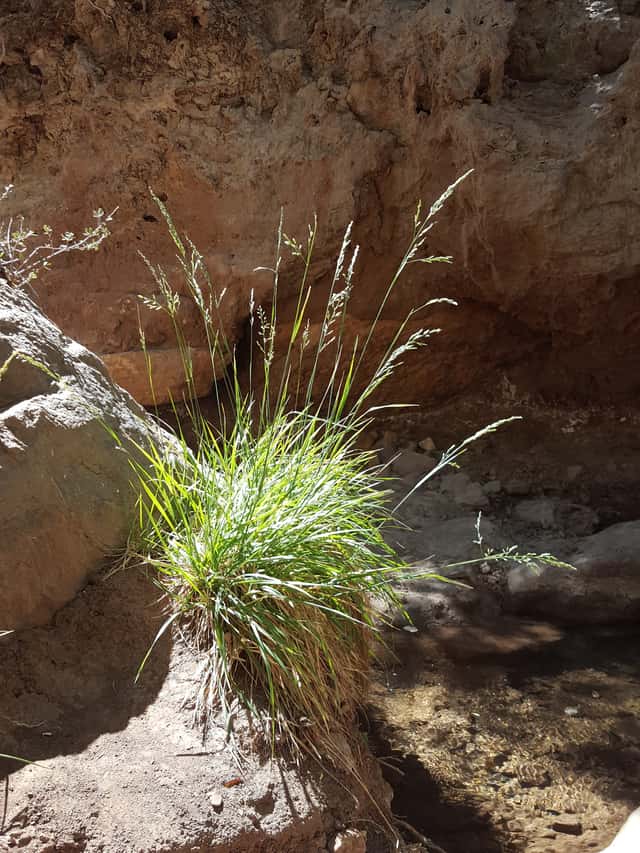
Poaceae
How to Grow and Care for Tall Fescue
Lolium arundinaceum
Tall Fescue is an easy-care grass needing weekly watering, full sun to partial shade, and well-draining loamy soil. Mow regularly at 2–3.5 inches and fertilize in fall. It is highly drought-tolerant once established.
Every 7 days
Bright indirect
-20° - 35°C
40% - 70%
Categories
What is Tall Fescue?
Tall Fescue (Lolium arundinaceum) is a easy-care plant from the Poaceae family. Tall Fescue (Lolium arundinaceum) is a robust cool-season perennial grass native to Europe and widely naturalized worldwide. Renowned for its deep root system — extending up to 3 feet — it is one of the most heat- and drought-tolerant cool-season grasses available. It forms dense clumps and grows vi...
Tall Fescue grows up to 1.6m, spread of 60cm, watering every 7 days, -20°C – 35°C, 40–70% humidity. It is not suitable for indoor environments and safe for pets.
Unlike many tropical plants, Tall Fescue tolerates watering mistakes. Best for beginners. Unlike many popular species, Tall Fescue is safe to keep around pets.
How to Care for Tall Fescue?
TLDR: Tall Fescue needs Bright indirect, watering every 7 days, and temperatures between -20-35°C with 40-70% humidity.
How Often Should You Water Tall Fescue?
Water deeply about once per week (approximately 1 inch), allowing the soil to dry slightly between sessions. In peak summer heat, increase to 2 inches per week. Always water in the morning to reduce fungal disease risk.
How Much Light Does Tall Fescue Need?
Tall Fescue thrives in full sun but is the most shade-tolerant of all cool-season grasses. It can grow well with as few as 3–4 hours of direct sunlight per day, making it ideal for partially shaded yards.
What Is the Best Soil for Tall Fescue?
Prefers well-draining loamy soil with a pH of 5.5–7.0. Aerate compacted soil annually to improve nutrient uptake and root penetration. Does not tolerate waterlogged conditions.
What Pot Should You Use for Tall Fescue?
Use in ground cover applications — no container needed. For erosion control slopes, no pot is required.
Care Schedule
Fertilize
Every 90 days
What Is Tall Fescue and Where Does It Come From?
Tall Fescue (Lolium arundinaceum) is a robust cool-season perennial grass native to Europe and widely naturalized worldwide. Renowned for its deep root system — extending up to 3 feet — it is one of the most heat- and drought-tolerant cool-season grasses available. It forms dense clumps and grows vigorously in spring and fall, thriving in a wide range of soils and light conditions from full sun to partial shade. It is widely used for lawns, pastures, erosion control, and sports fields.
How to Propagate Tall Fescue?
Seeding
Fall seeding (September–October) yields the best results. Keep soil consistently moist until grass reaches 2 inches tall.
- 1 Prepare soil by raking and removing debris
- 2 Spread seed at 6-8 lbs per 1,000 sq ft
- 3 Lightly rake seeds into the top 1/4 inch of soil
- 4 Water gently twice daily until germination
- 5 Reduce watering once established
Materials needed:
How Big Does Tall Fescue Grow?
TLDR: Tall Fescue can reach up to 1.6m tall with Fast growth rate.
Max height
1.6m
Spread
60cm
Growth rate
Fast
Foliage
Evergreen
Plant Uses
Ground Cover
Soil coverage
Ornamental
Great for decoration
Is your plant showing symptoms?
Click on the symptom to discover possible causes:
What Diseases Commonly Affect Tall Fescue?
TLDR: Tall Fescue is susceptible to 6 known diseases. Monitor regularly for early detection.
Leaf Spot
Leaf spot is a common fungal disease caused by various pathogens including Alternaria, Ascochyta, Colletotrichum, Septoria, and Venturia. It primarily affects leaves, causing discolored spots that can lead to premature leaf drop if left untreated.
Root-Knot Nematodes
Root-knot nematodes (Meloidogyne species) are microscopic roundworms that parasitize plant roots, causing characteristic galls or knots. These soil-borne pests are among the most economically damaging plant pathogens worldwide, affecting a wide range of ornamental and edible plants. The nematodes inject enzymes into root cells, causing abnormal swelling and disrupting water and nutrient uptake.
Rust
Rust is a common fungal disease caused by fungi in the order Pucciniales that affects a wide variety of plants. The disease gets its name from the characteristic orange, yellow, or reddish-brown pustules that appear on leaves, resembling metal rust. This obligate fungal parasite requires living plants to survive and can cause significant economic losses in agricultural crops.
Powdery Mildew
Powdery mildew is a common fungal disease caused by various fungi species including Erysiphe, Podosphaera, Oïdium, and Leveillula. It affects over 10,000 plant species worldwide. The disease thrives in warm, dry climates with high humidity and appears as a distinctive white powdery coating on plant surfaces.
Meaning & Symbolism
A symbol of resilience and endurance, tall fescue represents tenacity — thriving in harsh conditions where other plants struggle.
Fun Facts
Tall Fescue currently covers the South Lawn of the White House in Washington D.C.
Its deep roots can extend up to 3 feet underground, giving it exceptional drought resistance.
Tall Fescue is associated with a beneficial fungus (Epichloë coenophiala) that naturally repels insects and improves drought tolerance.
It was introduced to North America in the early 1800s and now covers over 35 million acres in the US.
Frequently asked questions
How often should I water Tall Fescue?
Is Tall Fescue toxic to pets?
Can Tall Fescue grow in shade?
When is the best time to plant Tall Fescue?
How tall should I let Tall Fescue grow?
Compare with similar plants
| Attribute | Difficulty | Light | Watering | Pet Safe |
|---|---|---|---|---|
| Field Maple | Easy | Bright indirect | 14d | ✓ |
| Silver Birch | Easy | Direct sun | 14d | ✓ |
| Cushion Bush | Easy | Direct sun | 14d | ✓ |
| Peruvian peppertree | Easy | Direct sun | 14d | ⚠️ |





