Amaranthaceae
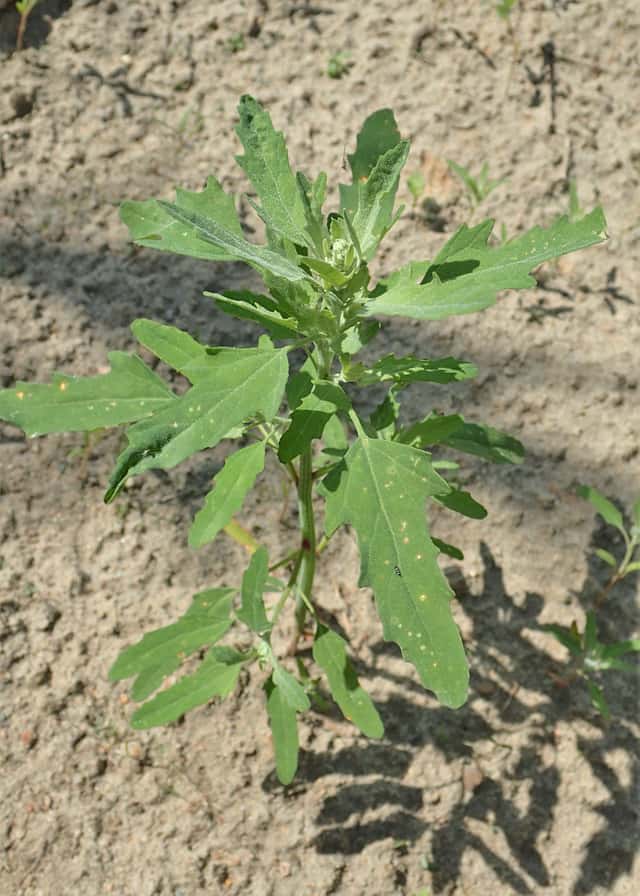
Fig-leaved Goosefoot (Chenopodium ficifolium)
Chenopodium ficifolium
A hardy, easy-to-grow annual that prefers full sun and rich, well-drained soil. Tolerates short dry spells but grows best with moderate soil moisture. Requires little to no fertilization and grows quickly during the summer season.
Every 4 days
Bright indirect
-10° - 35°C
30% - 70%
Categories
What is Fig-leaved Goosefoot?
Fig-leaved Goosefoot (Chenopodium ficifolium) is a easy-care plant from the Amaranthaceae family. Chenopodium ficifolium, commonly known as fig-leaved goosefoot, is an annual herbaceous plant in the family Amaranthaceae, native to Asia (from the Irano-Turanian region to Korea and northern Indo-China) and naturalized as a weed across Europe and North America. It grows in nitrogen-rich, disturbed...
Fig-leaved Goosefoot grows up to 80cm, spread of 40cm, watering every 4 days, -10°C – 35°C, 30–70% humidity. It is not suitable for indoor environments and safe for pets.
Unlike many tropical plants, Fig-leaved Goosefoot tolerates watering mistakes. Best for beginners. Unlike many popular species, Fig-leaved Goosefoot is safe to keep around pets.
How to Care for Fig-leaved Goosefoot?
TLDR: Fig-leaved Goosefoot needs Bright indirect, watering every 4 days, and temperatures between -10-35°C with 30-70% humidity.
How Often Should You Water Fig-leaved Goosefoot?
Water moderately, keeping soil lightly moist; avoid waterlogging as the plant is sensitive to excess moisture.
How Much Light Does Fig-leaved Goosefoot Need?
Needs full sun exposure; cannot grow well in shade.
What Is the Best Soil for Fig-leaved Goosefoot?
Prefers nitrogen-rich, well-draining soil with neutral to mildly alkaline pH.
What Pot Should You Use for Fig-leaved Goosefoot?
Not applicable (open ground cultivation)
What Is Fig-leaved Goosefoot and Where Does It Come From?
Chenopodium ficifolium, commonly known as fig-leaved goosefoot, is an annual herbaceous plant in the family Amaranthaceae, native to Asia (from the Irano-Turanian region to Korea and northern Indo-China) and naturalized as a weed across Europe and North America. It grows in nitrogen-rich, disturbed soils such as riverbanks and agricultural fields, reaching up to 80 cm tall with erect, branched stems. Its leaves resemble those of a fig tree, giving the plant its common name.
How to Propagate Fig-leaved Goosefoot?
Direct sowing
Seeds need light to germinate well; do not bury them too deep.
- 1 Sow seeds directly into soil after the last frost
- 2 Keep soil lightly moist until germination
- 3 Seeds germinate best when exposed to light
- 4 Thin seedlings once they develop a few true leaves
Materials needed:
How Big Does Fig-leaved Goosefoot Grow?
TLDR: Fig-leaved Goosefoot can reach up to 80cm tall with Fast growth rate.
Max height
80cm
Spread
40cm
Growth rate
Fast
Foliage
Deciduous
Plant Uses
Edible
Can be consumed
Medicinal Uses
- Traditionally used in small doses as an emetic and vermifuge, due to ascaridole content in leaves and seeds
Culinary Uses
- Cooked leaves and flower buds eaten like spinach
- Roasted seeds used as a condiment
Is your plant showing symptoms?
Click on the symptom to discover possible causes:
What Diseases Commonly Affect Fig-leaved Goosefoot?
TLDR: Fig-leaved Goosefoot is susceptible to 4 known diseases. Monitor regularly for early detection.
Downy Mildew
Downy mildew is a fungal-like disease caused by oomycetes (water molds) that thrives in cool, wet conditions. It affects a wide range of plants, causing yellowing leaves with fuzzy white-gray growth underneath, leading to defoliation and reduced yields if left untreated.
Leafminers
Leafminers are the larvae of various insects including flies, moths, sawflies, and beetles that tunnel between leaf surfaces, creating distinctive serpentine trails or blotchy patches. While primarily cosmetic, severe infestations can weaken plants by reducing photosynthesis capacity and making them susceptible to secondary infections.
Aphids
Aphids are small, soft-bodied, pear-shaped insects (1/16 to 1/8 inch long) that feed by sucking nutrient-rich sap from plants. They reproduce rapidly and can quickly weaken plants, causing distorted growth and transmitting plant viruses. Aphids come in various colors including green, black, red, yellow, brown, and gray. They secrete honeydew, a sticky substance that attracts ants and encourages sooty mold growth.
Flea beetle damage
Flea beetles are small, jumping insects that feed on the leaves of many vegetable crops. They chew numerous small, circular holes, creating a characteristic 'shothole' appearance. While established plants can often tolerate the damage, young seedlings are highly susceptible and can be stunted or killed if the infestation is severe.
Fun Facts
The name "ficifolium" comes from the resemblance of its leaves to fig tree leaves
It contains ascaridole, a compound also found in other medicinal Chenopodium species
Frequently asked questions
Is Chenopodium ficifolium edible?
Does it need a lot of water?
Can it grow in shade?
Compare with similar plants
| Attribute | Difficulty | Light | Watering | Pet Safe |
|---|---|---|---|---|
| Field Maple | Easy | Bright indirect | 14d | ✓ |
| Silver Birch | Easy | Direct sun | 14d | ✓ |
| Common Blanketflower | Easy | Direct sun | 10d | ✓ |
| Cushion Bush | Easy | Direct sun | 14d | ✓ |





