Araceae
Philodendron Care Guide
Philodendron
Philodendrons are easy-care tropical plants that thrive in medium to bright indirect light. Water weekly when the top inch of soil dries out, maintain moderate humidity, and use a well-draining aroid potting mix. Fertilize monthly during spring and summer. Avoid direct sun and soggy soil.
Every 7 days
Partial shade
12° - 30°C
50% - 80%
Categories
What is Philodendron?
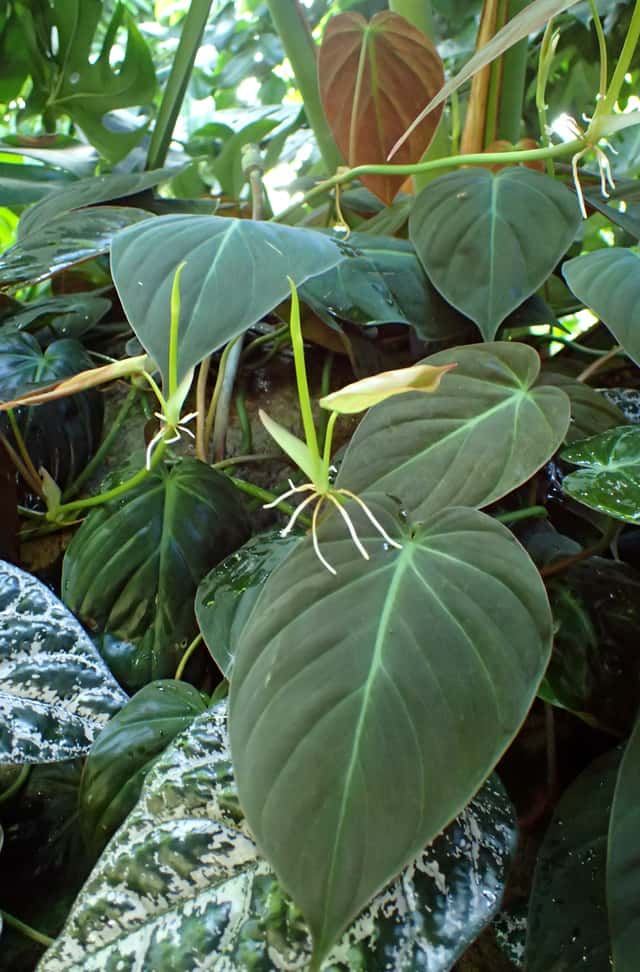
Philodendron (Philodendron) is a easy-care plant from the Araceae family. Philodendron is one of the largest and most diverse genera of tropical houseplants in the Araceae family, originating from Central and South America. With nearly 500 species, philodendrons range from compact trailing vines like P. hederaceum (heartleaf) to dramatic large-leaved climbers like P. erub...
Philodendron grows up to 2.5m, spread of 80cm, watering every 7 days, 12°C – 30°C, 50–80% humidity. It is suitable for indoor environments and not safe for pets.
Unlike many tropical plants, Philodendron tolerates watering mistakes. Best for beginners. Without precautions, ingestion can cause irritation in pets. Keep out of reach of cats and dogs. Without adequate drainage, root rot can develop within 14 days.
How to Care for Philodendron?
TLDR: Philodendron needs Partial shade, watering every 7 days, and temperatures between 12-30°C with 50-80% humidity.
How Often Should You Water Philodendron?
Water when the top 1–2 inches of soil feel dry, approximately once a week in spring/summer and every 10–14 days in fall/winter. Use room-temperature water and ensure thorough drainage to prevent root rot.
How Much Light Does Philodendron Need?
Philodendrons prefer bright to medium indirect light — ideally near an east- or north-facing window. They tolerate lower light but will grow slower with smaller leaves. Avoid direct afternoon sun, which scorches foliage.
What Is the Best Soil for Philodendron?
Use a well-draining aroid mix: combine a quality peat or coco coir-based potting mix with perlite and/or orchid bark. Good drainage is critical to prevent root rot. A slightly acidic to neutral pH of 5.5–7.0 is ideal.
What Pot Should You Use for Philodendron?
A pot with drainage holes is essential. Terracotta pots help prevent overwatering by allowing the soil to dry more evenly. Plastic or glazed ceramic pots retain moisture longer, suitable for drier environments. Repot every 1–2 years when roots begin circling the pot or emerging from drainage holes.
Care Schedule
Fertilize
Every 30 days
Misting
Every 3 days
Repot
Every 730 days
What Is Philodendron and Where Does It Come From?
Philodendron is one of the largest and most diverse genera of tropical houseplants in the Araceae family, originating from Central and South America. With nearly 500 species, philodendrons range from compact trailing vines like P. hederaceum (heartleaf) to dramatic large-leaved climbers like P. erubescens and sculptural aroids like P. bipinnatifidum and P. xanadu. Their lush, glossy foliage and adaptability to indoor conditions have made them among the most beloved houseplants worldwide. All species contain calcium oxalate crystals and are mildly to moderately toxic to pets and humans.
How to Propagate Philodendron?
Stem Cutting in Water
Spring and early summer offer the best rooting success. Use filtered or let tap water sit overnight to dechlorinate.
- 1 Cut a healthy stem with at least 2 nodes and 1–2 leaves using clean scissors.
- 2 Remove leaves from the bottom node to expose it.
- 3 Place the cutting in a jar of clean water, keeping the node submerged.
- 4 Change the water every 5–7 days and keep in bright indirect light.
- 5 Once roots are 2–5 cm long, transfer to moist aroid potting mix.
Materials needed:
How Big Does Philodendron Grow?
TLDR: Philodendron can reach up to 2.5m tall with Medium growth rate.
Max height
2.5m
Spread
80cm
Growth rate
Medium
Foliage
Evergreen
Warning: Toxic Plant
This plant can be toxic if ingested. Keep out of reach of:
Plant Uses
Ornamental
Great for decoration
Air Purifying
Improves air quality
Is your plant showing symptoms?
Click on the symptom to discover possible causes:
What Diseases Commonly Affect Philodendron?
TLDR: Philodendron is susceptible to 10 known diseases. Monitor regularly for early detection.
Root Rot
Root rot is a serious fungal disease that affects the root system of plants, causing them to decay and die. It is primarily caused by overwatering, poor drainage, or soil-borne fungi such as Pythium, Phytophthora, Rhizoctonia, and Fusarium. The disease thrives in waterlogged conditions where roots are deprived of oxygen, making them susceptible to fungal infection.
Bacterial Leaf Spot
Bacterial leaf spot is a plant disease caused by bacteria in the Xanthomonas and Pseudomonas genera that affects various ornamental and edible plants. The bacteria infect leaves through wounds or natural openings, causing characteristic lesions that can lead to premature leaf drop and plant weakening.
Spider Mites
Spider mites are tiny arachnids (less than 1/20 inch long) related to spiders and ticks that feed on plant sap. They thrive in hot, dry conditions and can cause significant damage to ornamental and vegetable plants. During severe infestations, crop losses can reach 14% or higher as these pests disrupt vital plant processes including photosynthesis, carbon dioxide absorption, and transpiration.
Mealybugs
Mealybugs are small, soft-bodied insects covered with a white, waxy, cottony material. They are common pests of houseplants and outdoor plants in mild climates. These sap-sucking insects feed on plant tissue, causing damage, stunted growth, and can lead to plant death if left untreated. They produce sticky honeydew which attracts sooty mold.
Meaning & Symbolism
Philodendrons symbolize a love of nature, lush growth, and the abundance of the tropics. They are associated with health, vitality, and bringing the energy of the rainforest indoors.
Fun Facts
The Philodendron genus contains nearly 500 species, making it one of the second-largest genera in the Araceae family.
P. hederaceum (heartleaf philodendron) is one of the most popular houseplants in the world and is nearly impossible to kill.
In the wild, many philodendrons are hemi-epiphytes — they begin life in the soil and then climb trees to reach the forest canopy.
All philodendrons contain calcium oxalate crystals as a natural defense mechanism against herbivores.
Frequently asked questions
How often should I water a Philodendron?
Is Philodendron toxic to cats and dogs?
How much light does a Philodendron need?
Why are my Philodendron leaves turning yellow?
What soil is best for Philodendron?
Compare with similar plants
| Attribute | Difficulty | Light | Watering | Pet Safe |
|---|---|---|---|---|
| Field Maple | Easy | Bright indirect | 14d | ✓ |
| Silver Birch | Easy | Direct sun | 14d | ✓ |
| Cushion Bush | Easy | Direct sun | 14d | ✓ |
| Peruvian peppertree | Easy | Direct sun | 14d | ⚠️ |