Araceae
Blushing Philodendron: Perfect Indoor Houseplant
Philodendron erubescens
Moderate care plant that needs bright indirect light, watering when the substrate is partially dry, and high humidity (50-70%). Does not tolerate waterlogging or temperatures below 13°C (55°F).
Every 4 days
Partial shade
13° - 29°C
50% - 70%
Categories
What is Blushing Philodendron?
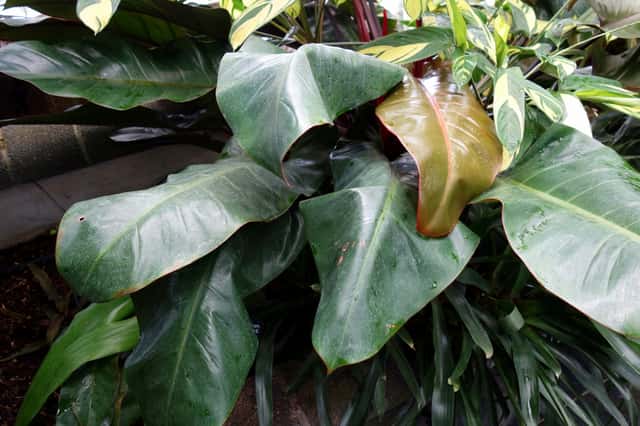
Blushing Philodendron (Philodendron erubescens) is a medium-care plant from the Araceae family. Philodendron erubescens is a climbing tropical plant native to the rainforests of Colombia. It stands out for its large heart-shaped leaves with green and reddish tones, and intensely red stems. It is a perennial plant ideal for indoors that can reach up to 90cm in height when grown at home.
Blushing Philodendron grows up to 90cm, spread of 40cm, watering every 4 days, 13°C – 29°C, 50–70% humidity. It is suitable for indoor environments and not safe for pets.
Without precautions, ingestion can cause irritation in pets. Keep out of reach of cats and dogs. Without adequate drainage, root rot can develop within 8 days.
How to Care for Blushing Philodendron?
TLDR: Blushing Philodendron needs Partial shade, watering every 4 days, and temperatures between 13-29°C with 50-70% humidity.
How Often Should You Water Blushing Philodendron?
Water when the top layer of substrate feels dry to the touch. In summer, approximately twice a week; in winter, reduce to once. Avoid waterlogging to prevent root rot.
How Much Light Does Blushing Philodendron Need?
Place in a location with bright indirect light, near a window but without direct sunlight. Light is essential to maintain the pink coloration of the leaves; without adequate light, they lose their tone and become completely green.
What Is the Best Soil for Blushing Philodendron?
Use well-draining and nutritious substrate. An ideal mix contains coconut fiber, perlite, pine bark, and worm castings. The soil should be permeable and aerated to avoid water accumulation.
What Pot Should You Use for Blushing Philodendron?
Plastic or ceramic pots with drainage holes. Prefer pots that do not retain too much moisture.
Care Schedule
Fertilize
Every 30 days
Misting
Every 7 days
Rotate
Every 14 days
Repot
Every 730 days
What Is Blushing Philodendron and Where Does It Come From?
Philodendron erubescens is a climbing tropical plant native to the rainforests of Colombia. It stands out for its large heart-shaped leaves with green and reddish tones, and intensely red stems. It is a perennial plant ideal for indoors that can reach up to 90cm in height when grown at home.
How to Propagate Blushing Philodendron?
Stem cuttings
Use cuttings with aerial nodes for better rooting
- 1 Cut a 10-15cm cutting with at least 2 nodes
- 2 Remove lower leaves
- 3 Place in water or moist substrate
- 4 Keep in warm and humid location
- 5 Roots appear in 2-4 weeks
Materials needed:
How Big Does Blushing Philodendron Grow?
TLDR: Blushing Philodendron can reach up to 90cm tall with Medium growth rate.
Max height
90cm
Spread
40cm
Growth rate
Medium
Foliage
Evergreen
Warning: Toxic Plant
This plant can be toxic if ingested. Keep out of reach of:
Plant Uses
Ornamental
Great for decoration
Air Purifying
Improves air quality
Is your plant showing symptoms?
Click on the symptom to discover possible causes:
What Diseases Commonly Affect Blushing Philodendron?
TLDR: Blushing Philodendron is susceptible to 36 known diseases. Monitor regularly for early detection.
Root Rot
Root rot is a serious fungal disease that affects the root system of plants, causing them to decay and die. It is primarily caused by overwatering, poor drainage, or soil-borne fungi such as Pythium, Phytophthora, Rhizoctonia, and Fusarium. The disease thrives in waterlogged conditions where roots are deprived of oxygen, making them susceptible to fungal infection.
Spider Mites
Spider mites are tiny arachnids (less than 1/20 inch long) related to spiders and ticks that feed on plant sap. They thrive in hot, dry conditions and can cause significant damage to ornamental and vegetable plants. During severe infestations, crop losses can reach 14% or higher as these pests disrupt vital plant processes including photosynthesis, carbon dioxide absorption, and transpiration.
Overwatering
Overwatering occurs when plants receive too much water, depriving roots of oxygen and causing root rot. This environmental stress is one of the most common causes of houseplant death, as waterlogged soil prevents roots from breathing and functioning properly.
Low Humidity Stress
Low humidity stress occurs when indoor air becomes too dry, causing plants to lose moisture faster than they can absorb it through their roots. This is especially common during winter heating periods, near radiators and heating vents, or in air-conditioned spaces. Tropical plants are particularly susceptible to low humidity damage.
Meaning & Symbolism
Symbolizes love, passion, and transformation. The reddish color of its stems represents vitality and energy.
Compare with similar plants
| Attribute | Difficulty | Light | Watering | Pet Safe |
|---|---|---|---|---|
| Dark Fieldcap | Medium | Low light | 2d | ⚠️ |
| Azalea | Medium | Partial shade | 3d | ⚠️ |
| Bougainvillea | Medium | Direct sun | 7d | ⚠️ |
| Wild Lettuce | Medium | Direct sun | 7d | ⚠️ |



