Crassulaceae
Dudleya edulis (Fingertips) Care Guide
Dudleya edulis
Extremely low-maintenance coastal succulent: bright light, sharp drainage, and infrequent deep watering. Let it rest through summer heat and watch it flush with growth after fall and winter rains.
Every 21 days
Bright indirect
-4° - 38°C
30% - 60%
Categories
What is Fingertips?
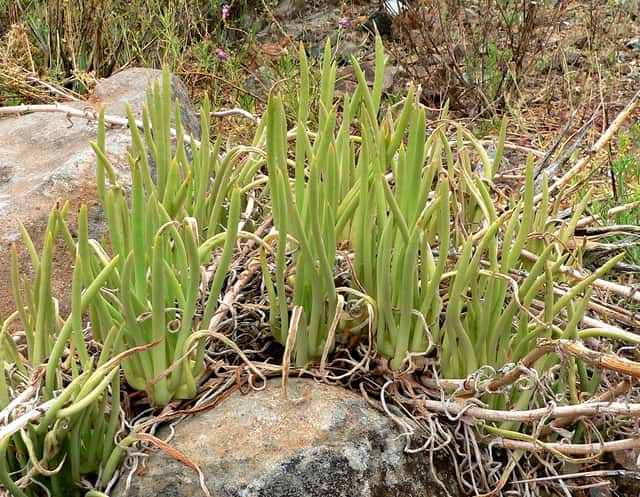
Fingertips (Dudleya edulis) is a easy-care plant from the Crassulaceae family. Dudleya edulis, commonly called fingertips or mission lettuce, is a compact succulent native to the coastal sage scrub, sandstone sea cliffs, and rocky canyons of Southern California and northern Baja California. Its pale green, finger-shaped leaves grow upright in tight clumping rosettes, often dus...
Fingertips grows up to 50cm, spread of 40cm, watering every 21 days, -4°C – 38°C, 30–60% humidity. It is suitable for indoor environments and safe for pets.
Unlike many tropical plants, Fingertips tolerates watering mistakes. Best for beginners. Unlike many popular species, Fingertips is safe to keep around pets. Without adequate drainage, root rot can develop within 42 days.
How to Care for Fingertips?
TLDR: Fingertips needs Bright indirect, watering every 21 days, and temperatures between -4-38°C with 30-60% humidity.
How Often Should You Water Fingertips?
Water deeply only when the soil has dried out completely, roughly every 2-3 weeks during fall through spring growth. Cut back watering sharply in summer while the plant is semi-dormant -- overwatering is the most common cause of death.
How Much Light Does Fingertips Need?
Give it bright light: full sun in mild coastal climates, or light afternoon shade in hot inland areas to prevent leaf scorch. Indoors, place within a foot of a bright south- or west-facing window.
What Is the Best Soil for Fingertips?
Use a gritty, fast-draining mix -- a cactus/succulent blend or a 50/50 combination of potting soil and coarse sand or pumice works well. Good drainage is essential since the roots are shallow and rot easily.
What Pot Should You Use for Fingertips?
A shallow, wide terracotta or unglazed clay pot with ample drainage holes suits its shallow root system and helps soil dry quickly.
What Is Fingertips and Where Does It Come From?
Dudleya edulis, commonly called fingertips or mission lettuce, is a compact succulent native to the coastal sage scrub, sandstone sea cliffs, and rocky canyons of Southern California and northern Baja California. Its pale green, finger-shaped leaves grow upright in tight clumping rosettes, often dusted with a chalky white coating called farina that reflects intense coastal sun and reduces water loss. In late spring and summer, tall branching stalks rise well above the foliage, bearing clusters of small white to cream flowers. True to its species name -- edulis, meaning edible -- its tender young leaves and flower stalks were traditionally harvested and eaten raw by the Kumeyaay people. A tough, low-maintenance succulent, it thrives in full coastal sun to light inland shade and needs very little water once established, entering a semi-dormant rest through the hottest, driest part of summer.
How to Propagate Fingertips?
Offset Division
Always use sterile tools and let cuttings callus fully before planting to prevent rot; avoid getting water in the rosette center.
- 1 Wait until offsets (pups) at the base of the rosette have developed their own small root system
- 2 Gently twist or cut the offset away from the mother plant with a clean, sharp blade
- 3 Let the cut surface callus over for 2-3 days in a dry, shaded spot
- 4 Place the offset on top of well-draining succulent soil, barely covering the base
- 5 Water sparingly once new roots establish, following normal mature-plant care
Materials needed:
Seed Propagation
Seeds need light to germinate, so press them onto the surface rather than covering them; a humidity dome helps until sprouting.
- 1 Collect ripe seed capsules from spent flower stalks in mid-to-late summer
- 2 Sow the fine seeds on the surface of moist, well-draining mineral soil without burying them
- 3 Keep in bright, indirect light with consistent light moisture until germination
- 4 Thin seedlings once true leaves appear and gradually reduce watering
Materials needed:
How Big Does Fingertips Grow?
TLDR: Fingertips can reach up to 50cm tall with Slow growth rate.
Max height
50cm
Spread
40cm
Growth rate
Slow
Foliage
Evergreen
Plant Uses
Edible
Can be consumed
Ornamental
Great for decoration
Culinary Uses
- Young leaves and flower stalks traditionally eaten raw, historically foraged by the Kumeyaay people
Is your plant showing symptoms?
Click on the symptom to discover possible causes:
What Diseases Commonly Affect Fingertips?
TLDR: Fingertips is susceptible to 6 known diseases. Monitor regularly for early detection.
Root Rot
Root rot is a serious fungal disease that affects the root system of plants, causing them to decay and die. It is primarily caused by overwatering, poor drainage, or soil-borne fungi such as Pythium, Phytophthora, Rhizoctonia, and Fusarium. The disease thrives in waterlogged conditions where roots are deprived of oxygen, making them susceptible to fungal infection.
Overwatering
Overwatering occurs when plants receive too much water, depriving roots of oxygen and causing root rot. This environmental stress is one of the most common causes of houseplant death, as waterlogged soil prevents roots from breathing and functioning properly.
Mealybugs
Mealybugs are small, soft-bodied insects covered with a white, waxy, cottony material. They are common pests of houseplants and outdoor plants in mild climates. These sap-sucking insects feed on plant tissue, causing damage, stunted growth, and can lead to plant death if left untreated. They produce sticky honeydew which attracts sooty mold.
Aphids
Aphids are small, soft-bodied, pear-shaped insects (1/16 to 1/8 inch long) that feed by sucking nutrient-rich sap from plants. They reproduce rapidly and can quickly weaken plants, causing distorted growth and transmitting plant viruses. Aphids come in various colors including green, black, red, yellow, brown, and gray. They secrete honeydew, a sticky substance that attracts ants and encourages sooty mold growth.
Meaning & Symbolism
Fingertips symbolizes resilience and quiet endurance, clinging to bare rock and salty sea cliffs where little else survives.
Fun Facts
The species name 'edulis' means edible in Latin, referencing the Kumeyaay tradition of eating its young leaves and flower stalks raw.
Its powdery white coating, called farina, reflects intense coastal sunlight and helps the plant conserve moisture.
It grows wild on sea cliffs and rocky slopes from Southern California down into Baja California, Mexico, often facing the ocean.
Unlike many succulents, it goes dormant in summer heat and does its active growing during the cooler, wetter winter months.
Frequently asked questions
How often should I water Fingertips (Dudleya edulis)?
Is Dudleya edulis toxic to pets or humans?
Why does my Dudleya edulis look shriveled in summer?
Can I touch the white powdery coating on the leaves?
What is the easiest way to propagate Dudleya edulis?
Compare with similar plants
| Attribute | Difficulty | Light | Watering | Pet Safe |
|---|---|---|---|---|
| Field Maple | Easy | Bright indirect | 14d | ✓ |
| Silver Birch | Easy | Direct sun | 14d | ✓ |
| Common Blanketflower | Easy | Direct sun | 10d | ✓ |
| Cushion Bush | Easy | Direct sun | 14d | ✓ |





