Salviniaceae
Floating Fern (Salvinia sp): Complete Care Guide
Salvinia sp
A very easy-to-grow free-floating aquatic plant. Requires high light, water temperature between 18–30°C, and pH between 6.0–7.5. No substrate required — it floats freely on the surface. Control growth by regularly removing excess to prevent shading.
Every 1 days
Bright indirect
18° - 30°C
60% - 90%
Categories
What is Floating Fern?
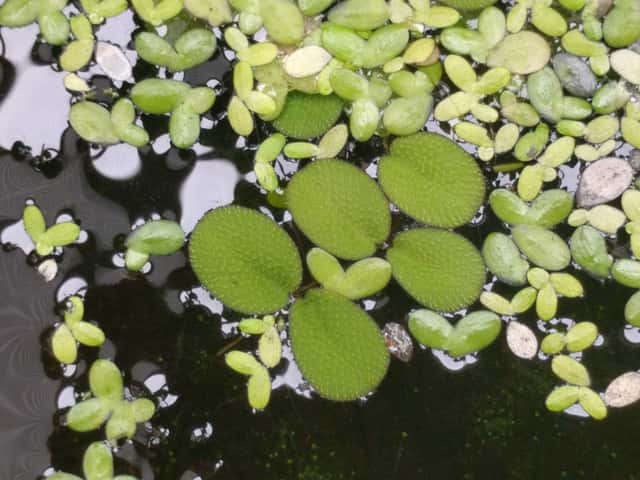
Floating Fern (Salvinia sp) is a easy-care plant from the Salviniaceae family. Salvinia sp is a free-floating aquatic fern native to tropical Americas. Characterized by pairs of small, velvety leaves on the water surface with submerged leaf-like structures that absorb nutrients directly from the water. It is one of the easiest aquatic plants to grow and reproduces with extraor...
Floating Fern grows up to 15cm, spread of 60cm, watering every 1 days, 18°C – 30°C, 60–90% humidity. It is suitable for indoor environments and safe for pets.
Unlike many tropical plants, Floating Fern tolerates watering mistakes. Best for beginners. Unlike many popular species, Floating Fern is safe to keep around pets. Without adequate drainage, root rot can develop within 7 days.
How to Care for Floating Fern?
TLDR: Floating Fern needs Bright indirect, watering every 1 days, and temperatures between 18-30°C with 60-90% humidity.
How Often Should You Water Floating Fern?
As a purely aquatic plant, water is its living medium. Maintain a constant water level and perform regular partial water changes in your aquarium or container to prevent toxin buildup. Avoid strong currents that could submerge the plant.
How Much Light Does Floating Fern Need?
Requires bright light between 5,000 and 20,000 lux, with at least 10 hours of illumination per day. In indoor environments, use full-spectrum lighting. Yellowing leaves indicate insufficient light or nutrient deficiency.
What Is the Best Soil for Floating Fern?
No conventional substrate is used — the plant floats on the water surface. Prefers slightly acidic to neutral water (pH 6.0–7.5). Add liquid aquatic fertilizers moderately to supply micronutrients such as iron and nitrogen.
What Pot Should You Use for Floating Fern?
Bottomless container — aquarium, artificial pond, basin, or tank. Avoid pots with substrate. The plant floats freely on the surface.
Care Schedule
Fertilize
Every 30 days
What Is Floating Fern and Where Does It Come From?
Salvinia sp is a free-floating aquatic fern native to tropical Americas. Characterized by pairs of small, velvety leaves on the water surface with submerged leaf-like structures that absorb nutrients directly from the water. It is one of the easiest aquatic plants to grow and reproduces with extraordinary speed under ideal conditions.
How to Propagate Floating Fern?
Plant Division
Division is the simplest and most effective method. The plant propagates naturally by fragmentation — just ensure clean water and adequate light.
- 1 Identify healthy lateral branches with vigorous leaves
- 2 Gently separate branches by hand or with clean scissors
- 3 Place new fragments on the water surface
- 4 The plant will develop independently within a few days
Materials needed:
How Big Does Floating Fern Grow?
TLDR: Floating Fern can reach up to 15cm tall with Fast growth rate.
Max height
15cm
Spread
60cm
Growth rate
Fast
Foliage
Evergreen
Plant Uses
Ornamental
Great for decoration
Is your plant showing symptoms?
Click on the symptom to discover possible causes:
What Diseases Commonly Affect Floating Fern?
TLDR: Floating Fern is susceptible to 7 known diseases. Monitor regularly for early detection.
Aphids
Aphids are small, soft-bodied, pear-shaped insects (1/16 to 1/8 inch long) that feed by sucking nutrient-rich sap from plants. They reproduce rapidly and can quickly weaken plants, causing distorted growth and transmitting plant viruses. Aphids come in various colors including green, black, red, yellow, brown, and gray. They secrete honeydew, a sticky substance that attracts ants and encourages sooty mold growth.
Nitrogen Deficiency
Nitrogen deficiency occurs when plants lack sufficient nitrogen, an essential macronutrient needed for chlorophyll production and overall growth. This deficiency typically manifests as yellowing leaves, starting with older foliage and progressing to newer growth if left untreated.
Iron Deficiency
Iron deficiency, commonly known as iron chlorosis, is a nutrient deficiency disorder where plants cannot access sufficient iron from the soil. While iron is typically abundant in soil, various soil conditions can limit plant uptake, resulting in characteristic yellowing of leaves while veins remain green.
Soil pH Imbalance
Soil pH imbalance occurs when soil becomes too acidic (low pH < 6.0) or too alkaline (high pH > 7.5), preventing plants from absorbing essential nutrients. The ideal pH range for most plants is 6.5-7.5. When pH is outside this range, nutrients become chemically locked in the soil, leading to deficiency symptoms even when nutrients are present.
Meaning & Symbolism
Symbolizes purity and renewal of waters, associated with the ability to transform and purify aquatic environments.
Fun Facts
Salvinia can double its biomass in just 2–4 days under ideal conditions, making it one of the fastest-growing plants in the world.
It is used globally as a natural biofilter in water treatment systems, absorbing nitrates, phosphates, and heavy metals.
Despite appearing to have roots, the submerged structures of Salvinia are actually modified leaves, not true roots.
In some tropical regions, Salvinia molesta is considered one of the worst aquatic invasive plants, capable of covering entire lakes.
Frequently asked questions
How much light does Floating Fern need?
How do I propagate Floating Fern?
Is Floating Fern toxic to fish or pets?
How do I control excessive growth?
Why are my Floating Fern leaves turning yellow?
Compare with similar plants
| Attribute | Difficulty | Light | Watering | Pet Safe |
|---|---|---|---|---|
| Field Maple | Easy | Bright indirect | 14d | ✓ |
| Silver Birch | Easy | Direct sun | 14d | ✓ |
| Common Blanketflower | Easy | Direct sun | 10d | ✓ |
| Cushion Bush | Easy | Direct sun | 14d | ✓ |





