Cleomaceae
Spider Flower (Cleome houtteana) Care Guide
Cleome houtteana
Spider flower is a low-maintenance, fast-growing annual that thrives in full sun with regular watering. It tolerates heat, humidity, and short dry spells once established, but performs best in consistently moist, well-drained soil. Avoid overwatering and excess fertilizer, both of which can cause weak, leggy growth.
Every 5 days
Bright indirect
15° - 35°C
40% - 70%
Categories
What is Spider Flower?
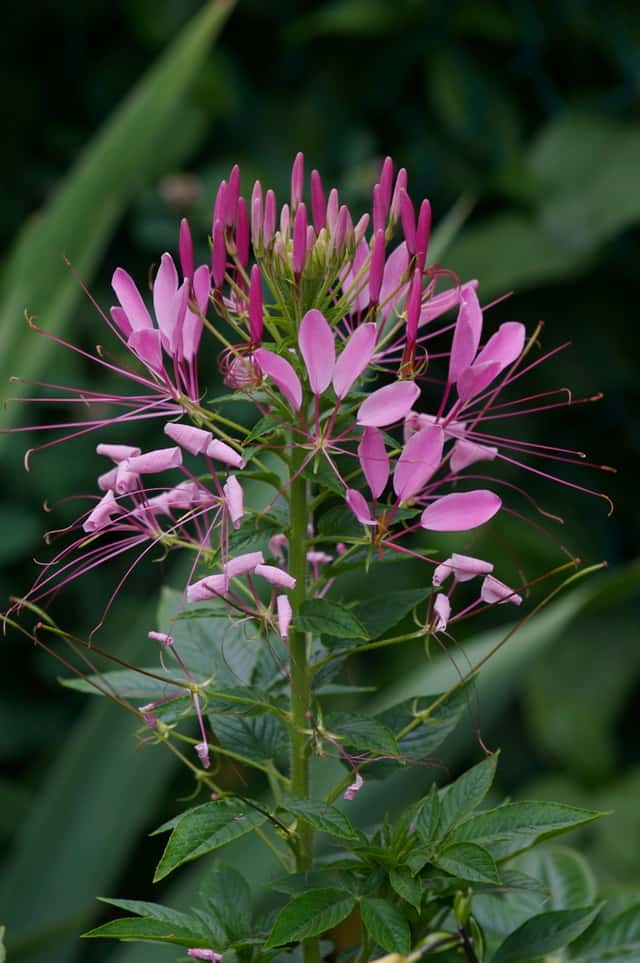
Spider Flower (Cleome houtteana) is a easy-care plant from the Cleomaceae family. Cleome houtteana (long known as Cleome hassleriana) is a tall, bushy annual flower prized for its striking, spider-like blooms held atop long flowering stems. Native to South America, it grows rapidly from seed to form an upright plant reaching up to 1.8 m (6 ft) in height, with palmately compound l...
Spider Flower grows up to 1.8m, spread of 60cm, watering every 5 days, 15°C – 35°C, 40–70% humidity. It is not suitable for indoor environments and safe for pets.
Unlike many tropical plants, Spider Flower tolerates watering mistakes. Best for beginners. Unlike many popular species, Spider Flower is safe to keep around pets.
How to Care for Spider Flower?
TLDR: Spider Flower needs Bright indirect, watering every 5 days, and temperatures between 15-35°C with 40-70% humidity.
How Often Should You Water Spider Flower?
Keep the soil evenly moist, especially during germination and the first few weeks after transplanting. Once established, spider flower tolerates brief dry spells, but consistent watering during hot weather produces fuller plants and more blooms. Avoid waterlogged soil, which can lead to root rot.
How Much Light Does Spider Flower Need?
Provide at least 6 hours of direct sunlight daily for the sturdiest growth and most abundant flowering. Spider flower tolerates light or partial shade, but plants grown with less sun tend to become leggy with fewer blooms.
What Is the Best Soil for Spider Flower?
Plant in average to fertile, well-drained soil enriched with organic matter. Heavy, poorly drained soils increase the risk of root rot, so amend clay soils with compost or coarse organic material before planting.
What Pot Should You Use for Spider Flower?
Spider flower is typically grown directly in garden beds rather than containers, but if potting is desired, use a large pot (at least 30 cm/12 in diameter) with ample drainage holes and well-draining potting mix.
Care Schedule
Fertilize
Every 30 days
What Is Spider Flower and Where Does It Come From?
Cleome houtteana (long known as Cleome hassleriana) is a tall, bushy annual flower prized for its striking, spider-like blooms held atop long flowering stems. Native to South America, it grows rapidly from seed to form an upright plant reaching up to 1.8 m (6 ft) in height, with palmately compound leaves and clusters of pink, purple, or white flowers featuring long, whisker-like stamens. Blooming continuously from early summer until the first frost, it is a favorite for pollinator gardens, attracting bees, butterflies, hummingbirds, and moths. The stems carry small spines and the foliage has a musky scent, so gloves are recommended when handling the plant.
How to Propagate Spider Flower?
Seed Sowing
Some older cultivars benefit from a few days of cold stratification in the refrigerator before sowing, while many modern hybrids germinate readily without it; check seed packet instructions for your specific variety.
- 1 Start seeds indoors 6-8 weeks before the last expected frost, or direct-sow outdoors once soil has warmed to 21-24C (70-75F).
- 2 Press seeds lightly into moist seed-starting mix or garden soil; do not bury deeply as light aids germination.
- 3 Keep the soil consistently moist and warm until seedlings emerge, typically within 7-14 days.
- 4 Thin or transplant seedlings so they stand 25-45 cm (10-18 in) apart to allow full, bushy growth.
- 5 Harden off indoor-started seedlings for a week before moving them outdoors after the danger of frost has passed.
Materials needed:
How Big Does Spider Flower Grow?
TLDR: Spider Flower can reach up to 1.8m tall with Fast growth rate.
Max height
1.8m
Spread
60cm
Growth rate
Fast
Foliage
Deciduous
Plant Uses
Ornamental
Great for decoration
Is your plant showing symptoms?
Click on the symptom to discover possible causes:
What Diseases Commonly Affect Spider Flower?
TLDR: Spider Flower is susceptible to 8 known diseases. Monitor regularly for early detection.
Powdery Mildew
Powdery mildew is a common fungal disease caused by various fungi species including Erysiphe, Podosphaera, Oïdium, and Leveillula. It affects over 10,000 plant species worldwide. The disease thrives in warm, dry climates with high humidity and appears as a distinctive white powdery coating on plant surfaces.
Rust
Rust is a common fungal disease caused by fungi in the order Pucciniales that affects a wide variety of plants. The disease gets its name from the characteristic orange, yellow, or reddish-brown pustules that appear on leaves, resembling metal rust. This obligate fungal parasite requires living plants to survive and can cause significant economic losses in agricultural crops.
Downy Mildew
Downy mildew is a fungal-like disease caused by oomycetes (water molds) that thrives in cool, wet conditions. It affects a wide range of plants, causing yellowing leaves with fuzzy white-gray growth underneath, leading to defoliation and reduced yields if left untreated.
Aphids
Aphids are small, soft-bodied, pear-shaped insects (1/16 to 1/8 inch long) that feed by sucking nutrient-rich sap from plants. They reproduce rapidly and can quickly weaken plants, causing distorted growth and transmitting plant viruses. Aphids come in various colors including green, black, red, yellow, brown, and gray. They secrete honeydew, a sticky substance that attracts ants and encourages sooty mold growth.
Fun Facts
The flowers open in the evening and are pollinated mainly by moths and hummingbirds, giving the plant its nickname Pink Queen of the Night gardens.
Ripe seed pods split open explosively, flinging seeds several feet from the parent plant.
Despite its spiny stems and musky scent, spider flower is considered non-toxic to cats and dogs.
Frequently asked questions
Is spider flower toxic to pets?
How often should I water spider flower?
What pests and diseases affect spider flower?
How do you propagate spider flower?
Compare with similar plants
| Attribute | Difficulty | Light | Watering | Pet Safe |
|---|---|---|---|---|
| Field Maple | Easy | Bright indirect | 14d | ✓ |
| Silver Birch | Easy | Direct sun | 14d | ✓ |
| Common Blanketflower | Easy | Direct sun | 10d | ✓ |
| Cushion Bush | Easy | Direct sun | 14d | ✓ |





