Asparagaceae
Cape Cowslip (Lachenalia) Care Guide
Lachenalia
Lachenalia bulbs grow actively through the cool, moist South African winter and go fully dormant in the dry summer heat. Plant bulbs in early autumn, water regularly and feed monthly as leaves and flower spikes develop, then gradually withhold water as foliage yellows in late spring. Keep bulbs bone-dry and warm all summer before starting the cycle again in autumn.
Every 10 days
Bright indirect
5° - 24°C
30% - 50%
Categories
What is Cape Cowslip?
Cape Cowslip (Lachenalia) is a medium-care plant from the Asparagaceae family. Lachenalia is a genus of roughly 130 winter-growing bulbous species native almost exclusively to the winter-rainfall regions of South Africa's Western and Northern Cape, with a few extending into Namibia. Commonly known as Cape cowslips or Cape hyacinths, these small bulbs produce strap-shaped, ofte...
Cape Cowslip grows up to 30cm, spread of 15cm, watering every 10 days, 5°C – 24°C, 30–50% humidity. It is suitable for indoor environments and safe for pets.
Unlike many popular species, Cape Cowslip is safe to keep around pets. Without adequate drainage, root rot can develop within 20 days.
How to Care for Cape Cowslip?
TLDR: Cape Cowslip needs Bright indirect, watering every 10 days, and temperatures between 5-24°C with 30-50% humidity.
How Often Should You Water Cape Cowslip?
Water regularly once leaves emerge in autumn, letting the top of the soil dry between waterings; stop watering completely once the foliage yellows in late spring and keep the bulbs completely dry through summer dormancy — overwatering during dormancy is the most common cause of bulb rot.
How Much Light Does Cape Cowslip Need?
Grow in full sun to bright light, with a little midday shade in hot climates; indoors place within a meter of a bright window during the winter growing season.
What Is the Best Soil for Cape Cowslip?
Plant in a very free-draining, sandy or gritty potting mix; perfect drainage is essential since Lachenalia bulbs rot quickly in soggy soil.
What Pot Should You Use for Cape Cowslip?
Use a shallow, wide terracotta or unglazed clay pot with ample drainage holes — the porous walls help the free-draining mix dry out properly between waterings.
Care Schedule
Fertilize
Every 30 days
Repot
Every 365 days
What Is Cape Cowslip and Where Does It Come From?
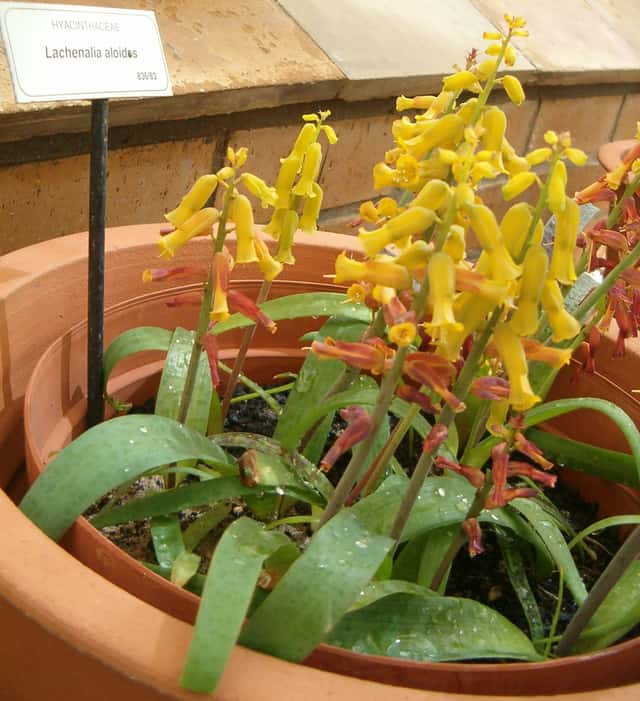
Lachenalia is a genus of roughly 130 winter-growing bulbous species native almost exclusively to the winter-rainfall regions of South Africa's Western and Northern Cape, with a few extending into Namibia. Commonly known as Cape cowslips or Cape hyacinths, these small bulbs produce strap-shaped, often mottled leaves and dense spikes of tubular, waxy flowers in vivid yellows, oranges, reds, pinks, greens and purples between late winter and early spring. This profile covers general genus-level care guidance applicable across most Lachenalia species and hybrids rather than a single species, since care needs are broadly consistent across the genus.
How to Propagate Cape Cowslip?
Offset (Bulb) Division
Only remove offsets that separate easily; forcing immature offsets can damage both bulbs. Dust cut surfaces with a fungicide powder if any bulbs were nicked during lifting.
- 1 Lift the dormant bulb clump once foliage has fully died back in late spring or early summer.
- 2 Gently separate the small daughter bulbs (offsets) that have formed around the base of the mother bulb.
- 3 Let the offsets dry and cure in a cool, airy spot for a few days.
- 4 Store the offsets dry until early autumn, then plant them in free-draining potting mix at the start of the growing season.
Materials needed:
Leaf Cutting with Bulbils
Use a clean, sharp blade to reduce rot risk, and keep the propagation mix just moist, never soggy.
- 1 Select a healthy, fully expanded leaf and cut it away at the base, just below soil level.
- 2 Cut or notch the base of the leaf to encourage bulbil formation.
- 3 Insert the cut end about 2 cm deep into moist, sandy propagation mix.
- 4 Keep in bright, indirect light and water lightly until small bulbils form at the base.
- 5 Once bulbils are visible and the original leaf has withered, lift and pot the new bulbils individually.
Materials needed:
How Big Does Cape Cowslip Grow?
TLDR: Cape Cowslip can reach up to 30cm tall with Medium growth rate.
Max height
30cm
Spread
15cm
Growth rate
Medium
Foliage
Deciduous
Plant Uses
Ornamental
Great for decoration
Is your plant showing symptoms?
Click on the symptom to discover possible causes:
What Diseases Commonly Affect Cape Cowslip?
TLDR: Cape Cowslip is susceptible to 9 known diseases. Monitor regularly for early detection.
Mealybugs
Mealybugs are small, soft-bodied insects covered with a white, waxy, cottony material. They are common pests of houseplants and outdoor plants in mild climates. These sap-sucking insects feed on plant tissue, causing damage, stunted growth, and can lead to plant death if left untreated. They produce sticky honeydew which attracts sooty mold.
Root Rot
Root rot is a serious fungal disease that affects the root system of plants, causing them to decay and die. It is primarily caused by overwatering, poor drainage, or soil-borne fungi such as Pythium, Phytophthora, Rhizoctonia, and Fusarium. The disease thrives in waterlogged conditions where roots are deprived of oxygen, making them susceptible to fungal infection.
Overwatering
Overwatering occurs when plants receive too much water, depriving roots of oxygen and causing root rot. This environmental stress is one of the most common causes of houseplant death, as waterlogged soil prevents roots from breathing and functioning properly.
Aphids
Aphids are small, soft-bodied, pear-shaped insects (1/16 to 1/8 inch long) that feed by sucking nutrient-rich sap from plants. They reproduce rapidly and can quickly weaken plants, causing distorted growth and transmitting plant viruses. Aphids come in various colors including green, black, red, yellow, brown, and gray. They secrete honeydew, a sticky substance that attracts ants and encourages sooty mold growth.
Meaning & Symbolism
As one of the first bulbs to flower during the Cape's cool winter rains, Lachenalia symbolizes renewal, resilience and the promise of spring after a dry, dormant season.
Fun Facts
Lachenalia includes around 130 species, nearly all endemic to South Africa's winter-rainfall Cape region.
The genus is named after Swiss botanist Werner de Lachenal, an 18th-century professor of botany.
Some Lachenalia flowers change color as they age, shifting from yellow or green buds to red or orange as they mature.
Frequently asked questions
How often should I water my Cape Cowslip?
Is Lachenalia toxic to pets?
Why is my Cape Cowslip not flowering?
Can I grow Lachenalia indoors?
Compare with similar plants
| Attribute | Difficulty | Light | Watering | Pet Safe |
|---|---|---|---|---|
| Dark Fieldcap | Medium | Low light | 2d | ⚠️ |
| Azalea | Medium | Partial shade | 3d | ⚠️ |
| Bougainvillea | Medium | Direct sun | 7d | ⚠️ |
| Wild Lettuce | Medium | Direct sun | 7d | ⚠️ |



