Rosaceae
Red Tip Photinia (Photinia × fraseri)
Photinia × fraseri
An easy-care shrub that needs full sun for the most intense red new growth, well-draining soil, and moderate watering. It tolerates frequent shearing, making it ideal for hedges and topiary.
Every 10 days
Direct sun
-15° - 35°C
40% - 70%
Categories
What is Red Tip Photinia?
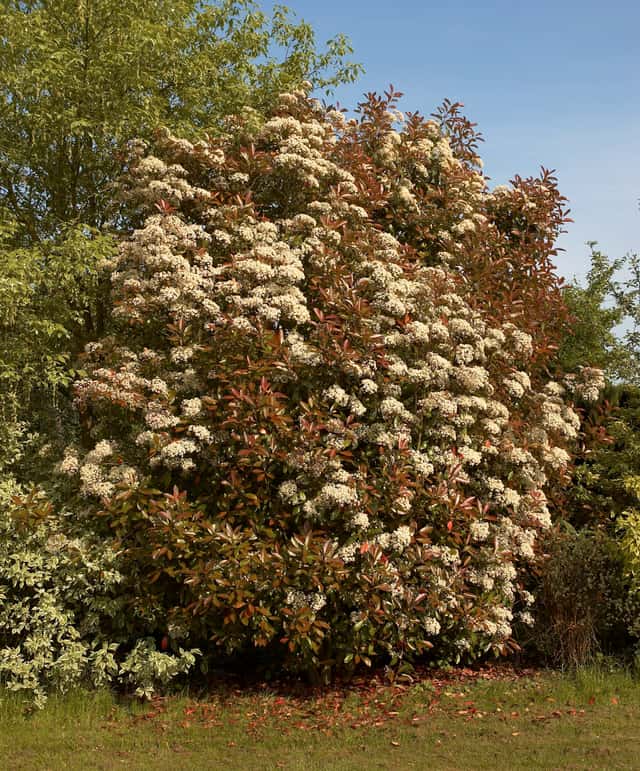
Red Tip Photinia (Photinia × fraseri) is a easy-care plant from the Rosaceae family. Red Tip Photinia (Photinia × fraseri) is an evergreen hybrid shrub in the rose family, bred from Photinia glabra and Photinia serratifolia. It is widely planted as a hedge for its vivid red new leaves, which contrast with the glossy dark green mature foliage. Small clusters of white flowers appear i...
Red Tip Photinia grows up to 4.5m, spread of 250cm, watering every 10 days, -15°C – 35°C, 40–70% humidity. It is not suitable for indoor environments and not safe for pets.
Unlike many tropical plants, Red Tip Photinia tolerates watering mistakes. Best for beginners. Without precautions, ingestion can cause irritation in pets. Keep out of reach of cats and dogs.
How to Care for Red Tip Photinia?
TLDR: Red Tip Photinia needs Direct sun, watering every 10 days, and temperatures between -15-35°C with 40-70% humidity.
How Often Should You Water Red Tip Photinia?
Water deeply once a week during the first year after planting; once established, the plant is drought tolerant and only needs extra water during intense heat or very dry soil.
How Much Light Does Red Tip Photinia Need?
Prefers full sun, at least 6 hours of direct light a day, to produce the most intense red coloring on new leaves; tolerates partial shade but grows more slowly and less vividly colored.
What Is the Best Soil for Red Tip Photinia?
Needs well-draining soil, ideally loamy; avoid waterlogged clay soils, which promote root rot. Tolerates a pH range from slightly acidic to alkaline.
What Pot Should You Use for Red Tip Photinia?
Large containers (40L / 10 gal or more) with good drainage, ideally in a sturdy material such as fiber-cement or terracotta, since the plant thrives best in the ground but can be container-grown for a few years.
Care Schedule
Fertilize
Every 180 days
What Is Red Tip Photinia and Where Does It Come From?
Red Tip Photinia (Photinia × fraseri) is an evergreen hybrid shrub in the rose family, bred from Photinia glabra and Photinia serratifolia. It is widely planted as a hedge for its vivid red new leaves, which contrast with the glossy dark green mature foliage. Small clusters of white flowers appear in spring, followed by red berries in autumn.
How to Propagate Red Tip Photinia?
Semi-hardwood stem cuttings
Keep the substrate lightly moist and in bright indirect light until rooted; avoid waterlogging.
- 1 Take a 10-15 cm semi-hardwood cutting in summer
- 2 Strip leaves from the lower half of the cutting
- 3 Dip the cut end in rooting hormone
- 4 Plant in a light, well-draining potting mix and keep moist
- 5 Cover with a plastic bag to retain humidity until roots form
Materials needed:
How Big Does Red Tip Photinia Grow?
TLDR: Red Tip Photinia can reach up to 4.5m tall with Fast growth rate.
Max height
4.5m
Spread
2.5m
Growth rate
Fast
Foliage
Evergreen
Warning: Toxic Plant
This plant can be toxic if ingested. Keep out of reach of:
Plant Uses
Ornamental
Great for decoration
Is your plant showing symptoms?
Click on the symptom to discover possible causes:
What Diseases Commonly Affect Red Tip Photinia?
TLDR: Red Tip Photinia is susceptible to 7 known diseases. Monitor regularly for early detection.
Diplocarpon
Diplocarpon is a group of leaf-spot fungi best known for causing black spot on roses. It spreads by splashing water and thrives on wet leaves in cool to mild, damp weather. Look for round, dark spots with fringed or feathery edges on leaves, followed by yellowing and early leaf drop; stems can develop purple‑black lesions. Roses are most often affected, but similar leaf spots can occur on strawberry and on apple/crabapple. Repeated infections weaken plants and reduce flowering and vigor.
Fire Blight
Fire blight is a highly destructive and contagious bacterial disease caused by Erwinia amylovora. It primarily affects plants in the Rosaceae family, including apple, pear, quince trees, and various ornamental plants. The disease can destroy an entire orchard in a single growing season under ideal conditions, with the bacterium moving approximately 11 inches per week in new growth.
Powdery Mildew
Powdery mildew is a common fungal disease caused by various fungi species including Erysiphe, Podosphaera, Oïdium, and Leveillula. It affects over 10,000 plant species worldwide. The disease thrives in warm, dry climates with high humidity and appears as a distinctive white powdery coating on plant surfaces.
Root Rot
Root rot is a serious fungal disease that affects the root system of plants, causing them to decay and die. It is primarily caused by overwatering, poor drainage, or soil-borne fungi such as Pythium, Phytophthora, Rhizoctonia, and Fusarium. The disease thrives in waterlogged conditions where roots are deprived of oxygen, making them susceptible to fungal infection.
Meaning & Symbolism
Symbolizes vitality and renewal, thanks to the vivid red flush of new growth that appears after each pruning; also associated with protection and privacy due to its traditional use as a boundary hedge.
Fun Facts
The name Photinia comes from the Greek word photeinos, meaning shining, a reference to the glossy young leaves.
It is a hybrid between Photinia glabra and Photinia serratifolia, first bred in the early 20th century.
Its vivid red new growth makes it one of the most popular hedging shrubs in temperate gardens worldwide.
It produces small red berries in autumn that attract birds, though they are mildly toxic to humans and pets.
Frequently asked questions
How often should I water Red Tip Photinia?
Why are the new leaves of Red Tip Photinia red?
Is Red Tip Photinia toxic to dogs and cats?
When is the best time to prune Red Tip Photinia?
Can Red Tip Photinia be grown in a pot?
Compare with similar plants
| Attribute | Difficulty | Light | Watering | Pet Safe |
|---|---|---|---|---|
| Field Maple | Easy | Bright indirect | 14d | ✓ |
| Silver Birch | Easy | Direct sun | 14d | ✓ |
| Cushion Bush | Easy | Direct sun | 14d | ✓ |
| Peruvian peppertree | Easy | Direct sun | 14d | ⚠️ |





