Apocynaceae
Frangipani: Aromatic Plant
Plumeria
Give frangipani as much bright, direct sun as possible, water deeply only once the soil has dried out, and plant it in a very free-draining, sandy or gritty mix. It tolerates heat and short dry spells well but resents soggy roots, so err on the side of underwatering, especially during winter dormancy.
Every 10 days
Bright indirect
10° - 35°C
40% - 50%
Categories
What is Frangipani?
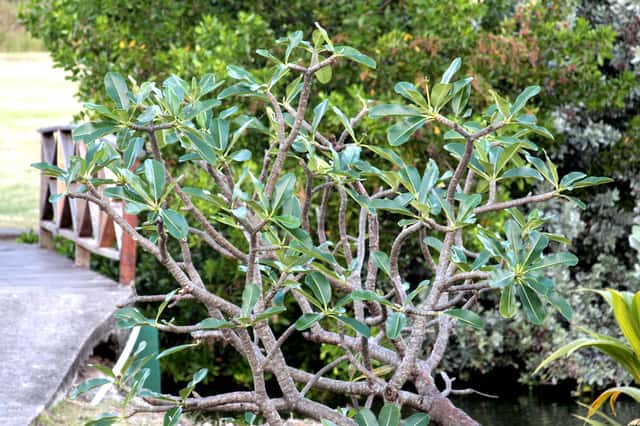
Frangipani (Plumeria) is a easy-care plant from the Apocynaceae family. Plumeria is a genus of about a dozen species of deciduous flowering trees and shrubs native to tropical and subtropical parts of the Americas, prized worldwide for their fragrant, waxy flowers and smooth gray bark. Grown as a landscape tree in frost-free climates and as a container plant elsewhere,...
Frangipani grows up to 10.0m, spread of 600cm, watering every 10 days, 10°C – 35°C, 40–50% humidity. It is suitable for indoor environments and not safe for pets.
Unlike many tropical plants, Frangipani tolerates watering mistakes. Best for beginners. Without precautions, ingestion can cause irritation in pets. Keep out of reach of cats and dogs. Without adequate drainage, root rot can develop within 20 days.
How to Care for Frangipani?
TLDR: Frangipani needs Bright indirect, watering every 10 days, and temperatures between 10-35°C with 40-50% humidity.
How Often Should You Water Frangipani?
Let the top few centimeters of soil dry completely between waterings, and cut back watering almost entirely once the plant drops its leaves in cooler months; overwatering is the most common cause of stem and root rot.
How Much Light Does Frangipani Need?
Plumeria flowers best with at least 6 hours of direct sun a day; indoors, place it in the brightest window available or supplement with grow lights.
What Is the Best Soil for Frangipani?
Use a coarse, fast-draining mix such as cactus or succulent soil amended with perlite, pumice, or coarse sand so water never pools around the roots.
What Pot Should You Use for Frangipani?
A terracotta or unglazed clay pot with generous drainage holes, sized only slightly larger than the root ball, helps excess moisture evaporate quickly.
Care Schedule
Fertilize
Every 30 days
What Is Frangipani and Where Does It Come From?
Plumeria is a genus of about a dozen species of deciduous flowering trees and shrubs native to tropical and subtropical parts of the Americas, prized worldwide for their fragrant, waxy flowers and smooth gray bark. Grown as a landscape tree in frost-free climates and as a container plant elsewhere, frangipani produces clusters of five-petaled blooms in white, yellow, pink, and red from late spring through fall, followed by a leafless winter dormancy in cooler regions.
How to Propagate Frangipani?
Stem cuttings
- Take cuttings from mature, hardened wood, not soft new growth
- Let the cut end callus and dry for 1-2 weeks before planting to prevent rot
- Root in a barely moist, fast-draining mix and avoid overwatering
- 1 Take the cutting
Cut a 30-45 cm leafless stem tip in spring or early summer using a clean, sharp blade.
- 2 Cure the cutting
Set the cutting in a warm, dry, shaded spot for 1-2 weeks until the cut end forms a callus.
- 3 Plant and wait
Insert the callused end a few centimeters into a gritty, well-draining mix and keep barely moist until roots and new leaves appear, usually within 4-8 weeks.
Materials needed:
Seed
- Fresh seed germinates far better than old seed
- Soak seeds briefly before sowing
- Expect more variation in flower color and form than from cuttings
- 1 Sow the seed
Press winged seeds edgewise into a moist, well-draining seed-starting mix, leaving the wing exposed.
- 2 Keep warm and humid
Maintain warmth (around 25-30C) and light humidity until germination, typically 1-3 weeks.
- 3 Grow on
Pot up seedlings once true leaves appear and grow in bright light; expect 3+ years before the first bloom.
Materials needed:
How Big Does Frangipani Grow?
TLDR: Frangipani can reach up to 10.0m tall with Slow growth rate.
Max height
10.0m
Spread
6.0m
Growth rate
Slow
Foliage
Deciduous
Warning: Toxic Plant
This plant can be toxic if ingested. Keep out of reach of:
Plant Uses
Ornamental
Great for decoration
Aromatic
Pleasant fragrance
Is your plant showing symptoms?
Click on the symptom to discover possible causes:
What Diseases Commonly Affect Frangipani?
TLDR: Frangipani is susceptible to 6 known diseases. Monitor regularly for early detection.
Scale Insects
Scale insects are small sap-sucking pests that appear as brown, shell-like bumps on plant stems and leaves. There are over 25 species, divided into armored (hard) and unarmored (soft) scales. They feed by piercing plant tissue and extracting sap, which weakens the plant and can lead to yellowing, stunted growth, and even death if left untreated. They also excrete honeydew, which attracts ants and promotes sooty mold growth.
Whiteflies
Whiteflies are small, soft-bodied, winged insects closely related to aphids and mealybugs. They are moth-like in appearance, about 1/16 inch long, triangular in shape, and gray-white in color. These sap-sucking pests feed on plant tissue, causing yellowing, stunted growth, and wilting. They also excrete honeydew, which attracts ants and promotes sooty mold growth. Whiteflies can transmit serious plant viruses.
Spider Mites
Spider mites are tiny arachnids (less than 1/20 inch long) related to spiders and ticks that feed on plant sap. They thrive in hot, dry conditions and can cause significant damage to ornamental and vegetable plants. During severe infestations, crop losses can reach 14% or higher as these pests disrupt vital plant processes including photosynthesis, carbon dioxide absorption, and transpiration.
Mealybugs
Mealybugs are small, soft-bodied insects covered with a white, waxy, cottony material. They are common pests of houseplants and outdoor plants in mild climates. These sap-sucking insects feed on plant tissue, causing damage, stunted growth, and can lead to plant death if left untreated. They produce sticky honeydew which attracts sooty mold.
Meaning & Symbolism
Frangipani flowers are traditionally strung into Hawaiian leis symbolizing hospitality and celebration, planted at temples across Southeast Asia as a sacred and protective tree, and associated in the Caribbean and Latin America with love and renewal.
Compare with similar plants
| Attribute | Difficulty | Light | Watering | Pet Safe |
|---|---|---|---|---|
| Field Maple | Easy | Bright indirect | 14d | ✓ |
| Silver Birch | Easy | Direct sun | 14d | ✓ |
| Cushion Bush | Easy | Direct sun | 14d | ✓ |
| Peruvian peppertree | Easy | Direct sun | 14d | ⚠️ |