Caprifoliaceae
Honeysuckle (Lonicera): How to Grow and Care
Lonicera
Honeysuckle is a vigorous, fast-growing plant that thrives in full sun to partial shade. Water moderately, allowing the soil to dry slightly between waterings. Fertilize once in spring. Prune after flowering to maintain shape and vigor.
Every 7 days
Bright indirect
-20° - 35°C
40% - 70%
Categories
What is Honeysuckle?
Honeysuckle (Lonicera) is a easy-care plant from the Caprifoliaceae family. Lonicera, commonly known as honeysuckle, is a large genus of around 200 species in the family Caprifoliaceae, native to the Northern Hemisphere. The genus includes both climbing vines and shrubs, deciduous and semi-evergreen, prized for their tubular, often fragrant flowers, long bloom season, and o...
Honeysuckle grows up to 9.0m, spread of 300cm, watering every 7 days, -20°C – 35°C, 40–70% humidity. It is not suitable for indoor environments and not safe for pets.
Unlike many tropical plants, Honeysuckle tolerates watering mistakes. Best for beginners. Without precautions, ingestion can cause irritation in pets. Keep out of reach of cats and dogs.
How to Care for Honeysuckle?
TLDR: Honeysuckle needs Bright indirect, watering every 7 days, and temperatures between -20-35°C with 40-70% humidity.
How Often Should You Water Honeysuckle?
Water every 7 days during the growing season. Established plants tolerate some drought but flower best with consistent moisture. Avoid waterlogging which can cause root rot.
How Much Light Does Honeysuckle Need?
Plant in full sun (6+ hours of direct sunlight) for maximum flowering. Tolerates partial shade, especially in hot climates, but produces fewer flowers in low light.
What Is the Best Soil for Honeysuckle?
Plant in well-draining soil enriched with organic matter. Tolerates clay, sandy, and loamy soils. Add compost to improve structure and fertility.
What Pot Should You Use for Honeysuckle?
Large terracotta pot or garden container with generous drainage holes
Care Schedule
Fertilize
Every 90 days
What Is Honeysuckle and Where Does It Come From?
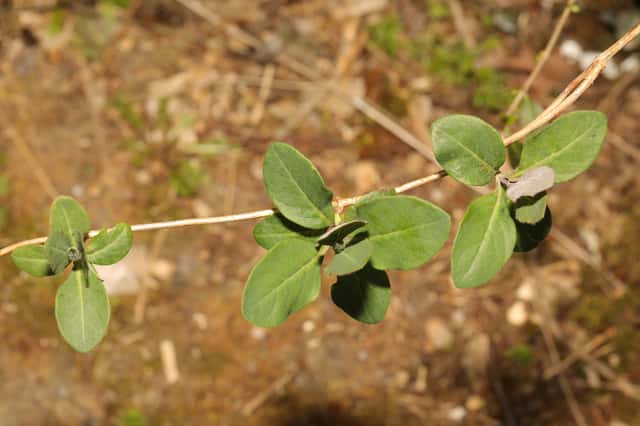
Lonicera, commonly known as honeysuckle, is a large genus of around 200 species in the family Caprifoliaceae, native to the Northern Hemisphere. The genus includes both climbing vines and shrubs, deciduous and semi-evergreen, prized for their tubular, often fragrant flowers, long bloom season, and ornamental berries. Species such as Lonicera periclymenum (European honeysuckle) and L. japonica (Japanese honeysuckle) are garden classics that attract pollinators, hummingbirds, and birds.
How to Propagate Honeysuckle?
Stem Cutting
Keep the medium moist but not soggy. Cover with a plastic bag to maintain humidity during the first weeks.
- 1 Take a semi-hardwood stem cutting of 15-20 cm just below a node
- 2 Remove lower leaves and retain 2-3 pairs at the top
- 3 Dip the base in rooting hormone powder
- 4 Insert into a moist mix of perlite and peat
- 5 Keep in bright indirect light with high humidity until roots form
Materials needed:
Ground Layering
Very effective for climbing vines. Keep soil moist throughout the process.
- 1 Select a long, flexible stem
- 2 Make a shallow cut in the bark at the middle of the stem
- 3 Bury that section in the soil about 10 cm deep
- 4 Secure with a U-shaped wire and water regularly
- 5 Sever from the parent plant once rooted
Materials needed:
How Big Does Honeysuckle Grow?
TLDR: Honeysuckle can reach up to 9.0m tall with Fast growth rate.
Max height
9.0m
Spread
3.0m
Growth rate
Fast
Foliage
Semi-evergreen
Warning: Toxic Plant
This plant can be toxic if ingested. Keep out of reach of:
Plant Uses
Ornamental
Great for decoration
Medicinal
Medicinal properties
Aromatic
Pleasant fragrance
Medicinal Uses
- Flowers and leaves of some species (especially L. japonica) used in traditional Chinese medicine as anti-inflammatory and antiviral agents
Is your plant showing symptoms?
Click on the symptom to discover possible causes:
What Diseases Commonly Affect Honeysuckle?
TLDR: Honeysuckle is susceptible to 6 known diseases. Monitor regularly for early detection.
Powdery Mildew
Powdery mildew is a common fungal disease caused by various fungi species including Erysiphe, Podosphaera, Oïdium, and Leveillula. It affects over 10,000 plant species worldwide. The disease thrives in warm, dry climates with high humidity and appears as a distinctive white powdery coating on plant surfaces.
Aphids
Aphids are small, soft-bodied, pear-shaped insects (1/16 to 1/8 inch long) that feed by sucking nutrient-rich sap from plants. They reproduce rapidly and can quickly weaken plants, causing distorted growth and transmitting plant viruses. Aphids come in various colors including green, black, red, yellow, brown, and gray. They secrete honeydew, a sticky substance that attracts ants and encourages sooty mold growth.
Crown Gall
Crown gall is a bacterial disease caused by Agrobacterium tumefaciens that affects over 140 species of plants. The bacteria insert DNA into plant cells, causing them to divide uncontrollably and form large tumor-like growths (galls) primarily on roots, stems, and at the soil line. These galls restrict water and nutrient flow, severely impacting plant health and potentially killing the plant.
Leaf Spot
Leaf spot is a common fungal disease caused by various pathogens including Alternaria, Ascochyta, Colletotrichum, Septoria, and Venturia. It primarily affects leaves, causing discolored spots that can lead to premature leaf drop if left untreated.
Meaning & Symbolism
Honeysuckle symbolizes love, devoted affection, and the sweetness of life. In Victorian flower language, it represents lasting bonds and the happiness found in simple pleasures.
Fun Facts
The Lonicera genus includes about 200 species distributed across the Northern Hemisphere
Flowers of L. japonica have been used in traditional Chinese medicine for over 1,500 years
The genus name Lonicera honors German botanist Adam Lonicer (1528–1586)
The tubular flowers are specially adapted for pollination by butterflies and hummingbirds
Frequently asked questions
How often should I water honeysuckle?
Is honeysuckle toxic to pets?
When does honeysuckle bloom?
Can I grow honeysuckle in a container?
Compare with similar plants
| Attribute | Difficulty | Light | Watering | Pet Safe |
|---|---|---|---|---|
| Field Maple | Easy | Bright indirect | 14d | ✓ |
| Silver Birch | Easy | Direct sun | 14d | ✓ |
| Cushion Bush | Easy | Direct sun | 14d | ✓ |
| Peruvian peppertree | Easy | Direct sun | 14d | ⚠️ |





