Solanaceae
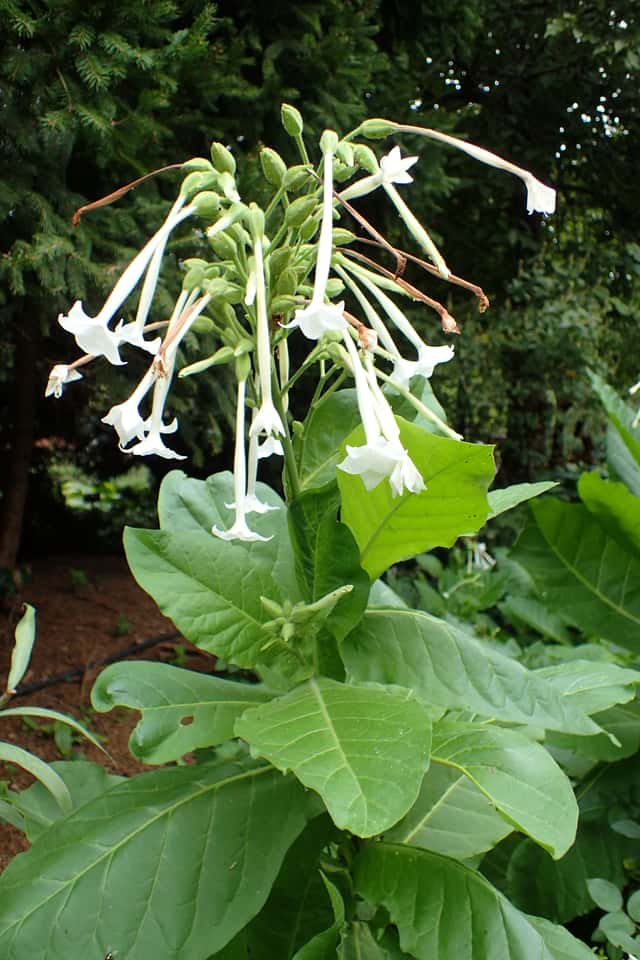
Woodland Tobacco (Nicotiana sylvestris)
Nicotiana sylvestris
Plant in rich, consistently moist but well-drained soil in full sun to partial shade. Water every 7 days keeping soil evenly moist. Fertilize monthly during the growing season. Choose a sheltered spot protected from strong winds given its tall stature.
Every 7 days
Bright indirect
1° - 35°C
40% - 70%
Categories
What is Woodland Tobacco?
Woodland Tobacco (Nicotiana sylvestris) is a medium-care plant from the Solanaceae family. Nicotiana sylvestris, commonly known as Woodland Tobacco or Flowering Tobacco, is a tall ornamental plant native to the Andes of Argentina and Bolivia. It belongs to the Solanaceae family and can grow up to 1.5 m (5 ft) tall, producing long drooping clusters of tubular white flowers with an intense...
Woodland Tobacco grows up to 1.5m, spread of 60cm, watering every 7 days, 1°C – 35°C, 40–70% humidity. It is not suitable for indoor environments and not safe for pets.
Without precautions, ingestion can cause irritation in pets. Keep out of reach of cats and dogs.
How to Care for Woodland Tobacco?
TLDR: Woodland Tobacco needs Bright indirect, watering every 7 days, and temperatures between 1-35°C with 40-70% humidity.
How Often Should You Water Woodland Tobacco?
Water every 7 days, keeping the soil consistently moist but never waterlogged. In hot spells, water more frequently. Allow the top inch of soil to guide you — water when it begins to feel slightly dry.
How Much Light Does Woodland Tobacco Need?
Thrives in full sun (6+ hours) but appreciates partial or dappled afternoon shade in hot climates. Avoid deep shade, which reduces flowering and can cause the plant to lean.
What Is the Best Soil for Woodland Tobacco?
Rich, organically amended, well-drained soil with pH 5.5–7.5. Incorporate compost before planting to improve fertility and moisture retention. Tolerates a range of soil textures from loam to chalk.
What Pot Should You Use for Woodland Tobacco?
Large ceramic or terracotta containers with ample drainage holes, at least 40 cm in diameter to accommodate the tall root system.
Care Schedule
Fertilize
Every 30 days
What Is Woodland Tobacco and Where Does It Come From?
Nicotiana sylvestris, commonly known as Woodland Tobacco or Flowering Tobacco, is a tall ornamental plant native to the Andes of Argentina and Bolivia. It belongs to the Solanaceae family and can grow up to 1.5 m (5 ft) tall, producing long drooping clusters of tubular white flowers with an intense jasmine-like fragrance strongest at night. Grown as an annual or biennial in temperate climates, it is a dramatic addition to borders and moon gardens.
How to Propagate Woodland Tobacco?
Seed Sowing
Seeds are very fine — mix with sand for even distribution. Self-seeds readily in mild climates.
- 1 Sow seeds indoors 6-8 weeks before the last frost date in a fine seed-starting mix
- 2 Do not cover seeds — they need light to germinate; press gently onto the surface
- 3 Maintain 18-23°C (65-75°F) and keep soil evenly moist
- 4 Transplant outdoors after danger of frost has passed, spacing plants 60 cm apart
Materials needed:
How Big Does Woodland Tobacco Grow?
TLDR: Woodland Tobacco can reach up to 1.5m tall with Fast growth rate.
Max height
1.5m
Spread
60cm
Growth rate
Fast
Foliage
Deciduous
Warning: Toxic Plant
This plant can be toxic if ingested. Keep out of reach of:
Plant Uses
Ornamental
Great for decoration
Is your plant showing symptoms?
Click on the symptom to discover possible causes:
What Diseases Commonly Affect Woodland Tobacco?
TLDR: Woodland Tobacco is susceptible to 8 known diseases. Monitor regularly for early detection.
Aphids
Aphids are small, soft-bodied, pear-shaped insects (1/16 to 1/8 inch long) that feed by sucking nutrient-rich sap from plants. They reproduce rapidly and can quickly weaken plants, causing distorted growth and transmitting plant viruses. Aphids come in various colors including green, black, red, yellow, brown, and gray. They secrete honeydew, a sticky substance that attracts ants and encourages sooty mold growth.
Thrips
Thrips are tiny cigar-shaped insects (1/25-inch long) that damage plants by sucking plant juices and scraping at fruits, flowers, and leaves. With over 6,000 species and rapid reproduction (lifecycle as short as 14 days), they can quickly infest plants and transmit viruses like tomato spotted wilt virus.
Whiteflies
Whiteflies are small, soft-bodied, winged insects closely related to aphids and mealybugs. They are moth-like in appearance, about 1/16 inch long, triangular in shape, and gray-white in color. These sap-sucking pests feed on plant tissue, causing yellowing, stunted growth, and wilting. They also excrete honeydew, which attracts ants and promotes sooty mold growth. Whiteflies can transmit serious plant viruses.
Mosaic Virus
Mosaic virus is a group of plant viruses that cause mottled, patchy patterns on leaves and can affect a wide variety of plants. The virus creates characteristic yellow, white, and green mosaic patterns, often accompanied by stunted growth and deformed plant parts. This highly contagious disease spreads rapidly through insect vectors and contaminated tools.
Meaning & Symbolism
Mystery, nocturnal beauty, and sensory gardens — its intensely fragrant night-blooming flowers evoke romance and the ephemeral.
Fun Facts
The flowers release their strongest scent at night to attract pollinating moths.
Plants can grow over 1.5 m (5 ft) tall, making them a dramatic focal point in any garden.
It is related to commercial tobacco (Nicotiana tabacum) but grown purely as an ornamental.
Native to the Andes of Argentina and Bolivia, it has been naturalized in gardens worldwide.
Frequently asked questions
How often should I water Woodland Tobacco?
Is Nicotiana sylvestris toxic to pets?
Can Woodland Tobacco be grown in pots?
When does Woodland Tobacco bloom?
Does Nicotiana sylvestris self-seed?
Compare with similar plants
| Attribute | Difficulty | Light | Watering | Pet Safe |
|---|---|---|---|---|
| Dark Fieldcap | Medium | Low light | 2d | ⚠️ |
| Azalea | Medium | Partial shade | 3d | ⚠️ |
| Bougainvillea | Medium | Direct sun | 7d | ⚠️ |
| Wild Lettuce | Medium | Direct sun | 7d | ⚠️ |



