Asphodelaceae
Burn Jelly Plant: Ground Cover Plant
Bulbine frutescens
Give it full sun and fast-draining, sandy soil. Water deeply but infrequently, letting the soil dry out between waterings, and avoid soggy conditions that invite root rot. Feed lightly every couple of months during the growing season and trim spent flower stalks to keep it tidy.
Every 12 days
Direct sun
-6° - 40°C
20% - 50%
Categories
What is Burn Jelly Plant?
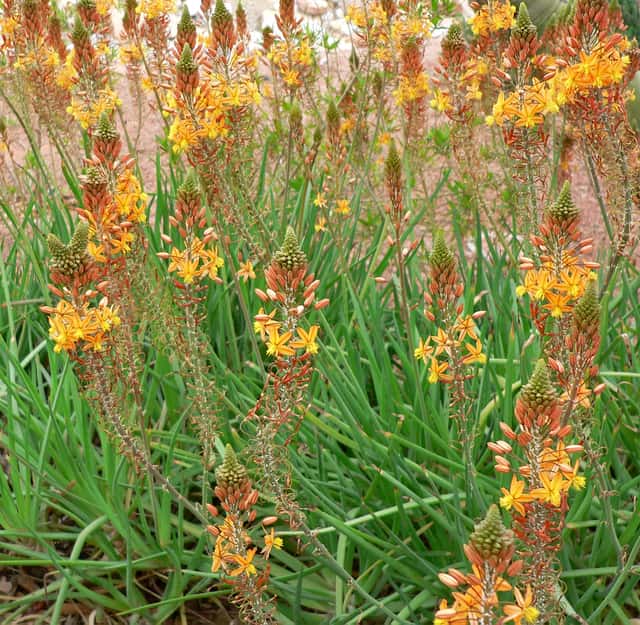
Burn Jelly Plant (Bulbine frutescens) is a easy-care plant from the Asphodelaceae family. Bulbine frutescens, commonly called the burn jelly plant, is a fast-growing, clump-forming succulent perennial from South Africa. Its narrow, fleshy, onion-like leaves radiate from a low rosette, while airy spikes of star-shaped yellow-to-orange flowers rise well above the foliage from spring throug...
Burn Jelly Plant grows up to 45cm, spread of 45cm, watering every 12 days, -6°C – 40°C, 20–50% humidity. It is suitable for indoor environments and safe for pets.
Unlike many tropical plants, Burn Jelly Plant tolerates watering mistakes. Best for beginners. Unlike many popular species, Burn Jelly Plant is safe to keep around pets. Without adequate drainage, root rot can develop within 24 days.
How to Care for Burn Jelly Plant?
TLDR: Burn Jelly Plant needs Direct sun, watering every 12 days, and temperatures between -6-40°C with 20-50% humidity.
How Often Should You Water Burn Jelly Plant?
Water only when the soil has dried out completely; this succulent handles drought far better than excess moisture, and overwatering is the main cause of root rot.
How Much Light Does Burn Jelly Plant Need?
Provide full sun to very bright light for the most flowers and compact growth; it tolerates a few hours of light shade but gets leggy in deep shade.
What Is the Best Soil for Burn Jelly Plant?
Plant in sandy, well-draining soil with a neutral to slightly acidic pH; heavy, waterlogged soil quickly leads to rot.
What Pot Should You Use for Burn Jelly Plant?
Use a wide, shallow terracotta or unglazed clay pot with generous drainage holes to keep roots dry between waterings.
Care Schedule
Fertilize
Every 60 days
What Is Burn Jelly Plant and Where Does It Come From?
Bulbine frutescens, commonly called the burn jelly plant, is a fast-growing, clump-forming succulent perennial from South Africa. Its narrow, fleshy, onion-like leaves radiate from a low rosette, while airy spikes of star-shaped yellow-to-orange flowers rise well above the foliage from spring through fall. Tough, drought-tolerant, and virtually pest-free, it thrives as a groundcover, border edging, or rockery accent in warm, sunny gardens.
How to Propagate Burn Jelly Plant?
Stem Cutting
Use clean, sharp tools and keep cuttings out of direct sun until rooted to prevent stress.
- 1 Cut a healthy, non-flowering stem 10-15 cm long in spring
- 2 Let the cut end callus for a day in a shaded spot
- 3 Plant the cutting in well-draining, sandy soil
- 4 Keep the soil lightly moist but never waterlogged until roots form
Materials needed:
Clump Division
Divide clumps every few years to keep plants vigorous and to multiply your stock.
- 1 Dig up an established clump
- 2 Gently separate rooted sections by hand
- 3 Replant divisions immediately in well-draining soil
- 4 Water lightly to settle the soil
Materials needed:
How Big Does Burn Jelly Plant Grow?
TLDR: Burn Jelly Plant can reach up to 45cm tall with Fast growth rate.
Max height
45cm
Spread
45cm
Growth rate
Fast
Foliage
Evergreen
Plant Uses
Ornamental
Great for decoration
Medicinal
Medicinal properties
Ground Cover
Soil coverage
Medicinal Uses
- Fresh leaf sap applied topically to soothe minor burns and sunburn
- Used on rashes, insect bites, and blisters for its cooling, anti-inflammatory gel
- Traditionally dabbed on cold sores, cracked lips, and mouth ulcers
- Leaf infusion taken traditionally for coughs and colds
Is your plant showing symptoms?
Click on the symptom to discover possible causes:
What Diseases Commonly Affect Burn Jelly Plant?
TLDR: Burn Jelly Plant is susceptible to 9 known diseases. Monitor regularly for early detection.
Root Rot
Root rot is a serious fungal disease that affects the root system of plants, causing them to decay and die. It is primarily caused by overwatering, poor drainage, or soil-borne fungi such as Pythium, Phytophthora, Rhizoctonia, and Fusarium. The disease thrives in waterlogged conditions where roots are deprived of oxygen, making them susceptible to fungal infection.
Phytophthora Root Rot
Disease caused by fungus-like organisms (oomycetes) that live in soil and can survive for years. It affects roots, stem, and crown of plants, being especially severe in waterlogged or poorly drained soils. It is the second most common cause of root rot in trees and shrubs.
Powdery Mildew
Powdery mildew is a common fungal disease caused by various fungi species including Erysiphe, Podosphaera, Oïdium, and Leveillula. It affects over 10,000 plant species worldwide. The disease thrives in warm, dry climates with high humidity and appears as a distinctive white powdery coating on plant surfaces.
Aphids
Aphids are small, soft-bodied, pear-shaped insects (1/16 to 1/8 inch long) that feed by sucking nutrient-rich sap from plants. They reproduce rapidly and can quickly weaken plants, causing distorted growth and transmitting plant viruses. Aphids come in various colors including green, black, red, yellow, brown, and gray. They secrete honeydew, a sticky substance that attracts ants and encourages sooty mold growth.
Meaning & Symbolism
Healing and resilience — a plant whose soothing sap and toughness in harsh, dry conditions have long symbolized recovery and endurance.
Compare with similar plants
| Attribute | Difficulty | Light | Watering | Pet Safe |
|---|---|---|---|---|
| Field Maple | Easy | Bright indirect | 14d | ✓ |
| Silver Birch | Easy | Direct sun | 14d | ✓ |
| Common Blanketflower | Easy | Direct sun | 10d | ✓ |
| Cushion Bush | Easy | Direct sun | 14d | ✓ |
Choose & Compare
Sources & References
- Orange Bulbine Care 101: Water, Light & Growing Tips
- Bulbine Care - Tips For Growing Bulbine Flowers
- Bulbine frutescens | PlantZAfrica
- Bulbine frutescens | Chicago Botanic Garden
- Common Stalked Bulbine Plant Diseases
- Bulbine frutescens: care, characteristics, uses and multiplication
- Suculenta Bulbine Frutescens
- Bulbine frutescens (Cola de gato)
- Bulbine frutescens | stalked bulbine Herbaceous Perennial/RHS





