Myrtaceae
Guava Tree: Edible Plant
Psidium guajava
The guava tree requires full sun, well-drained soil, and regular watering, especially during fruiting. It is a medium-care plant that benefits from pruning and fertilization to ensure good fruit production and healthy growth.
Every 5 days
Direct sun
15° - 38°C
50% - 80%
Categories
What is Guava Tree?
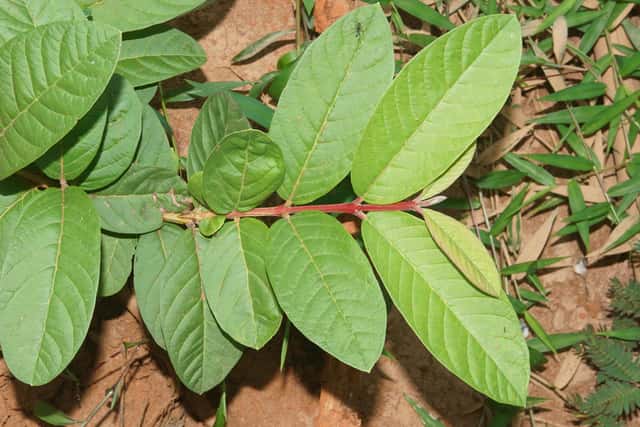
Guava Tree (Psidium guajava) is a easy-care plant from the Myrtaceae family. The guava tree (Psidium guajava) is a tropical fruit tree in the Myrtaceae family, native to the Americas. It is widely cultivated for its sweet and aromatic fruits, known as guavas. The tree features smooth bark, elliptical leaves, and delicate white flowers. It is a robust and fast-growing plant t...
Guava Tree grows up to 9.0m, spread of 600cm, watering every 5 days, 15°C – 38°C, 50–80% humidity. It is not suitable for indoor environments and safe for pets.
Unlike many tropical plants, Guava Tree tolerates watering mistakes. Best for beginners. Unlike many popular species, Guava Tree is safe to keep around pets.
How to Care for Guava Tree?
TLDR: Guava Tree needs Direct sun, watering every 5 days, and temperatures between 15-38°C with 50-80% humidity.
How Often Should You Water Guava Tree?
Keep the soil consistently moist but never waterlogged, especially during growth and fruiting periods. Reduce watering frequency during colder or rainy seasons. Check soil moisture before watering by inserting your finger a few inches deep.
How Much Light Does Guava Tree Need?
Plant the guava tree in a location that receives at least 6 to 8 hours of direct sunlight per day to ensure abundant flowering and fruiting, as well as vigorous development.
What Is the Best Soil for Guava Tree?
The guava tree prefers fertile, well-drained soils rich in organic matter. A pH between 5.0 and 7.5 is ideal. Avoid heavy clay soils that retain excess water, as they can cause root rot.
What Pot Should You Use for Guava Tree?
For container gardening (only for young plants or dwarf varieties), use large, deep pots with good drainage holes. Ceramic or terracotta pots are ideal to allow the soil to breathe and prevent moisture buildup.
Care Schedule
Fertilize
Every 90 days
What Is Guava Tree and Where Does It Come From?
The guava tree (Psidium guajava) is a tropical fruit tree in the Myrtaceae family, native to the Americas. It is widely cultivated for its sweet and aromatic fruits, known as guavas. The tree features smooth bark, elliptical leaves, and delicate white flowers. It is a robust and fast-growing plant that can reach several meters in height, valued both for its fruit production and its medicinal properties.
How to Propagate Guava Tree?
Seed Propagation
- The germination rate can be irregular; plant several seeds to increase the chances of success.
- Maintain constant moisture but avoid waterlogging to prevent seed rot.
- 1 Collection and Preparation
Remove seeds from ripe guavas, wash them well to remove all pulp, and dry them in the shade for a few days.
- 2 Scarification (Optional)
To speed up germination, seeds can be lightly sanded or soaked in warm water for 24 hours before planting.
- 3 Sowing
Plant the seeds in trays or pots with a light, well-drained substrate, covering them with a thin layer of soil (about 0.2 inches / 0.5 cm).
- 4 Post-sowing Care
Keep the substrate consistently moist in a location with good light and mild temperatures (68-86°F / 20-30°C). Germination may take a few weeks.
Materials needed:
Stem Cutting Propagation
- Use sterilized pruning shears to prevent the spread of diseases.
- Moisture is crucial for rooting; prevent cuttings from drying out, but also avoid excess water.
- 1 Cutting Selection
Choose semi-hardwood branches from a healthy mother plant, about 6-8 inches (15-20 cm) long with 2-3 nodes. Avoid very young or very old branches.
- 2 Cutting Preparation
Remove leaves from the bottom part of the cutting and cut the base at an angle just below a node. Optionally, dip the base in rooting hormone to stimulate root growth.
- 3 Planting
Plant the cutting in a light, well-drained substrate (such as sand and peat), leaving at least one node buried. Gently press the substrate around the cutting.
- 4 Environment and Care
Keep the substrate moist and the cutting in a location with indirect light and high humidity. Covering the cutting with a clear plastic bag can create an ideal microclimate for rooting.
Materials needed:
How Big Does Guava Tree Grow?
TLDR: Guava Tree can reach up to 9.0m tall with Fast growth rate.
Max height
9.0m
Spread
6.0m
Growth rate
Fast
Foliage
Evergreen
Plant Uses
Edible
Can be consumed
Medicinal
Medicinal properties
Ornamental
Great for decoration
Medicinal Uses
- Guava leaves are used in teas to treat diarrhea and stomach aches.
- It possesses anti-inflammatory, antioxidant, and antimicrobial properties.
- It helps in controlling blood sugar and cholesterol levels and is rich in vitamin C.
Culinary Uses
- The fruits are consumed fresh, in juices, jams, sweets (guava paste), and ice creams.
- Young leaves can be used in teas or as a seasoning in some cuisines.
Is your plant showing symptoms?
Click on the symptom to discover possible causes:
What Diseases Commonly Affect Guava Tree?
TLDR: Guava Tree is susceptible to 12 known diseases. Monitor regularly for early detection.
Anthracnose
Anthracnose is a fungal disease caused by fungi in the genus Colletotrichum that affects many plants, including vegetables, fruits, and trees. The disease thrives in cool, wet conditions, causing dark, sunken lesions on leaves, stems, flowers, and fruits.
Rust
Rust is a common fungal disease caused by fungi in the order Pucciniales that affects a wide variety of plants. The disease gets its name from the characteristic orange, yellow, or reddish-brown pustules that appear on leaves, resembling metal rust. This obligate fungal parasite requires living plants to survive and can cause significant economic losses in agricultural crops.
Root Rot
Root rot is a serious fungal disease that affects the root system of plants, causing them to decay and die. It is primarily caused by overwatering, poor drainage, or soil-borne fungi such as Pythium, Phytophthora, Rhizoctonia, and Fusarium. The disease thrives in waterlogged conditions where roots are deprived of oxygen, making them susceptible to fungal infection.
Aphids
Aphids are small, soft-bodied, pear-shaped insects (1/16 to 1/8 inch long) that feed by sucking nutrient-rich sap from plants. They reproduce rapidly and can quickly weaken plants, causing distorted growth and transmitting plant viruses. Aphids come in various colors including green, black, red, yellow, brown, and gray. They secrete honeydew, a sticky substance that attracts ants and encourages sooty mold growth.
Meaning & Symbolism
Guava is often associated with health, vitality, abundance, and longevity in various cultures, especially due to its nutritional and medicinal properties. It is a symbol of prosperity and well-being.
Compare with similar plants
| Attribute | Difficulty | Light | Watering | Pet Safe |
|---|---|---|---|---|
| Field Maple | Easy | Bright indirect | 14d | ✓ |
| Silver Birch | Easy | Direct sun | 14d | ✓ |
| Cushion Bush | Easy | Direct sun | 14d | ✓ |
| Peruvian peppertree | Easy | Direct sun | 14d | ⚠️ |





