Rubiaceae
Velvetseed (Guettarda)
Guettarda
Guettarda thrives in bright sun with regular watering every 2–3 days. Keep soil moist but well-drained, maintain high humidity, and fertilize every 3 months with a balanced fertilizer. Prune lightly twice a year to shape. Best suited for tropical outdoor gardens.
Every 3 days
Bright indirect
18° - 35°C
60% - 90%
Categories
What is Velvetseed?
Velvetseed (Guettarda) is a medium-care plant from the Rubiaceae family. Guettarda is a genus of tropical and subtropical evergreen shrubs and small trees in the family Rubiaceae, comprising over 150 species. Commonly known as velvetseed, these plants are native to the Neotropics, Pacific Islands, and coastal regions of Africa and Australia. They are characterized by opp...
Velvetseed grows up to 10.0m, spread of 400cm, watering every 3 days, 18°C – 35°C, 60–90% humidity. It is not suitable for indoor environments and safe for pets.
Unlike many popular species, Velvetseed is safe to keep around pets.
How to Care for Velvetseed?
TLDR: Velvetseed needs Bright indirect, watering every 3 days, and temperatures between 18-35°C with 60-90% humidity.
How Often Should You Water Velvetseed?
Water every 2–3 days, keeping soil evenly moist. Avoid waterlogging — ensure pots or beds have excellent drainage. During dry spells, water more frequently to maintain consistent soil moisture.
How Much Light Does Velvetseed Need?
Provide 4–8 hours of direct to bright indirect sunlight daily. Guettarda performs best in full sun positions and may become leggy or reduce flowering in low-light conditions.
What Is the Best Soil for Velvetseed?
Use well-draining loamy soil enriched with organic matter. A pH of 6.5–7.5 is ideal. Avoid heavy clay soils that retain excess moisture and cause root rot.
What Pot Should You Use for Velvetseed?
Terracotta or glazed ceramic pot with drainage holes; for outdoor planting, sandy or loamy garden beds are ideal.
Care Schedule
Fertilize
Every 90 days
Rotate
Every 7 days
Repot
Every 365 days
What Is Velvetseed and Where Does It Come From?
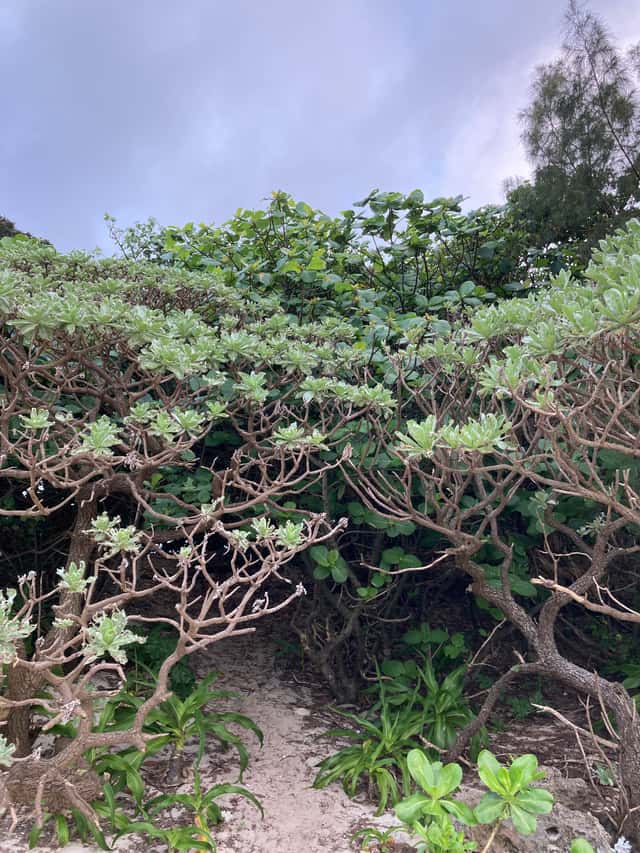
Guettarda is a genus of tropical and subtropical evergreen shrubs and small trees in the family Rubiaceae, comprising over 150 species. Commonly known as velvetseed, these plants are native to the Neotropics, Pacific Islands, and coastal regions of Africa and Australia. They are characterized by opposite, often velvety leaves, fragrant tubular white or pink flowers, and small fleshy multi-seeded fruits. Species such as G. speciosa thrive on sandy beaches and coastal margins, while G. scabra favors dry Caribbean woodlands.
How Big Does Velvetseed Grow?
TLDR: Velvetseed can reach up to 10.0m tall with Medium growth rate.
Max height
10.0m
Spread
4.0m
Growth rate
Medium
Foliage
Evergreen
Plant Uses
Ornamental
Great for decoration
Medicinal
Medicinal properties
Is your plant showing symptoms?
Click on the symptom to discover possible causes:
What Diseases Commonly Affect Velvetseed?
TLDR: Velvetseed is susceptible to 10 known diseases. Monitor regularly for early detection.
Root Rot
Root rot is a serious fungal disease that affects the root system of plants, causing them to decay and die. It is primarily caused by overwatering, poor drainage, or soil-borne fungi such as Pythium, Phytophthora, Rhizoctonia, and Fusarium. The disease thrives in waterlogged conditions where roots are deprived of oxygen, making them susceptible to fungal infection.
Overwatering
Overwatering occurs when plants receive too much water, depriving roots of oxygen and causing root rot. This environmental stress is one of the most common causes of houseplant death, as waterlogged soil prevents roots from breathing and functioning properly.
Scale Insects
Scale insects are small sap-sucking pests that appear as brown, shell-like bumps on plant stems and leaves. There are over 25 species, divided into armored (hard) and unarmored (soft) scales. They feed by piercing plant tissue and extracting sap, which weakens the plant and can lead to yellowing, stunted growth, and even death if left untreated. They also excrete honeydew, which attracts ants and promotes sooty mold growth.
Aphids
Aphids are small, soft-bodied, pear-shaped insects (1/16 to 1/8 inch long) that feed by sucking nutrient-rich sap from plants. They reproduce rapidly and can quickly weaken plants, causing distorted growth and transmitting plant viruses. Aphids come in various colors including green, black, red, yellow, brown, and gray. They secrete honeydew, a sticky substance that attracts ants and encourages sooty mold growth.
Fun Facts
Guettarda was named after 18th-century French naturalist Jean-Étienne Guettard, a pioneer of geological mapping.
G. speciosa flowers open at night, attracting moth pollinators with their intense fragrance.
Pacific Islanders historically used Guettarda speciosa wood to build canoes and dwellings due to its durability.
The fleshy fruits of Guettarda are multi-seeded, which gives the genus its common name "velvetseed".
Compare with similar plants
| Attribute | Difficulty | Light | Watering | Pet Safe |
|---|---|---|---|---|
| Dark Fieldcap | Medium | Low light | 2d | ⚠️ |
| Azalea | Medium | Partial shade | 3d | ⚠️ |
| Bougainvillea | Medium | Direct sun | 7d | ⚠️ |
| Wild Lettuce | Medium | Direct sun | 7d | ⚠️ |



