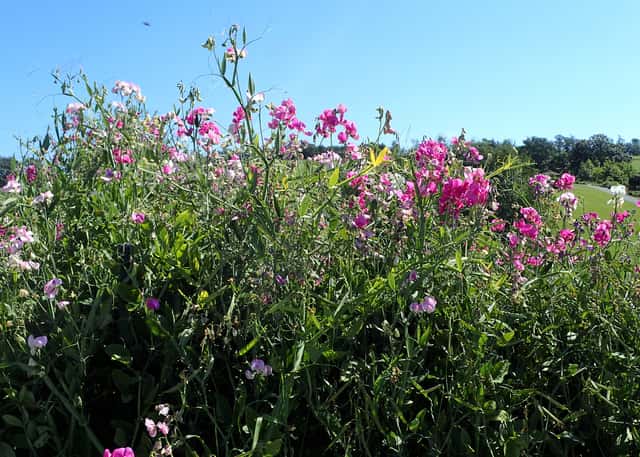
Fabaceae
Everlasting Pea (Lathyrus latifolius): Complete Care Guide
Lathyrus latifolius
Low-maintenance outdoor climber. Thrives in full sun with well-drained soil and moderate watering. Drought tolerant once established. Requires support for climbing. Cut back in autumn to encourage vigorous spring regrowth.
Every 4 days
Bright indirect
-15° - 35°C
40% - 70%
Categories
What is Everlasting Pea?
Everlasting Pea (Lathyrus latifolius) is a easy-care plant from the Fabaceae family. Lathyrus latifolius, commonly known as Everlasting Pea or Perennial Sweet Pea, is a vigorous climbing perennial native to Europe and North Africa. It produces showy pea-like flowers in shades of pink, white, rose, and purple from midsummer through fall, making it ideal for covering fences, trellises...
Everlasting Pea grows up to 2.0m, spread of 150cm, watering every 4 days, -15°C – 35°C, 40–70% humidity. It is not suitable for indoor environments and not safe for pets.
Unlike many tropical plants, Everlasting Pea tolerates watering mistakes. Best for beginners. Without precautions, ingestion can cause irritation in pets. Keep out of reach of cats and dogs.
How to Care for Everlasting Pea?
TLDR: Everlasting Pea needs Bright indirect, watering every 4 days, and temperatures between -15-35°C with 40-70% humidity.
How Often Should You Water Everlasting Pea?
Water moderately, allowing the soil to dry slightly between waterings. Once established, the plant is drought tolerant and needs watering only when soil is clearly dry. Avoid waterlogging, which leads to root rot.
How Much Light Does Everlasting Pea Need?
Plant in full sun with at least 6-8 hours of direct sunlight daily. Tolerates partial shade but blooms best in full sun exposure.
What Is the Best Soil for Everlasting Pea?
Prefers well-drained, moderately fertile soil. Adapts to sandy, loamy, clay, or chalky soils with pH 6.0-7.5. Avoid waterlogged conditions.
What Pot Should You Use for Everlasting Pea?
Trellis, fence, pergola, or sturdy support structure for climbing
Care Schedule
Fertilize
Every 30 days
What Is Everlasting Pea and Where Does It Come From?
Lathyrus latifolius, commonly known as Everlasting Pea or Perennial Sweet Pea, is a vigorous climbing perennial native to Europe and North Africa. It produces showy pea-like flowers in shades of pink, white, rose, and purple from midsummer through fall, making it ideal for covering fences, trellises, and walls. Unlike the annual sweet pea, it is unscented but returns reliably year after year. Note: seeds are toxic and can cause lathyrism if consumed in large quantities.
How to Propagate Everlasting Pea?
Seed sowing
Sow directly in the final location to avoid transplant shock. Scarification significantly improves germination rates.
- 1 Soak seeds in warm water for 24 hours or scarify the seed coat lightly with sandpaper
- 2 Sow less than 1 cm deep in early spring
- 3 Keep substrate moist until germination
- 4 Transplant with care as the plant dislikes root disturbance
Materials needed:
Crown division
The plant dislikes root disturbance. Divide only when necessary and replant quickly.
- 1 Divide the crown in spring as new shoots emerge
- 2 Carefully extract a section with roots and shoots
- 3 Replant immediately in the final location
- 4 Water well after planting
Materials needed:
How Big Does Everlasting Pea Grow?
TLDR: Everlasting Pea can reach up to 2.0m tall with Fast growth rate.
Max height
2.0m
Spread
1.5m
Growth rate
Fast
Foliage
Deciduous
Warning: Toxic Plant
This plant can be toxic if ingested. Keep out of reach of:
Plant Uses
Ornamental
Great for decoration
Ground Cover
Soil coverage
Is your plant showing symptoms?
Click on the symptom to discover possible causes:
What Diseases Commonly Affect Everlasting Pea?
TLDR: Everlasting Pea is susceptible to 6 known diseases. Monitor regularly for early detection.
Powdery Mildew
Powdery mildew is a common fungal disease caused by various fungi species including Erysiphe, Podosphaera, Oïdium, and Leveillula. It affects over 10,000 plant species worldwide. The disease thrives in warm, dry climates with high humidity and appears as a distinctive white powdery coating on plant surfaces.
Root Rot
Root rot is a serious fungal disease that affects the root system of plants, causing them to decay and die. It is primarily caused by overwatering, poor drainage, or soil-borne fungi such as Pythium, Phytophthora, Rhizoctonia, and Fusarium. The disease thrives in waterlogged conditions where roots are deprived of oxygen, making them susceptible to fungal infection.
Gray Mold (Botrytis Blight)
Gray mold, caused by the fungus Botrytis cinerea, is a widespread necrotrophic pathogen affecting over 1,400 plant species. It thrives in cool, humid conditions and attacks weakened or aging plant tissues, causing soft rot and characteristic gray fuzzy growth.
Rust
Rust is a common fungal disease caused by fungi in the order Pucciniales that affects a wide variety of plants. The disease gets its name from the characteristic orange, yellow, or reddish-brown pustules that appear on leaves, resembling metal rust. This obligate fungal parasite requires living plants to survive and can cause significant economic losses in agricultural crops.
Meaning & Symbolism
Lasting pleasure and fond memories
Fun Facts
One of the hardiest perennial climbers in Europe, tolerating frost down to -15°C
Its flowers attract butterflies and bees, making it an excellent plant for biodiversity
The seeds are toxic due to the neurotoxin beta-ODAP, which causes lathyrism in large doses
It can become invasive in some regions, particularly along the western coast of the USA
Frequently asked questions
Is the Everlasting Pea toxic?
How often should I water Everlasting Pea?
Does Everlasting Pea need support?
When does Everlasting Pea bloom?
Does Everlasting Pea have fragrance?
Compare with similar plants
| Attribute | Difficulty | Light | Watering | Pet Safe |
|---|---|---|---|---|
| Field Maple | Easy | Bright indirect | 14d | ✓ |
| Silver Birch | Easy | Direct sun | 14d | ✓ |
| Cushion Bush | Easy | Direct sun | 14d | ✓ |
| Peruvian peppertree | Easy | Direct sun | 14d | ⚠️ |





