Rosaceae
Scarlet Firethorn: Full Sun Plant
Pyracantha coccinea
An easy-to-grow, low-maintenance shrub that thrives in full sun with well-draining soil. Highly drought-tolerant once established. Requires minimal watering and benefits from annual pruning after flowering to maintain shape. Best planted outdoors; choose disease-resistant cultivars to minimise issues with fire blight and scab.
Every 14 days
Direct sun
-20° - 35°C
% - %
Categories
What is Scarlet Firethorn?
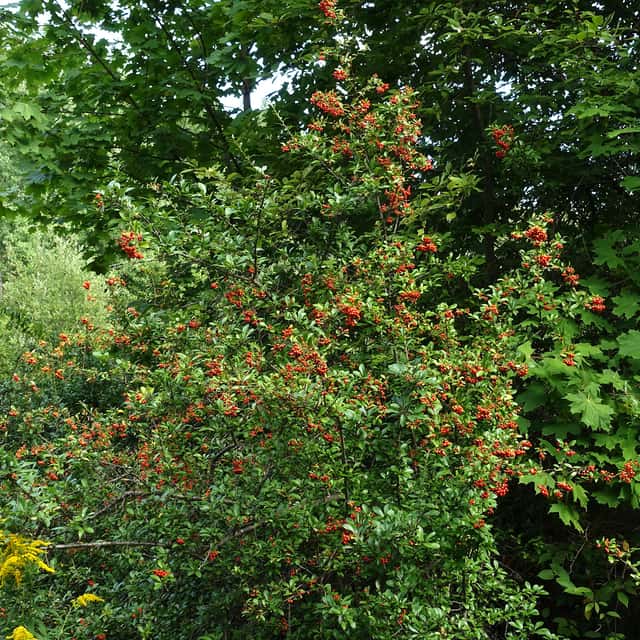
Scarlet Firethorn (Pyracantha coccinea) is a easy-care plant from the Rosaceae family. Pyracantha coccinea (Scarlet Firethorn) is a thorny, broadleaf semi-evergreen shrub native to Southern Europe and Western Asia. It is prized for its dense clusters of small white flowers in late spring and its profuse display of brilliant orange-red berries that persist through winter, providing vit...
Scarlet Firethorn grows up to 5.5m, spread of 550cm, watering every 14 days, -20°C – 35°C. It is not suitable for indoor environments and not safe for pets.
Unlike many tropical plants, Scarlet Firethorn tolerates watering mistakes. Best for beginners. Without precautions, ingestion can cause irritation in pets. Keep out of reach of cats and dogs.
How to Care for Scarlet Firethorn?
TLDR: Scarlet Firethorn needs Direct sun, watering every 14 days, and temperatures between -20-35°C with 40-70% humidity.
How Often Should You Water Scarlet Firethorn?
Water deeply but infrequently — Pyracantha coccinea is highly drought-tolerant once established and prefers soil that dries out between waterings. Overwatering is the primary cause of root rot. During prolonged dry spells, water every 10–14 days. Avoid wetting foliage to reduce fungal disease risk.
How Much Light Does Scarlet Firethorn Need?
Plant in full sun (6+ hours of direct sunlight daily) for the best flowering and fruiting. Partial shade is tolerated but results in fewer flowers and berries, and increases disease susceptibility.
What Is the Best Soil for Scarlet Firethorn?
Tolerates a wide range of soils including clay, loam, chalk, and sand, provided drainage is good. Prefers slightly acidic to neutral pH (5.5–8.0). Avoid waterlogged conditions. Avoid overly rich soils — excess fertility promotes leafy growth at the expense of berries.
What Pot Should You Use for Scarlet Firethorn?
Best grown directly in the ground outdoors. Container growing is possible with smaller cultivars in large, frost-resistant pots with excellent drainage. Use a terracotta or heavy ceramic pot to provide stability. Overwinter potted specimens in a sheltered, cool spot.
Care Schedule
Fertilize
Every 90 days
Misting
Every 3 days
Rotate
Every 7 days
Repot
Every 365 days
What Is Scarlet Firethorn and Where Does It Come From?
Pyracantha coccinea (Scarlet Firethorn) is a thorny, broadleaf semi-evergreen shrub native to Southern Europe and Western Asia. It is prized for its dense clusters of small white flowers in late spring and its profuse display of brilliant orange-red berries that persist through winter, providing vital food for birds. The plant forms dense, impenetrable thickets due to its sharp thorns, making it an excellent barrier hedge or security planting.
How Big Does Scarlet Firethorn Grow?
TLDR: Scarlet Firethorn can reach up to 5.5m tall with Fast growth rate.
Max height
5.5m
Spread
5.5m
Growth rate
Fast
Foliage
Semi-evergreen
Warning: Toxic Plant
This plant can be toxic if ingested. Keep out of reach of:
Plant Uses
Ornamental
Great for decoration
Medicinal Uses
- Historically used in European folk medicine for digestive complaints and as an astringent
Culinary Uses
- Berries can be used to make jellies and jams after cooking; seeds must be removed as they contain cyanogenic glycosides
Is your plant showing symptoms?
Click on the symptom to discover possible causes:
What Diseases Commonly Affect Scarlet Firethorn?
TLDR: Scarlet Firethorn is susceptible to 6 known diseases. Monitor regularly for early detection.
Fire Blight
Fire blight is a highly destructive and contagious bacterial disease caused by Erwinia amylovora. It primarily affects plants in the Rosaceae family, including apple, pear, quince trees, and various ornamental plants. The disease can destroy an entire orchard in a single growing season under ideal conditions, with the bacterium moving approximately 11 inches per week in new growth.
Root Rot
Root rot is a serious fungal disease that affects the root system of plants, causing them to decay and die. It is primarily caused by overwatering, poor drainage, or soil-borne fungi such as Pythium, Phytophthora, Rhizoctonia, and Fusarium. The disease thrives in waterlogged conditions where roots are deprived of oxygen, making them susceptible to fungal infection.
Gray Mold (Botrytis Blight)
Gray mold, caused by the fungus Botrytis cinerea, is a widespread necrotrophic pathogen affecting over 1,400 plant species. It thrives in cool, humid conditions and attacks weakened or aging plant tissues, causing soft rot and characteristic gray fuzzy growth.
Aphids
Aphids are small, soft-bodied, pear-shaped insects (1/16 to 1/8 inch long) that feed by sucking nutrient-rich sap from plants. They reproduce rapidly and can quickly weaken plants, causing distorted growth and transmitting plant viruses. Aphids come in various colors including green, black, red, yellow, brown, and gray. They secrete honeydew, a sticky substance that attracts ants and encourages sooty mold growth.
Meaning & Symbolism
Firethorn has long symbolised protection and vigilance in European folk traditions, owing to its formidable thorns and ability to form impenetrable barriers. Its vivid red-orange berries are associated with abundance, vitality, and the warmth of fire — a symbol of life persisting through winter.
Fun Facts
The name Pyracantha comes from the Greek pyr (fire) and akantha (thorn) — literally fire thorn — a perfect description of its blazing berries and sharp spines.
Pyracantha's dense, thorny thickets are so effective at deterring predators that birds such as blackbirds and thrushes use it as a nesting site safe from cats.
Pyracantha can be trained as a bonsai specimen and is widely used as espalier against walls — a traditional technique that showcases its spectacular berry display.
The berries can be made into jams, jellies, and liqueurs once the seeds are removed and the fruit is cooked — raw consumption in large quantities causes gastrointestinal upset.
Pyracantha is one of the most effective wildlife shrubs available, providing nesting sites, shelter, and winter food for birds in a single planting.
Compare with similar plants
| Attribute | Difficulty | Light | Watering | Pet Safe |
|---|---|---|---|---|
| Field Maple | Easy | Bright indirect | 14d | ✓ |
| Silver Birch | Easy | Direct sun | 14d | ✓ |
| Cushion Bush | Easy | Direct sun | 14d | ✓ |
| Peruvian peppertree | Easy | Direct sun | 14d | ⚠️ |
Choose & Compare
Sources & References
- Missouri Botanical Garden - Pyracantha coccinea Plant Finder
- Clemson HGIC - Pyracantha (Firethorn) Care Guide
- NC State Extension - Pyracantha coccinea Plant Toolbox
- Poison Control - Are Pyracantha Berries Poisonous?
- Pyracantha.co.uk - Diseases of Pyracantha Firethorn
- Plantura - Pyracantha Overview & Care
- Treehouse - Scarlet Firethorn Care, Needs and Diseases
- Gardenia.net - Pyracantha coccinea





