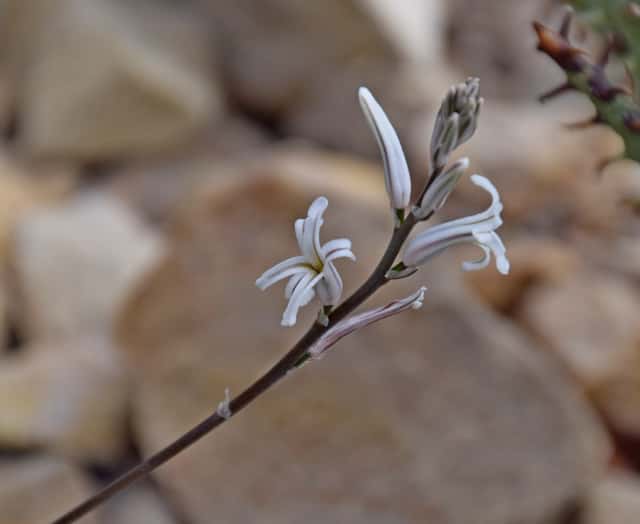
Asphodelaceae
Marumian Haworthia (Haworthia marumiana): Care and Growing Guide
Haworthia marumiana
Easy-care plant ideal for beginners. Prefers bright indirect light, infrequent watering, and well-draining soil. Does not tolerate waterlogged conditions.
Every 21 days
Partial shade
-1.1° - 35°C
30% - 50%
Categories
What is Marumian Haworthia?
Marumian Haworthia (Haworthia marumiana) is a easy-care plant from the Asphodelaceae family. Haworthia marumiana is a compact, clumping succulent native to the rocky Karoo region of South Africa. It forms dense rosettes of soft, semi-translucent leaves adapted to grow in partial shade between rocks. One of the most graceful haworthias for container growing.
Marumian Haworthia grows up to 8cm, spread of 15cm, watering every 21 days, -1.1°C – 35°C, 30–50% humidity. It is suitable for indoor environments and safe for pets.
Unlike many tropical plants, Marumian Haworthia tolerates watering mistakes. Best for beginners. Unlike many popular species, Marumian Haworthia is safe to keep around pets. Without adequate drainage, root rot can develop within 42 days.
How to Care for Marumian Haworthia?
TLDR: Marumian Haworthia needs Partial shade, watering every 21 days, and temperatures between -1.1-35°C with 30-50% humidity.
How Often Should You Water Marumian Haworthia?
Water only when the soil is completely dry, approximately every 21 days. In winter, reduce frequency further. Never let water pool in the saucer.
How Much Light Does Marumian Haworthia Need?
Place in bright indirect light or gentle morning sun. Avoid intense direct sunlight, which can scorch the translucent leaves.
What Is the Best Soil for Marumian Haworthia?
Use cactus and succulent mix with extra perlite for excellent drainage. pH between 6.0 and 7.5.
What Pot Should You Use for Marumian Haworthia?
Terracotta or ceramic pot with drainage holes. Choose a pot only slightly larger than the rosette to prevent excess moist soil.
Care Schedule
Fertilize
Every 90 days
What Is Marumian Haworthia and Where Does It Come From?
Haworthia marumiana is a compact, clumping succulent native to the rocky Karoo region of South Africa. It forms dense rosettes of soft, semi-translucent leaves adapted to grow in partial shade between rocks. One of the most graceful haworthias for container growing.
How Big Does Marumian Haworthia Grow?
TLDR: Marumian Haworthia can reach up to 8cm tall with Slow growth rate.
Max height
8cm
Spread
15cm
Growth rate
Slow
Foliage
Evergreen
Plant Uses
Ornamental
Great for decoration
Is your plant showing symptoms?
Click on the symptom to discover possible causes:
What Diseases Commonly Affect Marumian Haworthia?
TLDR: Marumian Haworthia is susceptible to 7 known diseases. Monitor regularly for early detection.
Root Rot
Root rot is a serious fungal disease that affects the root system of plants, causing them to decay and die. It is primarily caused by overwatering, poor drainage, or soil-borne fungi such as Pythium, Phytophthora, Rhizoctonia, and Fusarium. The disease thrives in waterlogged conditions where roots are deprived of oxygen, making them susceptible to fungal infection.
Powdery Mildew
Powdery mildew is a common fungal disease caused by various fungi species including Erysiphe, Podosphaera, Oïdium, and Leveillula. It affects over 10,000 plant species worldwide. The disease thrives in warm, dry climates with high humidity and appears as a distinctive white powdery coating on plant surfaces.
Leaf Spot
Leaf spot is a common fungal disease caused by various pathogens including Alternaria, Ascochyta, Colletotrichum, Septoria, and Venturia. It primarily affects leaves, causing discolored spots that can lead to premature leaf drop if left untreated.
Mealybugs
Mealybugs are small, soft-bodied insects covered with a white, waxy, cottony material. They are common pests of houseplants and outdoor plants in mild climates. These sap-sucking insects feed on plant tissue, causing damage, stunted growth, and can lead to plant death if left untreated. They produce sticky honeydew which attracts sooty mold.
Fun Facts
Haworthia marumiana is native to the rocky escarpments near Graaff-Reinet, Eastern Cape, South Africa, at altitudes between 500 and 1,500 meters.
Its semi-translucent leaves allow deep light penetration through the leaf tissue, an adaptation for thriving in partial shade among rocks.
During drought stress, leaves shift from green to a reddish-purple hue as a natural protection mechanism.
It is considered non-toxic to humans, dogs, and cats, making it a safe choice for homes with pets and children.
Frequently asked questions
How often should I water Haworthia marumiana?
Can Haworthia marumiana tolerate direct sun?
Is it toxic to pets?
How often should I fertilize?
Compare with similar plants
| Attribute | Difficulty | Light | Watering | Pet Safe |
|---|---|---|---|---|
| Field Maple | Easy | Bright indirect | 14d | ✓ |
| Silver Birch | Easy | Direct sun | 14d | ✓ |
| Cushion Bush | Easy | Direct sun | 14d | ✓ |
| Peruvian peppertree | Easy | Direct sun | 14d | ⚠️ |





