Zingiberaceae
Hedychium (Ginger Lily): Complete Care Guide
Hedychium
Easy-care tropical perennials that thrive in warmth and humidity. Water regularly to keep soil consistently moist but never waterlogged. Prefer full sun to partial shade. Fertilize monthly during growing season. In cold climates, mulch rhizomes heavily before winter.
Every 6 days
Bright indirect
7° - 35°C
60% - 85%
Categories
What is Ginger Lily / Garland Flower (genus)?
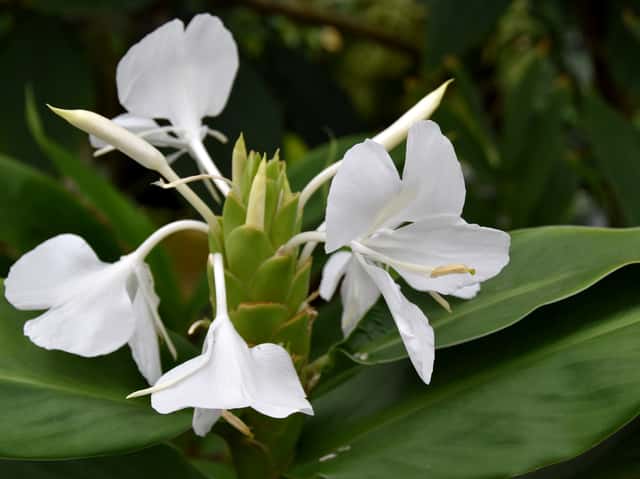
Ginger Lily / Garland Flower (genus) (Hedychium) is a easy-care plant from the Zingiberaceae family. Hedychium is a genus of tropical and subtropical flowering plants in the family Zingiberaceae, native to the Himalayan foothills and Southeast Asia. Prized for their bold, fragrant blooms in shades of white, yellow, orange, and red, these fast-growing rhizomatous perennials thrive in warm, humid env...
Ginger Lily / Garland Flower (genus) grows up to 1.8m, spread of 90cm, watering every 6 days, 7°C – 35°C, 60–85% humidity. It is suitable for indoor environments and safe for pets.
Unlike many tropical plants, Ginger Lily / Garland Flower (genus) tolerates watering mistakes. Best for beginners. Unlike many popular species, Ginger Lily / Garland Flower (genus) is safe to keep around pets. Without adequate drainage, root rot can develop within 12 days.
How to Care for Ginger Lily / Garland Flower (genus)?
TLDR: Ginger Lily / Garland Flower (genus) needs Bright indirect, watering every 6 days, and temperatures between 7-35°C with 60-85% humidity.
How Often Should You Water Ginger Lily / Garland Flower (genus)?
Water every 5-7 days during active growth, keeping soil evenly moist. Reduce watering significantly during winter dormancy. Yellowing leaves and soggy soil are signs of overwatering, which leads to root rot.
How Much Light Does Ginger Lily / Garland Flower (genus) Need?
Prefer full sun to partial shade — at least 4-6 hours of direct or bright indirect light daily. In hot climates, afternoon shade helps prevent leaf scorch. Indoors, place near a bright south- or east-facing window.
What Is the Best Soil for Ginger Lily / Garland Flower (genus)?
Thrive in rich, humus-dense, well-draining soil with high organic matter. Amend with compost or aged manure. Tolerates clay if drainage is adequate. Ideal pH 5.5-7.0.
What Pot Should You Use for Ginger Lily / Garland Flower (genus)?
Large ceramic or heavy plastic pots at least 40 cm (16 in) in diameter to accommodate spreading rhizomes. Ensure drainage holes. Use saucers to maintain humidity but empty after 30 minutes to prevent root rot.
Care Schedule
Fertilize
Every 30 days
Misting
Every 3 days
Repot
Every 730 days
What Is Ginger Lily / Garland Flower (genus) and Where Does It Come From?
Hedychium is a genus of tropical and subtropical flowering plants in the family Zingiberaceae, native to the Himalayan foothills and Southeast Asia. Prized for their bold, fragrant blooms in shades of white, yellow, orange, and red, these fast-growing rhizomatous perennials thrive in warm, humid environments. Notable species include H. coronarium (the national flower of Cuba) and H. gardnerianum (Kahili ginger). They are excellent garden specimen plants, pond-edge plantings, and container subjects.
How to Propagate Ginger Lily / Garland Flower (genus)?
Rhizome Division
Divide every 3-4 years to rejuvenate the plant and improve flowering. Sterilize cutting tools with rubbing alcohol to prevent fungal spread.
- 1 Dig up the clump carefully in early spring before new growth emerges
- 2 Divide rhizomes using a sharp, clean knife ensuring at least one bud per section
- 3 Replant divisions at the same depth in rich, moist soil
- 4 Water well and provide light shade until established
Materials needed:
How Big Does Ginger Lily / Garland Flower (genus) Grow?
TLDR: Ginger Lily / Garland Flower (genus) can reach up to 1.8m tall with Fast growth rate.
Max height
1.8m
Spread
90cm
Growth rate
Fast
Foliage
Deciduous
Plant Uses
Ornamental
Great for decoration
Aromatic
Pleasant fragrance
Medicinal
Medicinal properties
Medicinal Uses
- Roots used in traditional Asian medicine for headaches, fever, and anti-inflammatory purposes
- Essential oils from flowers used in aromatherapy
Culinary Uses
- Rhizomes are edible but mild-flavored; occasionally used as a ginger substitute in cooking
Is your plant showing symptoms?
Click on the symptom to discover possible causes:
What Diseases Commonly Affect Ginger Lily / Garland Flower (genus)?
TLDR: Ginger Lily / Garland Flower (genus) is susceptible to 6 known diseases. Monitor regularly for early detection.
Root Rot
Root rot is a serious fungal disease that affects the root system of plants, causing them to decay and die. It is primarily caused by overwatering, poor drainage, or soil-borne fungi such as Pythium, Phytophthora, Rhizoctonia, and Fusarium. The disease thrives in waterlogged conditions where roots are deprived of oxygen, making them susceptible to fungal infection.
Leaf Spot
Leaf spot is a common fungal disease caused by various pathogens including Alternaria, Ascochyta, Colletotrichum, Septoria, and Venturia. It primarily affects leaves, causing discolored spots that can lead to premature leaf drop if left untreated.
Scale Insects
Scale insects are small sap-sucking pests that appear as brown, shell-like bumps on plant stems and leaves. There are over 25 species, divided into armored (hard) and unarmored (soft) scales. They feed by piercing plant tissue and extracting sap, which weakens the plant and can lead to yellowing, stunted growth, and even death if left untreated. They also excrete honeydew, which attracts ants and promotes sooty mold growth.
Mealybugs
Mealybugs are small, soft-bodied insects covered with a white, waxy, cottony material. They are common pests of houseplants and outdoor plants in mild climates. These sap-sucking insects feed on plant tissue, causing damage, stunted growth, and can lead to plant death if left untreated. They produce sticky honeydew which attracts sooty mold.
Meaning & Symbolism
Hedychium coronarium, the white butterfly ginger, is the national flower of Cuba (Mariposa), symbolizing purity, secret love, and freedom. The genus name derives from the Greek hedys (sweet) and chion (snow).
Fun Facts
Hedychium coronarium is the national flower of Cuba, known as Mariposa, a symbol of purity and secret love
The genus name comes from Greek: hedys (sweet) + chion (snow), describing the fragrant white flowers
Some species like H. gardnerianum are considered invasive in New Zealand, Portugal, and Hawaii
The genus contains over 80 species, most native to the Himalayan foothills from India to southern China
Frequently asked questions
How often should I water Hedychium?
Is Hedychium toxic to cats and dogs?
Can Hedychium be grown indoors?
When does Hedychium bloom?
How do I propagate Hedychium?
Compare with similar plants
| Attribute | Difficulty | Light | Watering | Pet Safe |
|---|---|---|---|---|
| Field Maple | Easy | Bright indirect | 14d | ✓ |
| Silver Birch | Easy | Direct sun | 14d | ✓ |
| Cushion Bush | Easy | Direct sun | 14d | ✓ |
| Peruvian peppertree | Easy | Direct sun | 14d | ⚠️ |





