Saxifragaceae
Heuchera micrantha — Crevice Alumroot
Heuchera micrantha
A moderately low-maintenance plant once established. Water every 7 days on average, allowing the top inch of soil to dry between waterings. Reduce watering in winter. Apply a balanced slow-release fertiliser in spring. Remove spent flower stems and any damaged leaves to keep the plant tidy. Divide clumps every 3-4 years to maintain vigour.
Every 7 days
Partial shade
-15° - 30°C
40% - 70%
Categories
What is Crevice Alumroot?
Crevice Alumroot (Heuchera micrantha) is a medium-care plant from the Saxifragaceae family. Heuchera micrantha, commonly known as crevice alumroot or small-flowered alumroot, is a herbaceous perennial in the family Saxifragaceae native to the rocky cliffs, talus slopes, and crevices of western North America, from British Columbia south to California. It forms low, mounding rosettes of deep...
Crevice Alumroot grows up to 60cm, spread of 45cm, watering every 7 days, -15°C – 30°C, 40–70% humidity. It is suitable for indoor environments and safe for pets.
Unlike many popular species, Crevice Alumroot is safe to keep around pets. Without adequate drainage, root rot can develop within 14 days.
How to Care for Crevice Alumroot?
TLDR: Crevice Alumroot needs Partial shade, watering every 7 days, and temperatures between -15-30°C with 40-70% humidity.
How Often Should You Water Crevice Alumroot?
Water when the top 1–2 inches of soil feel dry. Avoid waterlogging — Heuchera roots are prone to rot in consistently wet conditions. Water more frequently during hot summers and reduce to every 10–14 days in winter.
How Much Light Does Crevice Alumroot Need?
Thrives in partial shade to dappled sunlight. Ideal in spots with morning sun and afternoon shade. Can tolerate more sun in cooler climates if soil moisture is maintained. Avoid intense afternoon sun, which can scorch the foliage.
What Is the Best Soil for Crevice Alumroot?
Plant in well-drained, humus-rich soil with a slightly acidic to neutral pH (5.5–7.0). Amend with grit or perlite to ensure excellent drainage. In containers, use a 2:1 mix of potting compost and perlite.
What Pot Should You Use for Crevice Alumroot?
Terracotta or unglazed ceramic pot with drainage holes — these allow the soil to breathe and prevent moisture build-up around the crown.
Care Schedule
Fertilize
Every 14 days
Misting
Every 3 days
Rotate
Every 7 days
Repot
Every 365 days
What Is Crevice Alumroot and Where Does It Come From?
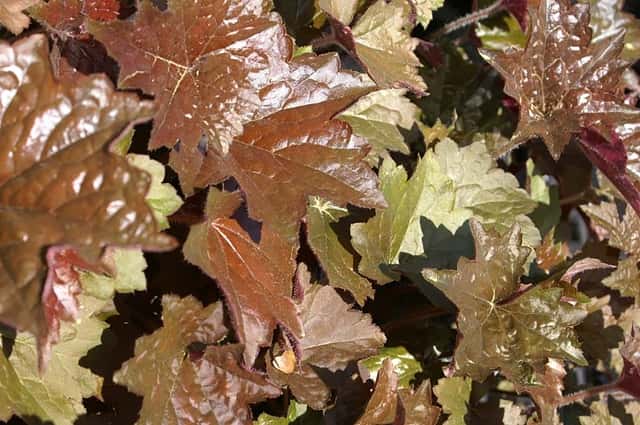
Heuchera micrantha, commonly known as crevice alumroot or small-flowered alumroot, is a herbaceous perennial in the family Saxifragaceae native to the rocky cliffs, talus slopes, and crevices of western North America, from British Columbia south to California. It forms low, mounding rosettes of deeply lobed, maple-like leaves in shades of green to bronzy-red, providing year-round ornamental interest. In late spring to early summer, slender wiry stems rise above the foliage bearing loose, airy panicles of tiny white to cream flowers that attract native bees and flies. It thrives in partial shade and well-drained, rocky soils, making it an excellent choice for rock gardens, shaded borders, and naturalistic plantings.
How Big Does Crevice Alumroot Grow?
TLDR: Crevice Alumroot can reach up to 60cm tall with Slow growth rate.
Max height
60cm
Spread
45cm
Growth rate
Slow
Foliage
Evergreen
Plant Uses
Ornamental
Great for decoration
Ground Cover
Soil coverage
Is your plant showing symptoms?
Click on the symptom to discover possible causes:
What Diseases Commonly Affect Crevice Alumroot?
TLDR: Crevice Alumroot is susceptible to 7 known diseases. Monitor regularly for early detection.
Root Rot
Root rot is a serious fungal disease that affects the root system of plants, causing them to decay and die. It is primarily caused by overwatering, poor drainage, or soil-borne fungi such as Pythium, Phytophthora, Rhizoctonia, and Fusarium. The disease thrives in waterlogged conditions where roots are deprived of oxygen, making them susceptible to fungal infection.
Phytophthora Root Rot
Disease caused by fungus-like organisms (oomycetes) that live in soil and can survive for years. It affects roots, stem, and crown of plants, being especially severe in waterlogged or poorly drained soils. It is the second most common cause of root rot in trees and shrubs.
Botrytis
Powdery Mildew
Powdery mildew is a common fungal disease caused by various fungi species including Erysiphe, Podosphaera, Oïdium, and Leveillula. It affects over 10,000 plant species worldwide. The disease thrives in warm, dry climates with high humidity and appears as a distinctive white powdery coating on plant surfaces.
Meaning & Symbolism
Resilience and adaptability — a symbol of thriving in adversity, growing in rocky crevices where little else can survive.
Fun Facts
The species name "micrantha" is Greek for "small-flowered," perfectly describing its dainty panicles of tiny blooms.
Heuchera micrantha grows naturally on vertical cliff faces and rocky crevices, anchoring itself where almost nothing else can grow.
Its flowers are an important early-season nectar source for native bees, flies, and other small pollinators in western North America.
Frequently asked questions
Is Heuchera micrantha toxic to pets?
How often should I water Heuchera micrantha?
Can I grow Heuchera micrantha in a container?
Compare with similar plants
| Attribute | Difficulty | Light | Watering | Pet Safe |
|---|---|---|---|---|
| Dark Fieldcap | Medium | Low light | 2d | ⚠️ |
| Azalea | Medium | Partial shade | 3d | ⚠️ |
| Bougainvillea | Medium | Direct sun | 7d | ⚠️ |
| Wild Lettuce | Medium | Direct sun | 7d | ⚠️ |



