Malvaceae
Kenaf: Edible Plant
Hibiscus cannabinus
Give kenaf full sun and warm temperatures; it will not tolerate shade. Keep soil consistently moist but well-drained, feeding regularly during its rapid growth phase, and watch for waterlogging, which invites root and stem rot.
Every 5 days
Direct sun
18° - 35°C
50% - 80%
Categories
What is Kenaf?
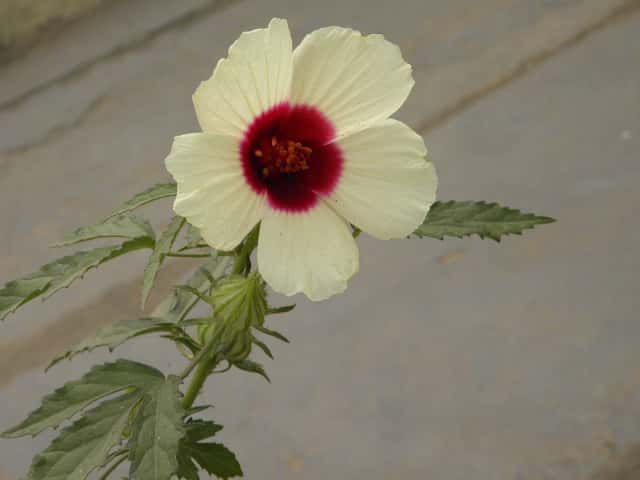
Kenaf (Hibiscus cannabinus) is a easy-care plant from the Malvaceae family. Kenaf is a fast-growing, upright hibiscus relative in the mallow family, cultivated worldwide since prehistoric times for its strong bast fiber. It produces tall, cane-like stems topped with pale yellow, hibiscus-like flowers with dark purple centers, maturing from seed to full height in just three...
Kenaf grows up to 3.0m, spread of 90cm, watering every 5 days, 18°C – 35°C, 50–80% humidity. It is not suitable for indoor environments and safe for pets.
Unlike many tropical plants, Kenaf tolerates watering mistakes. Best for beginners. Unlike many popular species, Kenaf is safe to keep around pets.
How to Care for Kenaf?
TLDR: Kenaf needs Direct sun, watering every 5 days, and temperatures between 18-35°C with 50-80% humidity.
How Often Should You Water Kenaf?
Water enough to keep soil evenly moist, especially in heat, but let the top layer dry slightly between waterings — soggy, poorly drained soil quickly leads to root rot.
How Much Light Does Kenaf Need?
Needs full, direct sun for most of the day; it cannot grow well in shade or low light.
What Is the Best Soil for Kenaf?
Thrives in well-drained sandy loam with a near-neutral pH (6.0-7.0); heavy, waterlogged soils cause disease problems.
What Pot Should You Use for Kenaf?
Best grown directly in garden beds or large, deep containers with excellent drainage, since it develops a long taproot and dislikes waterlogging.
Care Schedule
Fertilize
Every 30 days
Misting
Every 3 days
Rotate
Every 7 days
Repot
Every 365 days
What Is Kenaf and Where Does It Come From?
Kenaf is a fast-growing, upright hibiscus relative in the mallow family, cultivated worldwide since prehistoric times for its strong bast fiber. It produces tall, cane-like stems topped with pale yellow, hibiscus-like flowers with dark purple centers, maturing from seed to full height in just three to four months.
How to Propagate Kenaf?
Seed sowing
- Sow in early spring once soil is warm
- Needs a long, warm growing season of 4-5 months
- 1 Prepare warm bed
Sow seeds directly outdoors after last frost, or start in a warm greenhouse at 20-25C.
- 2 Thin seedlings
Thin to final spacing once seedlings have true leaves.
Materials needed:
Half-ripe cuttings
- Take cuttings in mid-to-late summer
- Use a cold frame to maintain humidity
- 1 Take cutting
Cut a half-ripe (semi-hardwood) stem section in July or August.
- 2 Root in frame
Place in a humid cold frame until roots form.
Materials needed:
How Big Does Kenaf Grow?
TLDR: Kenaf can reach up to 3.0m tall with Fast growth rate.
Max height
3.0m
Spread
90cm
Growth rate
Fast
Foliage
Deciduous
Plant Uses
Edible
Can be consumed
Medicinal
Medicinal properties
Medicinal Uses
- Leaves used traditionally as a purgative
- Seeds regarded as an aphrodisiac in folk medicine
- Used traditionally for biliousness, dysentery and coughs
Culinary Uses
- Young leaves cooked as a spinach-like vegetable
- Seeds roasted or ground
- Flowers and roots eaten in some regions
- Seed oil used for cooking
Is your plant showing symptoms?
Click on the symptom to discover possible causes:
What Diseases Commonly Affect Kenaf?
TLDR: Kenaf is susceptible to 8 known diseases. Monitor regularly for early detection.
Aphids
Aphids are small, soft-bodied, pear-shaped insects (1/16 to 1/8 inch long) that feed by sucking nutrient-rich sap from plants. They reproduce rapidly and can quickly weaken plants, causing distorted growth and transmitting plant viruses. Aphids come in various colors including green, black, red, yellow, brown, and gray. They secrete honeydew, a sticky substance that attracts ants and encourages sooty mold growth.
Whiteflies
Whiteflies are small, soft-bodied, winged insects closely related to aphids and mealybugs. They are moth-like in appearance, about 1/16 inch long, triangular in shape, and gray-white in color. These sap-sucking pests feed on plant tissue, causing yellowing, stunted growth, and wilting. They also excrete honeydew, which attracts ants and promotes sooty mold growth. Whiteflies can transmit serious plant viruses.
Spider Mites
Spider mites are tiny arachnids (less than 1/20 inch long) related to spiders and ticks that feed on plant sap. They thrive in hot, dry conditions and can cause significant damage to ornamental and vegetable plants. During severe infestations, crop losses can reach 14% or higher as these pests disrupt vital plant processes including photosynthesis, carbon dioxide absorption, and transpiration.
Root Rot
Root rot is a serious fungal disease that affects the root system of plants, causing them to decay and die. It is primarily caused by overwatering, poor drainage, or soil-borne fungi such as Pythium, Phytophthora, Rhizoctonia, and Fusarium. The disease thrives in waterlogged conditions where roots are deprived of oxygen, making them susceptible to fungal infection.
Meaning & Symbolism
In many of the regions where it is grown, kenaf is prized as a symbol of resourcefulness and renewal, since its fast-growing stalks are transformed into fiber, paper, and rope each season.
Compare with similar plants
| Attribute | Difficulty | Light | Watering | Pet Safe |
|---|---|---|---|---|
| Field Maple | Easy | Bright indirect | 14d | ✓ |
| Silver Birch | Easy | Direct sun | 14d | ✓ |
| Cushion Bush | Easy | Direct sun | 14d | ✓ |
| Peruvian peppertree | Easy | Direct sun | 14d | ⚠️ |





