Verbenaceae
Lemon verbena: Aromatic Plant
Aloysia citrodora
Thrives in full sun and temperate climates; it is sensitive to intense cold and waterlogging. It grows well in pots on sunny balconies and terraces, provided the soil is well-drained and rich in organic matter.
Every 7 days
Direct sun
5° - 35°C
35% - 60%
Categories
What is Lemon verbena?
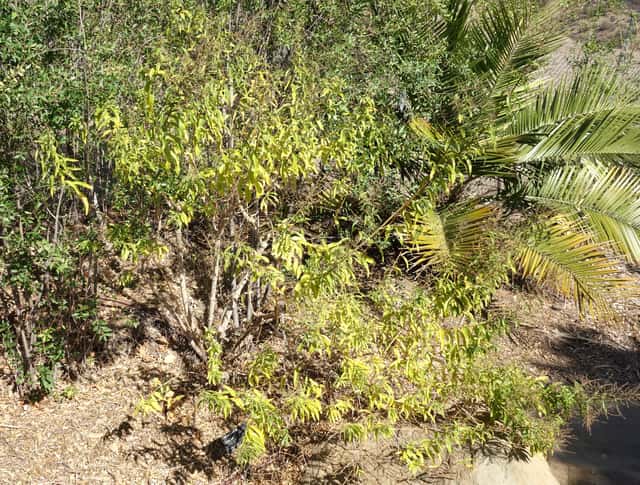
Lemon verbena (Aloysia citrodora) is a medium-care plant from the Verbenaceae family. An aromatic perennial shrub native to South America (Argentina, Chile, Peru, and Bolivia), belonging to the Verbenaceae family. The lanceolate leaves, 5-8 cm long, release an intense lemon scent when rubbed. It blooms between summer and early autumn with small white or purplish flowers gathered in s...
Lemon verbena grows up to 3.0m, spread of 250cm, watering every 7 days, 5°C – 35°C, 35–60% humidity. It is suitable for indoor environments and not safe for pets.
Without precautions, ingestion can cause irritation in pets. Keep out of reach of cats and dogs. Without adequate drainage, root rot can develop within 14 days.
How to Care for Lemon verbena?
TLDR: Lemon verbena needs Direct sun, watering every 7 days, and temperatures between 5-35°C with 35-60% humidity.
How Often Should You Water Lemon verbena?
Water regularly from March to September, allowing the soil surface to dry slightly between waterings; drastically reduce watering in winter, keeping the substrate just barely moist. Avoid waterlogging, as it is the most common cause of root rot.
How Much Light Does Lemon verbena Need?
Place the plant in full sun in a sheltered spot, ideally against a south-facing wall; it only tolerates partial shade in the hottest climates.
What Is the Best Soil for Lemon verbena?
Prefers soil rich in organic matter, sandy and well-drained; for pots, use a universal potting mix blended with perlite to improve drainage.
What Pot Should You Use for Lemon verbena?
Choose a deep pot with large drainage holes to encourage root development and prevent waterlogging; in winter, move it to a bright, cool, sheltered location.
Care Schedule
Fertilize
Every 90 days
Misting
Every 7 days
Repot
Every 730 days
What Is Lemon verbena and Where Does It Come From?
An aromatic perennial shrub native to South America (Argentina, Chile, Peru, and Bolivia), belonging to the Verbenaceae family. The lanceolate leaves, 5-8 cm long, release an intense lemon scent when rubbed. It blooms between summer and early autumn with small white or purplish flowers gathered in spikes. Introduced to Europe in the 17th century by Spanish and Portuguese sailors, it is now cultivated primarily for culinary use, herbal medicine, and as an aromatic ornamental balcony plant.
How Big Does Lemon verbena Grow?
TLDR: Lemon verbena can reach up to 3.0m tall with Fast growth rate.
Max height
3.0m
Spread
2.5m
Growth rate
Fast
Foliage
Deciduous
Warning: Toxic Plant
This plant can be toxic if ingested. Keep out of reach of:
Plant Uses
Aromatic
Pleasant fragrance
Edible
Can be consumed
Medicinal
Medicinal properties
Ornamental
Great for decoration
Medicinal Uses
- Digestive and carminative
- Antispasmodic and relaxing
- Promotes sleep and reduces anxiety
- Decongestant eye compresses
Culinary Uses
- Infusions and herbal teas
- Flavoring for liqueurs and refreshing drinks
- Flavoring for fish, poultry, and desserts
- Jams and yogurts
Is your plant showing symptoms?
Click on the symptom to discover possible causes:
What Diseases Commonly Affect Lemon verbena?
TLDR: Lemon verbena is susceptible to 9 known diseases. Monitor regularly for early detection.
Root Rot
Root rot is a serious fungal disease that affects the root system of plants, causing them to decay and die. It is primarily caused by overwatering, poor drainage, or soil-borne fungi such as Pythium, Phytophthora, Rhizoctonia, and Fusarium. The disease thrives in waterlogged conditions where roots are deprived of oxygen, making them susceptible to fungal infection.
Overwatering
Overwatering occurs when plants receive too much water, depriving roots of oxygen and causing root rot. This environmental stress is one of the most common causes of houseplant death, as waterlogged soil prevents roots from breathing and functioning properly.
Powdery Mildew
Powdery mildew is a common fungal disease caused by various fungi species including Erysiphe, Podosphaera, Oïdium, and Leveillula. It affects over 10,000 plant species worldwide. The disease thrives in warm, dry climates with high humidity and appears as a distinctive white powdery coating on plant surfaces.
Aphids
Aphids are small, soft-bodied, pear-shaped insects (1/16 to 1/8 inch long) that feed by sucking nutrient-rich sap from plants. They reproduce rapidly and can quickly weaken plants, causing distorted growth and transmitting plant viruses. Aphids come in various colors including green, black, red, yellow, brown, and gray. They secrete honeydew, a sticky substance that attracts ants and encourages sooty mold growth.
Meaning & Symbolism
The name 'Herb Louisa' honors Maria Luisa of Parma, Princess of Asturias; introduced to Europe in the 18th century, it has long been a symbol of hospitality and domestic well-being thanks to its refreshing fragrance.
Compare with similar plants
| Attribute | Difficulty | Light | Watering | Pet Safe |
|---|---|---|---|---|
| Dark Fieldcap | Medium | Low light | 2d | ⚠️ |
| Azalea | Medium | Partial shade | 3d | ⚠️ |
| Bougainvillea | Medium | Direct sun | 7d | ⚠️ |
| Wild Lettuce | Medium | Direct sun | 7d | ⚠️ |



