Rosaceae
Himalayan Blackberry (Rubus armeniacus)
Rubus armeniacus
Himalayan Blackberry is an extremely low-maintenance plant outdoors. It thrives in full sun but tolerates partial shade. Water young plants regularly until established; mature plants are highly drought-tolerant thanks to deep root systems. Plant in well-drained loamy soil with a pH of 5.5–7.0. Prune old canes (floricanes) to the ground after fruiting each year to encourage vigorous new growth. Fertilize lightly in early spring with a balanced fertilizer. Be mindful of its invasive tendency — root fragments resprout readily, so contain spread by removing suckers promptly.
Every 7 days
Direct sun
-18° - 37°C
40% - 70%
Categories
What is Himalayan Blackberry?
Himalayan Blackberry (Rubus armeniacus) is a easy-care plant from the Rosaceae family. Rubus armeniacus, commonly known as Himalayan Blackberry, is a vigorous, fast-growing, semi-evergreen shrub native to Armenia and northern Iran. Its arching biennial canes can reach 3–10 metres in length and are lined with stout thorns. Despite its common name, it is not native to the Himalayas; it...
Himalayan Blackberry grows up to 3.0m, spread of 400cm, watering every 7 days, -18°C – 37°C, 40–70% humidity. It is not suitable for indoor environments and safe for pets.
Unlike many tropical plants, Himalayan Blackberry tolerates watering mistakes. Best for beginners. Unlike many popular species, Himalayan Blackberry is safe to keep around pets.
How to Care for Himalayan Blackberry?
TLDR: Himalayan Blackberry needs Direct sun, watering every 7 days, and temperatures between -18-37°C with 40-70% humidity.
How Often Should You Water Himalayan Blackberry?
Water newly planted canes every 3–7 days during the first growing season. Once established, Himalayan Blackberry is remarkably drought-tolerant and rarely needs supplemental irrigation except during extended dry spells. Overwatering can promote root rot, so allow the soil to partially dry between waterings.
How Much Light Does Himalayan Blackberry Need?
Provide full sun (6 or more hours of direct sunlight per day) for the best fruit production. The plant tolerates partial shade but will produce fewer and smaller berries. Avoid deep shade, which encourages leggy growth and increases susceptibility to powdery mildew.
What Is the Best Soil for Himalayan Blackberry?
Himalayan Blackberry adapts to a wide range of soils including sandy, loamy, and clay textures. It prefers well-drained, moderately fertile loam with a slightly acidic to neutral pH (5.5–7.0). It can colonise poor, disturbed, or nutrient-deficient soils, which contributes to its invasive success. Improve drainage in clay-heavy sites by incorporating coarse sand or organic matter before planting.
What Pot Should You Use for Himalayan Blackberry?
Not typically grown in containers due to its vigorous, sprawling growth habit. If attempted, use a very large (minimum 80–100 L) sturdy container with drainage holes. Terracotta or heavy-duty polyethylene pots work best. Be prepared for aggressive root expansion.
Care Schedule
Fertilize
Every 90 days
What Is Himalayan Blackberry and Where Does It Come From?
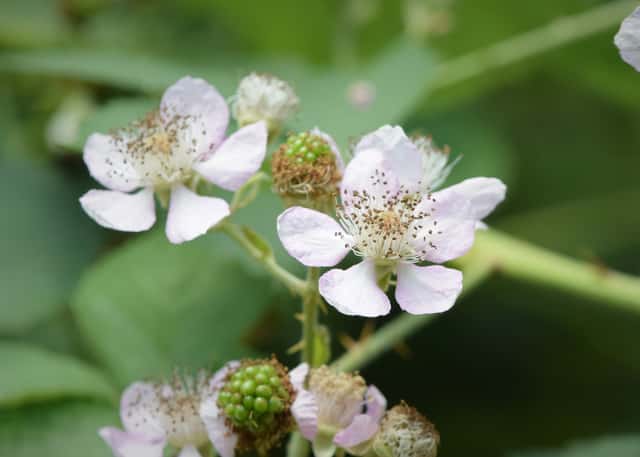
Rubus armeniacus, commonly known as Himalayan Blackberry, is a vigorous, fast-growing, semi-evergreen shrub native to Armenia and northern Iran. Its arching biennial canes can reach 3–10 metres in length and are lined with stout thorns. Despite its common name, it is not native to the Himalayas; it was introduced to North America in 1885 and has since become one of the most widespread invasive shrubs in temperate regions worldwide. The plant produces attractive white to pale pink flowers in late spring and early summer, followed by large, sweet, jet-black berries that are prized for eating fresh, making jams, pies, and beverages. Its root bark and leaves also have a long history of medicinal use as an astringent remedy.
How to Propagate Himalayan Blackberry?
Tip Layering
Tip layering is the easiest and most reliable propagation method for Himalayan Blackberry. Mark rooted tips clearly before severing.
- 1 Select a long, flexible current-year cane in July
- 2 Bend the tip down to the soil and bury the last 10–15 cm in a small hole about 10 cm deep
- 3 Secure with a wire pin or stone
- 4 Water the buried tip regularly
- 5 By autumn, the tip will have rooted; sever from the parent cane and transplant in spring
Materials needed:
Semi-hardwood Cutting
Keep cuttings out of direct sun until rooted. Mist lightly each morning to maintain humidity.
- 1 Take 15–20 cm semi-hardwood cuttings in mid-summer
- 2 Remove lower leaves, retaining 2–3 at the tip
- 3 Dip the base in rooting hormone powder
- 4 Insert into a moist propagation mix of perlite and peat
- 5 Place in a cold frame or shaded area and keep moist
Materials needed:
How Big Does Himalayan Blackberry Grow?
TLDR: Himalayan Blackberry can reach up to 3.0m tall with Fast growth rate.
Max height
3.0m
Spread
4.0m
Growth rate
Fast
Foliage
Semi-evergreen
Plant Uses
Edible
Can be consumed
Medicinal
Medicinal properties
Medicinal Uses
- Leaves and root bark used as astringent tea for diarrhea and dysentery
- Leaf infusion used as gargle for sore throats and mouth ulcers
- Traditional tonic and diuretic in European folk medicine
Culinary Uses
- Fresh berries eaten out of hand
- Blackberry jam, jelly, and preserves
- Blackberry pie and crumble
- Blackberry wine, cordial, and liqueur
- Berry smoothies and syrups
Is your plant showing symptoms?
Click on the symptom to discover possible causes:
What Diseases Commonly Affect Himalayan Blackberry?
TLDR: Himalayan Blackberry is susceptible to 4 known diseases. Monitor regularly for early detection.
Rust
Rust is a common fungal disease caused by fungi in the order Pucciniales that affects a wide variety of plants. The disease gets its name from the characteristic orange, yellow, or reddish-brown pustules that appear on leaves, resembling metal rust. This obligate fungal parasite requires living plants to survive and can cause significant economic losses in agricultural crops.
Aphids
Aphids are small, soft-bodied, pear-shaped insects (1/16 to 1/8 inch long) that feed by sucking nutrient-rich sap from plants. They reproduce rapidly and can quickly weaken plants, causing distorted growth and transmitting plant viruses. Aphids come in various colors including green, black, red, yellow, brown, and gray. They secrete honeydew, a sticky substance that attracts ants and encourages sooty mold growth.
Powdery Mildew
Powdery mildew is a common fungal disease caused by various fungi species including Erysiphe, Podosphaera, Oïdium, and Leveillula. It affects over 10,000 plant species worldwide. The disease thrives in warm, dry climates with high humidity and appears as a distinctive white powdery coating on plant surfaces.
Botrytis
Meaning & Symbolism
In folk traditions, blackberry canes have symbolised protection, resilience, and wild abundance. The thorny thickets are associated with boundaries and perseverance in Celtic and European folklore.
Fun Facts
Canes can reach up to 10 metres in length in a single season, making it one of the fastest-growing shrubs in temperate regions.
Luther Burbank introduced Himalayan Blackberry to North America in 1885, originally intending it as a cultivated fruit crop.
The berries are technically not true berries but aggregate fruits, each composed of many small drupelets.
Dense blackberry thickets provide important nesting habitat and food for birds, deer, and small mammals, even though the plant is invasive.
Frequently asked questions
Are Himalayan Blackberry berries edible?
How do I control Himalayan Blackberry?
When do Himalayan Blackberries fruit?
Is Himalayan Blackberry invasive?
How do I prune Himalayan Blackberry?
Compare with similar plants
| Attribute | Difficulty | Light | Watering | Pet Safe |
|---|---|---|---|---|
| Field Maple | Easy | Bright indirect | 14d | ✓ |
| Silver Birch | Easy | Direct sun | 14d | ✓ |
| Cushion Bush | Easy | Direct sun | 14d | ✓ |
| Peruvian peppertree | Easy | Direct sun | 14d | ⚠️ |





