Myrtaceae
Bracelet Honey Myrtle: Aromatic Plant
Melaleuca armillaris
Requires full sun exposure and well-drained soil. Although it is somewhat drought-tolerant once established, regular watering promotes vigorous growth.
Every 7 days
Bright indirect
5° - 35°C
40% - 70%
Categories
What is Bracelet Honey Myrtle?
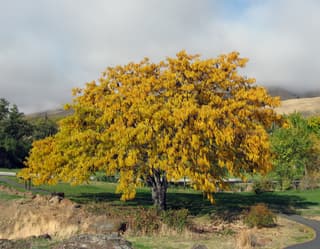
Bracelet Honey Myrtle (Melaleuca armillaris) is a medium-care plant from the Myrtaceae family. Melaleuca armillaris, commonly known as the Bracelet Honey Myrtle, is a large evergreen shrub or small tree native to Australia. It is distinguished by its gray, papery bark that peels over time and its fine, almost needle-like foliage. In summer, it produces cylindrical white flower spikes resembli...
Bracelet Honey Myrtle grows up to 5.0m, spread of 400cm, watering every 7 days, 5°C – 35°C, 40–70% humidity. It is suitable for indoor environments and not safe for pets.
Without precautions, ingestion can cause irritation in pets. Keep out of reach of cats and dogs. Without adequate drainage, root rot can develop within 14 days.
How to Care for Bracelet Honey Myrtle?
TLDR: Bracelet Honey Myrtle needs Bright indirect, watering every 7 days, and temperatures between 5-35°C with 40-70% humidity.
How Often Should You Water Bracelet Honey Myrtle?
Allow the top inch (2 cm) of soil to dry out between waterings. Never allow the root ball to dry out completely.
How Much Light Does Bracelet Honey Myrtle Need?
Place the plant in the sunniest spot possible. Insufficient light can reduce flowering and cause the foliage to become sparse.
What Is the Best Soil for Bracelet Honey Myrtle?
Use a high-quality potting mix combined with coarse sand or perlite to ensure excellent drainage.
What Pot Should You Use for Bracelet Honey Myrtle?
A large terracotta pot with ample drainage holes to prevent waterlogging.
Care Schedule
Fertilize
Every 30 days
Misting
Every 7 days
Rotate
Every 14 days
Repot
Every 730 days
What Is Bracelet Honey Myrtle and Where Does It Come From?
Melaleuca armillaris, commonly known as the Bracelet Honey Myrtle, is a large evergreen shrub or small tree native to Australia. It is distinguished by its gray, papery bark that peels over time and its fine, almost needle-like foliage. In summer, it produces cylindrical white flower spikes resembling bottlebrushes, which are highly attractive to pollinators. It is a hardy species, often used for windbreaks or as an ornamental specimen in Mediterranean climates.
How to Propagate Bracelet Honey Myrtle?
Semi-hardwood cuttings
- Use bottom heat to speed up rooting.
- Avoid direct sunlight exposure during the rooting phase.
- 1 Taking the cutting
Cut semi-mature stems 4 to 6 inches (10 to 15 cm) long.
- 2 Preparation
Remove leaves from the lower half and dip the base in rooting hormone.
- 3 Planting
Plant in a mixture of sand and peat, keep moist and covered to maintain humidity.
Materials needed:
Sowing seeds
- The 'bog method' (placing the pot in a saucer of water) works well for Melaleuca.
- 1 Collection
Harvest the woody seed capsules and let them dry until they release the fine seeds.
- 2 Sowing
Spread the seeds on the surface of a fine seed-starting mix without covering them.
- 3 Watering
Water by misting to avoid displacing the seeds and keep in a warm place.
Materials needed:
How Big Does Bracelet Honey Myrtle Grow?
TLDR: Bracelet Honey Myrtle can reach up to 5.0m tall with Fast growth rate.
Max height
5.0m
Spread
4.0m
Growth rate
Fast
Foliage
Evergreen
Warning: Toxic Plant
This plant can be toxic if ingested. Keep out of reach of:
Plant Uses
Ornamental
Great for decoration
Aromatic
Pleasant fragrance
Medicinal Uses
- The essential oil extracted from the leaves possesses antiseptic and antibacterial properties.
Is your plant showing symptoms?
Click on the symptom to discover possible causes:
Meaning & Symbolism
Often associated with purification and healing in Australian traditions.
Compare with similar plants
| Attribute | Difficulty | Light | Watering | Pet Safe |
|---|---|---|---|---|
| Azalea | Medium | Partial shade | 3d | ⚠️ |
| Wild Lettuce | Medium | Direct sun | 7d | ⚠️ |
| Cape Primrose | Medium | Partial shade | 7d | ✓ |
| Honey Locust | Medium | Direct sun | 14d | ✓ |