Araceae
Philodendron brandtianum (Silver Leaf Philodendron)
Philodendron brandtianum
Easy-care houseplant: prefers bright indirect light, moderate watering once the top 2-3 inches of soil dry out, and high humidity. It is toxic if ingested due to calcium oxalate crystals.
Every 7 days
Partial shade
15° - 32°C
60% - 80%
Categories
What is Silver Leaf Philodendron?
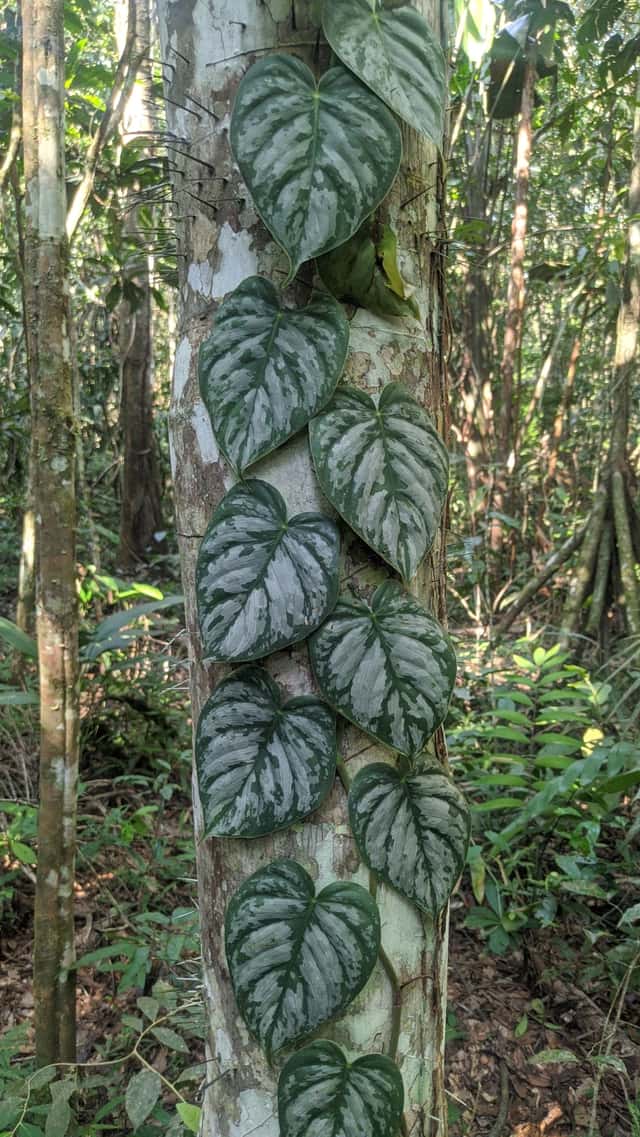
Silver Leaf Philodendron (Philodendron brandtianum) is a easy-care plant from the Araceae family. Philodendron brandtianum, known as the Silver Leaf Philodendron, is a climbing aroid native to the tropical rainforests of Brazil, Peru, Bolivia, Ecuador, and Colombia. Its heart-shaped, olive-green leaves are marked with striking silvery patches created by leaf structure rather than pigment. A fast...
Silver Leaf Philodendron grows up to 1.5m, watering every 7 days, 15°C – 32°C, 60–80% humidity. It is suitable for indoor environments and not safe for pets.
Unlike many tropical plants, Silver Leaf Philodendron tolerates watering mistakes. Best for beginners. Without precautions, ingestion can cause irritation in pets. Keep out of reach of cats and dogs. Without adequate drainage, root rot can develop within 14 days.
How to Care for Silver Leaf Philodendron?
TLDR: Silver Leaf Philodendron needs Partial shade, watering every 7 days, and temperatures between 15-32°C with 60-80% humidity.
How Often Should You Water Silver Leaf Philodendron?
Water when the top 2-3 inches of soil are dry, typically 2-3 times a week in summer and once weekly in winter; avoid overwatering to prevent root rot.
How Much Light Does Silver Leaf Philodendron Need?
Provide bright, indirect light such as an east- or west-facing window; avoid direct sun, which scorches the leaves.
What Is the Best Soil for Silver Leaf Philodendron?
Plant in a well-draining, fertile mix, such as potting soil combined with perlite and coconut coir.
What Pot Should You Use for Silver Leaf Philodendron?
A container with drainage holes, ideally a hanging basket or a pot with a moss pole for climbing.
Care Schedule
Fertilize
Every 30 days
Repot
Every 730 days
What Is Silver Leaf Philodendron and Where Does It Come From?
Philodendron brandtianum, known as the Silver Leaf Philodendron, is a climbing aroid native to the tropical rainforests of Brazil, Peru, Bolivia, Ecuador, and Colombia. Its heart-shaped, olive-green leaves are marked with striking silvery patches created by leaf structure rather than pigment. A fast-growing vine, it thrives climbing on moss poles or trailing from hanging baskets, and adapts well to indoor cultivation.
How to Propagate Silver Leaf Philodendron?
Water stem cutting propagation
Use clean, sharp scissors to prevent contamination; water lightly after transplanting to avoid stressing the new roots.
- 1 Cut a healthy stem section with at least one node and one leaf
- 2 Place the cutting in a container of clean water, submerging the node
- 3 Change the water weekly and keep in bright indirect light
- 4 Transplant into soil once roots reach 3-5 cm (1-2 in) long
Materials needed:
How Big Does Silver Leaf Philodendron Grow?
TLDR: Silver Leaf Philodendron can reach up to 1.5m tall with Fast growth rate.
Max height
1.5m
Growth rate
Fast
Foliage
Evergreen
Warning: Toxic Plant
This plant can be toxic if ingested. Keep out of reach of:
Plant Uses
Ornamental
Great for decoration
Is your plant showing symptoms?
Click on the symptom to discover possible causes:
What Diseases Commonly Affect Silver Leaf Philodendron?
TLDR: Silver Leaf Philodendron is susceptible to 11 known diseases. Monitor regularly for early detection.
Root Rot
Root rot is a serious fungal disease that affects the root system of plants, causing them to decay and die. It is primarily caused by overwatering, poor drainage, or soil-borne fungi such as Pythium, Phytophthora, Rhizoctonia, and Fusarium. The disease thrives in waterlogged conditions where roots are deprived of oxygen, making them susceptible to fungal infection.
Spider Mites
Spider mites are tiny arachnids (less than 1/20 inch long) related to spiders and ticks that feed on plant sap. They thrive in hot, dry conditions and can cause significant damage to ornamental and vegetable plants. During severe infestations, crop losses can reach 14% or higher as these pests disrupt vital plant processes including photosynthesis, carbon dioxide absorption, and transpiration.
Mealybugs
Mealybugs are small, soft-bodied insects covered with a white, waxy, cottony material. They are common pests of houseplants and outdoor plants in mild climates. These sap-sucking insects feed on plant tissue, causing damage, stunted growth, and can lead to plant death if left untreated. They produce sticky honeydew which attracts sooty mold.
Aphids
Aphids are small, soft-bodied, pear-shaped insects (1/16 to 1/8 inch long) that feed by sucking nutrient-rich sap from plants. They reproduce rapidly and can quickly weaken plants, causing distorted growth and transmitting plant viruses. Aphids come in various colors including green, black, red, yellow, brown, and gray. They secrete honeydew, a sticky substance that attracts ants and encourages sooty mold growth.
Fun Facts
The silvery patches on the leaves are not pigment - they are an optical effect created by the leaf cell structure reflecting light.
In the wild, it can grow as an epiphyte, hemiepiphyte, or terrestrial plant, climbing tree trunks in search of light.
It is a fast-growing vine, popular for vertical gardens and hanging baskets.
Frequently asked questions
How often should I water Philodendron brandtianum?
Is Philodendron brandtianum toxic to cats and dogs?
Why is the silver variegation fading on my plant?
What is the most common problem with this species?
Compare with similar plants
| Attribute | Difficulty | Light | Watering | Pet Safe |
|---|---|---|---|---|
| Field Maple | Easy | Bright indirect | 14d | ✓ |
| Silver Birch | Easy | Direct sun | 14d | ✓ |
| Cushion Bush | Easy | Direct sun | 14d | ✓ |
| Peruvian peppertree | Easy | Direct sun | 14d | ⚠️ |
Choose & Compare
Sources & References
- How to Plant, Grow, and Care For Philodendron Brandtianum - Epic Gardening
- Philodendron brandtianum - Plant Care 101 - Gardenia.net
- Como cultivar y cuidar una Philodendron brandtianum - PictureThis
- Ultimate Guide to Solving Philodendron Brandtianum Problems - Greg
- Philodendron Brandtianum Silver Leaf Care Guide - Garden Pals
- Guia de cuidados com o Philodendron - Urbangreen





