Hydrangeaceae
Smooth Hydrangea: How to Grow and Care for Hydrangea arborescens
Hydrangea arborescens
Plant in partial shade with morning sun. Water every 7 days, keeping soil consistently moist but well-drained. Prune hard in early spring to promote strong blooms. Fertilize monthly during growing season. WARNING: toxic to pets and humans if ingested.
Every 7 days
Partial shade
-20° - 35°C
50% - 70%
Categories
What is Smooth Hydrangea?
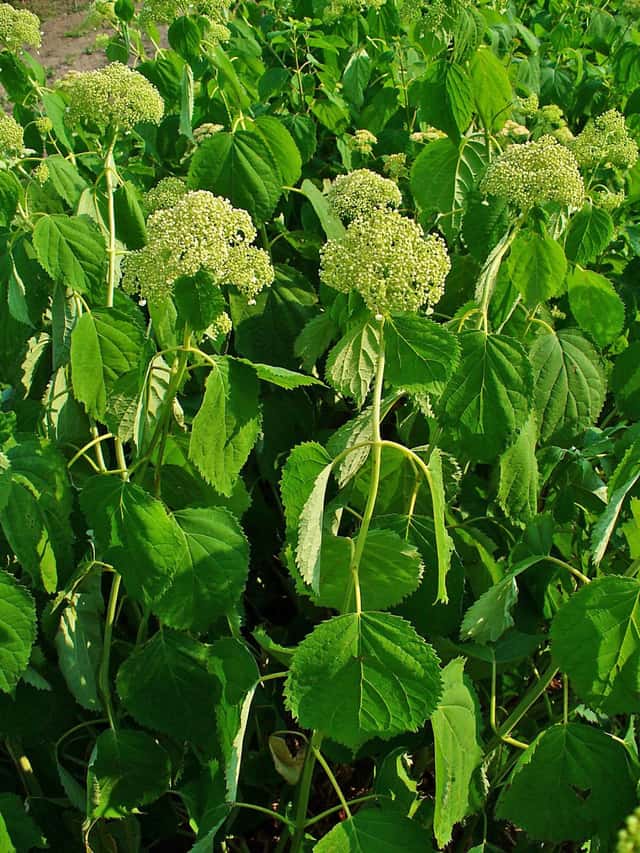
Smooth Hydrangea (Hydrangea arborescens) is a medium-care plant from the Hydrangeaceae family. Hydrangea arborescens, commonly known as Smooth Hydrangea or Wild Hydrangea, is a deciduous shrub native to the eastern United States. The 'Annabelle' cultivar is iconic for its massive, globe-shaped white flower heads reaching up to 30 cm across. Hardy to USDA zone 3, it is one of the most cold-tol...
Smooth Hydrangea grows up to 1.5m, spread of 150cm, watering every 7 days, -20°C – 35°C, 50–70% humidity. It is not suitable for indoor environments and not safe for pets.
Without precautions, ingestion can cause irritation in pets. Keep out of reach of cats and dogs.
How to Care for Smooth Hydrangea?
TLDR: Smooth Hydrangea needs Partial shade, watering every 7 days, and temperatures between -20-35°C with 50-70% humidity.
How Often Should You Water Smooth Hydrangea?
Water every 7 days or when the top 2 inches of soil are dry. Never let the soil become waterlogged. Increase frequency during heat waves.
How Much Light Does Smooth Hydrangea Need?
Thrives in partial shade — morning sun with afternoon shade is ideal. Can tolerate full sun with adequate moisture but avoid harsh afternoon exposure.
What Is the Best Soil for Smooth Hydrangea?
Use rich, organic, well-draining loamy soil with a slightly acidic pH of 5–7. Amend with compost to improve moisture retention.
What Pot Should You Use for Smooth Hydrangea?
Ceramic or terracotta pot with drainage holes. Best grown in-ground.
Care Schedule
Fertilize
Every 30 days
What Is Smooth Hydrangea and Where Does It Come From?
Hydrangea arborescens, commonly known as Smooth Hydrangea or Wild Hydrangea, is a deciduous shrub native to the eastern United States. The 'Annabelle' cultivar is iconic for its massive, globe-shaped white flower heads reaching up to 30 cm across. Hardy to USDA zone 3, it is one of the most cold-tolerant hydrangeas available.
How Big Does Smooth Hydrangea Grow?
TLDR: Smooth Hydrangea can reach up to 1.5m tall with Fast growth rate.
Max height
1.5m
Spread
1.5m
Growth rate
Fast
Foliage
Deciduous
Warning: Toxic Plant
This plant can be toxic if ingested. Keep out of reach of:
Plant Uses
Ornamental
Great for decoration
Is your plant showing symptoms?
Click on the symptom to discover possible causes:
What Diseases Commonly Affect Smooth Hydrangea?
TLDR: Smooth Hydrangea is susceptible to 9 known diseases. Monitor regularly for early detection.
Bacterial Leaf Spot
Bacterial leaf spot is a plant disease caused by bacteria in the Xanthomonas and Pseudomonas genera that affects various ornamental and edible plants. The bacteria infect leaves through wounds or natural openings, causing characteristic lesions that can lead to premature leaf drop and plant weakening.
Rust
Rust is a common fungal disease caused by fungi in the order Pucciniales that affects a wide variety of plants. The disease gets its name from the characteristic orange, yellow, or reddish-brown pustules that appear on leaves, resembling metal rust. This obligate fungal parasite requires living plants to survive and can cause significant economic losses in agricultural crops.
Powdery Mildew
Powdery mildew is a common fungal disease caused by various fungi species including Erysiphe, Podosphaera, Oïdium, and Leveillula. It affects over 10,000 plant species worldwide. The disease thrives in warm, dry climates with high humidity and appears as a distinctive white powdery coating on plant surfaces.
Gray Mold (Botrytis Blight)
Gray mold, caused by the fungus Botrytis cinerea, is one of the most common fungal diseases in plants. It affects over 200 plant species, including ornamentals, vegetables, fruits, and houseplants. The disease thrives in cool, humid conditions with poor air circulation, causing grayish spots and soft rot on infected tissues.
Meaning & Symbolism
Grace, abundance, and resilience. White blooms symbolize purity and heartfelt emotion.
Fun Facts
The Annabelle cultivar produces flower heads up to 12 inches across — bigger than a softball!
Unlike most hydrangeas, Smooth Hydrangea blooms on new wood, so a hard spring pruning guarantees a stunning display.
It is one of the most cold-hardy hydrangeas, surviving temperatures as low as -20°F (USDA zone 3).
Frequently asked questions
Is Smooth Hydrangea toxic to dogs and cats?
When should I prune Smooth Hydrangea?
Why are my flowers turning green?
Compare with similar plants
| Attribute | Difficulty | Light | Watering | Pet Safe |
|---|---|---|---|---|
| Dark Fieldcap | Medium | Low light | 2d | ⚠️ |
| Azalea | Medium | Partial shade | 3d | ⚠️ |
| Bougainvillea | Medium | Direct sun | 7d | ⚠️ |
| Wild Lettuce | Medium | Direct sun | 7d | ⚠️ |



