Hydrangeaceae
Mountain Hydrangea (Hydrangea serrata): Complete Care Guide
Hydrangea serrata
Plant in a spot with morning sun and afternoon shade. Keep soil consistently moist, watering approximately every 6 days. Use well-draining, slightly acidic soil rich in organic matter. Fertilize every 90 days during the growing season. Prune lightly after flowering. Protect from harsh afternoon sun.
Every 6 days
Partial shade
-13° - 35°C
50% - 70%
Categories
What is Mountain Hydrangea?
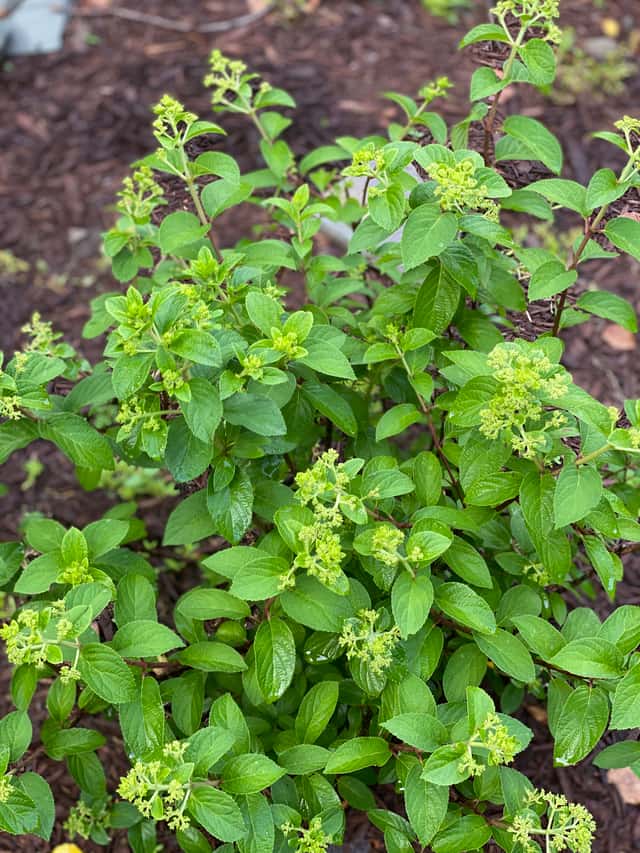
Mountain Hydrangea (Hydrangea serrata) is a medium-care plant from the Hydrangeaceae family. Hydrangea serrata, commonly known as mountain hydrangea, is a compact deciduous shrub native to the mountainous regions of Korea and Japan. It produces elegant lacecap flower heads in shades of blue, pink, white, and lavender, with colour determined by soil pH. Growing slowly to about 120 cm tall an...
Mountain Hydrangea grows up to 1.2m, spread of 150cm, watering every 6 days, -13°C – 35°C, 50–70% humidity. It is not suitable for indoor environments and not safe for pets.
Without precautions, ingestion can cause irritation in pets. Keep out of reach of cats and dogs.
How to Care for Mountain Hydrangea?
TLDR: Mountain Hydrangea needs Partial shade, watering every 6 days, and temperatures between -13-35°C with 50-70% humidity.
How Often Should You Water Mountain Hydrangea?
Water when the top inch of soil just begins to dry out — do not allow the soil to become waterlogged. During hot spells, increase watering frequency. Avoid overhead watering to reduce the risk of fungal diseases such as powdery mildew.
How Much Light Does Mountain Hydrangea Need?
Mountain hydrangea performs best in morning sun with afternoon shade, especially in warmer climates. In cooler northern regions full sun is tolerated. Insufficient light reduces blooming; too much direct afternoon sun can scorch leaves.
What Is the Best Soil for Mountain Hydrangea?
Use rich, well-draining soil with a pH of 4.5–7.0. Acidic soil (below pH 6.0) produces blue flowers; alkaline soil (above pH 6.5) yields pink blooms. Amend planting beds with compost or organic matter for best results.
What Pot Should You Use for Mountain Hydrangea?
A wide ceramic or terracotta pot with good drainage holes, at least 40 cm (16 in) in diameter. Avoid dark-coloured pots that absorb heat in sunny spots.
Care Schedule
Fertilize
Every 90 days
What Is Mountain Hydrangea and Where Does It Come From?
Hydrangea serrata, commonly known as mountain hydrangea, is a compact deciduous shrub native to the mountainous regions of Korea and Japan. It produces elegant lacecap flower heads in shades of blue, pink, white, and lavender, with colour determined by soil pH. Growing slowly to about 120 cm tall and 150 cm wide, it is prized for its delicate texture, long summer-to-fall bloom period, and adaptability to woodland and cottage garden settings.
How to Propagate Mountain Hydrangea?
Stem Cutting
Cover with a plastic bag or humidity dome to retain moisture. Avoid direct sun while rooting.
- 1 Take a semi-hardwood cutting of 10-15 cm with 2-3 pairs of leaves
- 2 Remove lower leaves and dip the cut end in rooting hormone powder
- 3 Plant in a moist mix of peat and perlite
- 4 Keep in bright indirect light with high humidity until roots develop
Materials needed:
Ground Layering
Mark the buried section so it is not disturbed during rooting.
- 1 Bend a flexible stem to the ground without detaching it from the parent plant
- 2 Bury the middle section about 5 cm deep in moist soil
- 3 Secure with a garden pin and water regularly
- 4 Once rooted, cut the stem from the parent plant and transplant
Materials needed:
How Big Does Mountain Hydrangea Grow?
TLDR: Mountain Hydrangea can reach up to 1.2m tall with Slow growth rate.
Max height
1.2m
Spread
1.5m
Growth rate
Slow
Foliage
Deciduous
Warning: Toxic Plant
This plant can be toxic if ingested. Keep out of reach of:
Plant Uses
Ornamental
Great for decoration
Medicinal Uses
- Leaves contain phyllodulcin, a natural sweetener studied for potential anti-diabetic and blood pressure-lowering properties
Culinary Uses
- Young leaves are brewed into amacha (甘茶), a sweet herbal tea served at Japanese Buddhist Hanamatsuri festivals to bathe statues of the Buddha
Is your plant showing symptoms?
Click on the symptom to discover possible causes:
What Diseases Commonly Affect Mountain Hydrangea?
TLDR: Mountain Hydrangea is susceptible to 7 known diseases. Monitor regularly for early detection.
Powdery Mildew
Powdery mildew is a common fungal disease caused by various fungi species including Erysiphe, Podosphaera, Oïdium, and Leveillula. It affects over 10,000 plant species worldwide. The disease thrives in warm, dry climates with high humidity and appears as a distinctive white powdery coating on plant surfaces.
Leaf Spot
Leaf spot is a common fungal disease caused by various pathogens including Alternaria, Ascochyta, Colletotrichum, Septoria, and Venturia. It primarily affects leaves, causing discolored spots that can lead to premature leaf drop if left untreated.
Bacterial Wilt
Bacterial wilt is a fatal vascular disease caused by bacteria (Erwinia tracheiphila, Ralstonia solanacearum, Xanthomonas spp.) that infects the water-conducting tissue of plants. The bacteria multiply and block the flow of water and nutrients, causing rapid wilting and plant death within 1-2 weeks.
Root Rot
Root rot is a serious fungal disease that affects the root system of plants, causing them to decay and die. It is primarily caused by overwatering, poor drainage, or soil-borne fungi such as Pythium, Phytophthora, Rhizoctonia, and Fusarium. The disease thrives in waterlogged conditions where roots are deprived of oxygen, making them susceptible to fungal infection.
Meaning & Symbolism
In Korean and Japanese culture this plant symbolises sincere emotion, devotion, and gratitude. Its leaves are used in Buddhist ceremonies to prepare amacha tea, offered during the Hanamatsuri flower festival.
Fun Facts
The flower colour of Hydrangea serrata can shift over years as soil pH naturally changes
In Japan, its leaves are used to brew amacha (甘茶), a sweet ceremonial tea served at the Hanamatsuri Buddhist festival to bathe statues of the Buddha
It is hardier than its close relative Hydrangea macrophylla, surviving temperatures down to -13°C when dormant
The species name serrata means saw-toothed in Latin, referring to the distinctly serrated leaf edges
Frequently asked questions
How often should I water mountain hydrangea?
Is Hydrangea serrata toxic to pets?
How do I get blue flowers instead of pink?
When should I prune mountain hydrangea?
Can mountain hydrangea grow in a container?
Compare with similar plants
| Attribute | Difficulty | Light | Watering | Pet Safe |
|---|---|---|---|---|
| Dark Fieldcap | Medium | Low light | 2d | ⚠️ |
| Azalea | Medium | Partial shade | 3d | ⚠️ |
| Bougainvillea | Medium | Direct sun | 7d | ⚠️ |
| Wild Lettuce | Medium | Direct sun | 7d | ⚠️ |



