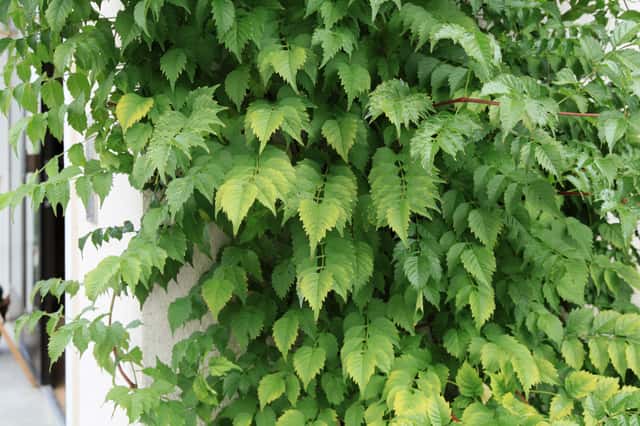
Bignoniaceae
Trumpet Vine (Campsis × tagliabuana) Care Guide
Campsis × tagliabuana
Plant in full sun for the best flowering and give it a sturdy structure to climb. Water regularly while establishing, then reduce watering — established vines tolerate short dry spells well. Prune hard in late winter to control its vigorous, fast growth and keep flowering wood renewed.
Every 7 days
Bright indirect
-20° - 38°C
40% - 70%
Categories
What is Trumpet Vine?
Trumpet Vine (Campsis × tagliabuana) is a medium-care plant from the Bignoniaceae family. Campsis × tagliabuana is a vigorous, deciduous flowering vine born from a cross between Campsis radicans and Campsis grandiflora, first bred in Italy by the Tagliabue brothers. It climbs by aerial rootlets and produces large clusters of trumpet-shaped, salmon-to-orange-red flowers from midsummer thr...
Trumpet Vine grows up to 9.0m, spread of 365cm, watering every 7 days, -20°C – 38°C, 40–70% humidity. It is not suitable for indoor environments and not safe for pets.
Without precautions, ingestion can cause irritation in pets. Keep out of reach of cats and dogs.
How to Care for Trumpet Vine?
TLDR: Trumpet Vine needs Bright indirect, watering every 7 days, and temperatures between -20-38°C with 40-70% humidity.
How Often Should You Water Trumpet Vine?
Water deeply once a week during the first growing season to establish roots. Afterward, water only during prolonged dry spells — soggy soil promotes root rot.
How Much Light Does Trumpet Vine Need?
Give it at least 6 hours of direct sun daily; flowering is sparse in shade even though the foliage tolerates partial shade.
What Is the Best Soil for Trumpet Vine?
Use well-draining soil; it tolerates clay, loam, or sandy soils and a wide pH range, but avoid waterlogged spots.
What Pot Should You Use for Trumpet Vine?
Best grown in the ground against a strong trellis or pergola; if potted, use a large, heavy container with excellent drainage to anchor its vigorous growth.
What Is Trumpet Vine and Where Does It Come From?
Campsis × tagliabuana is a vigorous, deciduous flowering vine born from a cross between Campsis radicans and Campsis grandiflora, first bred in Italy by the Tagliabue brothers. It climbs by aerial rootlets and produces large clusters of trumpet-shaped, salmon-to-orange-red flowers from midsummer through late summer, making it a favorite for covering pergolas, fences, and walls while attracting hummingbirds and pollinators.
How to Propagate Trumpet Vine?
Stem cutting
Keep the mix lightly moist and cover with a plastic bag to raise humidity around the cutting.
- 1 Cut a semi-hardwood stem 15-20 cm long with at least two nodes
- 2 Strip leaves from the lower half and dip the cut end in rooting hormone
- 3 Plant in a light, moist potting mix and keep in a shaded spot until rooted
Materials needed:
Layering
Pin the stem down with a stake or stone to keep it in firm contact with the soil.
- 1 Bend a flexible stem down to the soil without detaching it from the parent plant
- 2 Nick the bark where it touches the ground and cover that spot with soil
- 3 Keep moist until roots form, then sever from the parent plant
Materials needed:
Division
Choose suckers that already have roots for a higher success rate.
- 1 Locate root suckers emerging around the parent plant
- 2 Dig around the sucker, keeping some roots intact
- 3 Transplant immediately to its permanent spot and water well
Materials needed:
How Big Does Trumpet Vine Grow?
TLDR: Trumpet Vine can reach up to 9.0m tall with Fast growth rate.
Max height
9.0m
Spread
3.6m
Growth rate
Fast
Foliage
Deciduous
Warning: Toxic Plant
This plant can be toxic if ingested. Keep out of reach of:
Plant Uses
Ornamental
Great for decoration
Is your plant showing symptoms?
Click on the symptom to discover possible causes:
What Diseases Commonly Affect Trumpet Vine?
TLDR: Trumpet Vine is susceptible to 6 known diseases. Monitor regularly for early detection.
Powdery Mildew
Powdery mildew is a common fungal disease caused by various fungi species including Erysiphe, Podosphaera, Oïdium, and Leveillula. It affects over 10,000 plant species worldwide. The disease thrives in warm, dry climates with high humidity and appears as a distinctive white powdery coating on plant surfaces.
Aphids
Aphids are small, soft-bodied, pear-shaped insects (1/16 to 1/8 inch long) that feed by sucking nutrient-rich sap from plants. They reproduce rapidly and can quickly weaken plants, causing distorted growth and transmitting plant viruses. Aphids come in various colors including green, black, red, yellow, brown, and gray. They secrete honeydew, a sticky substance that attracts ants and encourages sooty mold growth.
Root Rot
Root rot is a serious fungal disease that affects the root system of plants, causing them to decay and die. It is primarily caused by overwatering, poor drainage, or soil-borne fungi such as Pythium, Phytophthora, Rhizoctonia, and Fusarium. The disease thrives in waterlogged conditions where roots are deprived of oxygen, making them susceptible to fungal infection.
Scale Insects
Scale insects are small sap-sucking pests that appear as brown, shell-like bumps on plant stems and leaves. There are over 25 species, divided into armored (hard) and unarmored (soft) scales. They feed by piercing plant tissue and extracting sap, which weakens the plant and can lead to yellowing, stunted growth, and even death if left untreated. They also excrete honeydew, which attracts ants and promotes sooty mold growth.
Meaning & Symbolism
In the language of flowers, the trumpet vine symbolizes fame, vigor, and abundant energy — a fitting emblem for a plant that grows and blooms with such vitality.
Fun Facts
The name honors the Tagliabue brothers, Italian nurserymen who first bred this hybrid in the 1800s.
Its aerial rootlets let it climb almost any surface without support, but they can damage wood siding and mortar over time.
Hummingbirds are strongly drawn to its trumpet-shaped flowers, making it a favorite in wildlife gardens.
Frequently asked questions
Is Campsis × tagliabuana invasive?
Why isn't my trumpet vine flowering?
Is Campsis × tagliabuana toxic to pets?
How fast does trumpet vine grow?
Compare with similar plants
| Attribute | Difficulty | Light | Watering | Pet Safe |
|---|---|---|---|---|
| Dark Fieldcap | Medium | Low light | 2d | ⚠️ |
| Azalea | Medium | Partial shade | 3d | ⚠️ |
| Bougainvillea | Medium | Direct sun | 7d | ⚠️ |
| Wild Lettuce | Medium | Direct sun | 7d | ⚠️ |



