Convolvulaceae
Japanese Morning Glory (Ipomoea nil): Complete Care Guide
Ipomoea nil
Japanese Morning Glory is easy to grow in full sun. Water regularly, keeping the soil slightly moist between waterings. Provide a trellis or support for its twining stems. Avoid excess nitrogen fertilization, which promotes foliage over flowers. Light pruning encourages branching and more blooms.
Every 3 days
Direct sun
10° - 35°C
50% - 80%
Categories
What is Japanese Morning Glory?
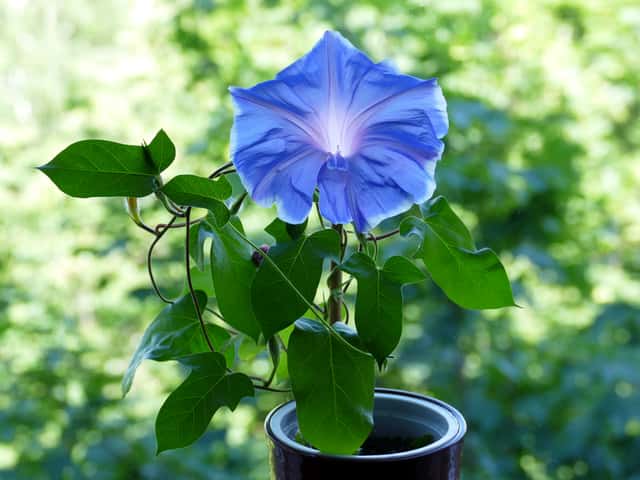
Japanese Morning Glory (Ipomoea nil) is a easy-care plant from the Convolvulaceae family. Ipomoea nil, commonly known as Japanese Morning Glory, is a vigorous annual climbing vine in the Convolvulaceae family, native to tropical Americas and now widely naturalized across Asia. It produces large, trumpet-shaped flowers in shades of blue, purple, and pink that open at dawn and close by mid...
Japanese Morning Glory grows up to 5.0m, spread of 200cm, watering every 3 days, 10°C – 35°C, 50–80% humidity. It is not suitable for indoor environments and not safe for pets.
Unlike many tropical plants, Japanese Morning Glory tolerates watering mistakes. Best for beginners. Without precautions, ingestion can cause irritation in pets. Keep out of reach of cats and dogs.
How to Care for Japanese Morning Glory?
TLDR: Japanese Morning Glory needs Direct sun, watering every 3 days, and temperatures between 10-35°C with 50-80% humidity.
How Often Should You Water Japanese Morning Glory?
Water every 2–4 days in summer, allowing the top inch of soil to dry slightly between waterings. Reduce frequency in cooler or rainy periods. Avoid waterlogging, which causes root rot.
How Much Light Does Japanese Morning Glory Need?
Plant in full sun with at least 6 hours of direct sunlight per day. Insufficient light results in fewer flowers and weaker stems. Avoid locations with artificial light at night, which can disrupt the flowering cycle.
What Is the Best Soil for Japanese Morning Glory?
Use light, well-draining soil rich in organic matter. A mix of garden soil with coarse sand or perlite works well. Ideal pH is 5.5–7.5. Avoid compacted or clay-heavy soils that retain excessive moisture.
What Pot Should You Use for Japanese Morning Glory?
Terracotta pot or container with ample drainage holes. For garden cultivation, a vertical support such as a bamboo trellis or wire fence works well.
Care Schedule
Fertilize
Every 30 days
What Is Japanese Morning Glory and Where Does It Come From?
Ipomoea nil, commonly known as Japanese Morning Glory, is a vigorous annual climbing vine in the Convolvulaceae family, native to tropical Americas and now widely naturalized across Asia. It produces large, trumpet-shaped flowers in shades of blue, purple, and pink that open at dawn and close by midday. A popular ornamental plant for fences, trellises, and balconies, it is prized for its rapid growth and prolific summer-to-fall blooming.
How to Propagate Japanese Morning Glory?
Seed Sowing
Do not transplant seedlings once rooted — Morning Glory dislikes root disturbance. Sow directly where plants will remain permanently.
- 1 Scarify seeds lightly with sandpaper or soak in warm water for 24 hours to improve germination rates.
- 2 Sow directly in the final location or in pots, 1 cm deep.
- 3 Keep the substrate moist and in a warm location (above 18°C / 64°F).
- 4 After germination, install a trellis or support to guide the twining stems.
Materials needed:
How Big Does Japanese Morning Glory Grow?
TLDR: Japanese Morning Glory can reach up to 5.0m tall with Fast growth rate.
Max height
5.0m
Spread
2.0m
Growth rate
Fast
Foliage
Deciduous
Warning: Toxic Plant
This plant can be toxic if ingested. Keep out of reach of:
Plant Uses
Ornamental
Great for decoration
Is your plant showing symptoms?
Click on the symptom to discover possible causes:
What Diseases Commonly Affect Japanese Morning Glory?
TLDR: Japanese Morning Glory is susceptible to 7 known diseases. Monitor regularly for early detection.
Aphids
Aphids are small, soft-bodied, pear-shaped insects (1/16 to 1/8 inch long) that feed by sucking nutrient-rich sap from plants. They reproduce rapidly and can quickly weaken plants, causing distorted growth and transmitting plant viruses. Aphids come in various colors including green, black, red, yellow, brown, and gray. They secrete honeydew, a sticky substance that attracts ants and encourages sooty mold growth.
Spider Mites
Spider mites are tiny arachnids (less than 1/20 inch long) related to spiders and ticks that feed on plant sap. They thrive in hot, dry conditions and can cause significant damage to ornamental and vegetable plants. During severe infestations, crop losses can reach 14% or higher as these pests disrupt vital plant processes including photosynthesis, carbon dioxide absorption, and transpiration.
Whiteflies
Whiteflies are small, soft-bodied, winged insects closely related to aphids and mealybugs. They are moth-like in appearance, about 1/16 inch long, triangular in shape, and gray-white in color. These sap-sucking pests feed on plant tissue, causing yellowing, stunted growth, and wilting. They also excrete honeydew, which attracts ants and promotes sooty mold growth. Whiteflies can transmit serious plant viruses.
Leafminers
Leafminers are the larvae of various insects including flies, moths, sawflies, and beetles that tunnel between leaf surfaces, creating distinctive serpentine trails or blotchy patches. While primarily cosmetic, severe infestations can weaken plants by reducing photosynthesis capacity and making them susceptible to secondary infections.
Meaning & Symbolism
The flowers of Japanese Morning Glory symbolize fleeting joy and daily renewal — each bloom opens at dawn and fades before noon, a reminder of the transient beauty of the present moment.
Fun Facts
Each Japanese Morning Glory flower lasts only a few hours, opening at dawn and closing before noon.
In Japan, Ipomoea nil (Asagao) has been cultivated for centuries, with over a thousand selected varieties developed.
Morning Glory seeds contain LSA, an alkaloid with psychoactive properties — making them toxic if ingested.
This annual vine can cover up to 5 meters of fences and trellises in a single growing season.
Frequently asked questions
How often should I water Japanese Morning Glory?
Is Japanese Morning Glory toxic to pets?
How much sun does Japanese Morning Glory need?
Can I grow Japanese Morning Glory in a pot?
Why do Morning Glory flowers only last one day?
Compare with similar plants
| Attribute | Difficulty | Light | Watering | Pet Safe |
|---|---|---|---|---|
| Field Maple | Easy | Bright indirect | 14d | ✓ |
| Silver Birch | Easy | Direct sun | 14d | ✓ |
| Cushion Bush | Easy | Direct sun | 14d | ✓ |
| Peruvian peppertree | Easy | Direct sun | 14d | ⚠️ |