Araceae
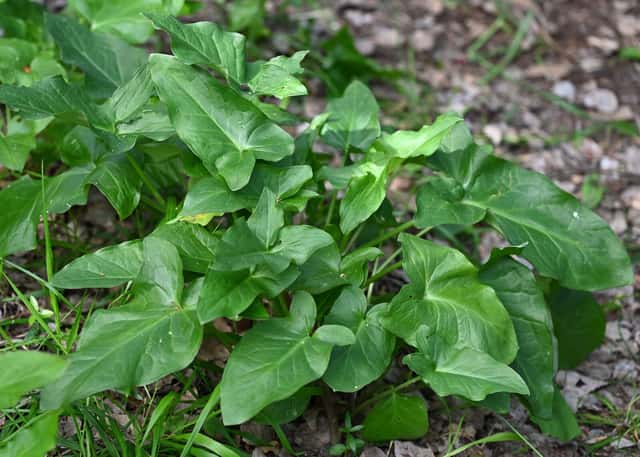
Italian Arum (Arum italicum)
Arum italicum
Grow in shade to part shade in humus-rich, moist but well-drained soil. Water regularly during the active growing season (fall through spring) and taper off watering in summer as the foliage yellows and the plant goes dormant. Little to no fertilizing or pruning is required — simply remove spent or damaged leaves.
Every 7 days
Low light
° - °C
% - %
Categories
What is Italian Arum?
Italian Arum (Arum italicum) is a easy-care plant from the Araceae family. Italian arum (Arum italicum) is a tuberous perennial in the Araceae family, native to much of Europe, North Africa, and western Asia. It is grown for its arrow-shaped, dark green leaves — often marbled with cream or white veining — that emerge in fall and persist through winter, an unusual growth cy...
Italian Arum grows up to 45cm, spread of 45cm, watering every 7 days. It is not suitable for indoor environments and not safe for pets.
Unlike many tropical plants, Italian Arum tolerates watering mistakes. Best for beginners. Without precautions, ingestion can cause irritation in pets. Keep out of reach of cats and dogs.
How to Care for Italian Arum?
TLDR: Italian Arum needs Low light, watering every 7 days, and temperatures between 15-30°C with 40-70% humidity.
How Often Should You Water Italian Arum?
Keep soil evenly moist during fall, winter, and spring; check that the top 5 cm of soil is dry before watering again. Cut back watering sharply in summer once the leaves die back, as the plant is dormant and excess moisture at this stage promotes tuber rot.
How Much Light Does Italian Arum Need?
Prefers light to full shade; foliage color and vigor are best out of direct sun. Variegated cultivars may need slightly brighter, filtered light to keep their white leaf markings distinct.
What Is the Best Soil for Italian Arum?
Needs organically rich, humus-heavy soil with a slightly acidic to neutral pH (6.5-7.0) and good drainage. Amend heavy clay with perlite or coarse sand to prevent waterlogging and tuber decay.
What Pot Should You Use for Italian Arum?
A wide, shallow container with generous drainage holes; unglazed terracotta helps excess moisture evaporate between waterings.
What Is Italian Arum and Where Does It Come From?
Italian arum (Arum italicum) is a tuberous perennial in the Araceae family, native to much of Europe, North Africa, and western Asia. It is grown for its arrow-shaped, dark green leaves — often marbled with cream or white veining — that emerge in fall and persist through winter, an unusual growth cycle for a garden perennial. In spring it produces a pale green-yellow spathe surrounding a spadix, followed in summer by a striking spike of orange-red berries. All parts of the plant, especially the berries, contain calcium oxalate crystals and are toxic if ingested. The species tolerates shade well and can naturalize aggressively, being classified as invasive in parts of the US, Australia, and New Zealand.
How to Propagate Italian Arum?
Tuber division
Wear gloves when handling tubers, as the sap can irritate skin. Replant as soon as possible to prevent the tubers from drying out.
- 1 Wait for summer dormancy, when the foliage has fully died back
- 2 Carefully dig up the parent tuber along with any offset tubers
- 3 Separate the offset tubers by hand or with a clean knife
- 4 Replant immediately about 10 cm deep in rich, well-drained soil
Materials needed:
Seed sowing
Seeds lose viability quickly if allowed to dry out, so sow them as soon as possible after harvest.
- 1 Harvest ripe red berries in summer while wearing gloves
- 2 Extract and rinse the seeds, removing the surrounding pulp
- 3 Sow in moist potting mix soon after harvesting
- 4 Keep in shade with consistent moisture until germination
Materials needed:
How Big Does Italian Arum Grow?
TLDR: Italian Arum can reach up to 45cm tall with Fast growth rate.
Max height
45cm
Spread
45cm
Growth rate
Fast
Foliage
Deciduous
Warning: Toxic Plant
This plant can be toxic if ingested. Keep out of reach of:
Plant Uses
Ornamental
Great for decoration
Ground Cover
Soil coverage
Is your plant showing symptoms?
Click on the symptom to discover possible causes:
What Diseases Commonly Affect Italian Arum?
TLDR: Italian Arum is susceptible to 4 known diseases. Monitor regularly for early detection.
Root Rot
Root rot is a serious fungal disease that affects the root system of plants, causing them to decay and die. It is primarily caused by overwatering, poor drainage, or soil-borne fungi such as Pythium, Phytophthora, Rhizoctonia, and Fusarium. The disease thrives in waterlogged conditions where roots are deprived of oxygen, making them susceptible to fungal infection.
Bacterial Leaf Spot
Bacterial leaf spot is a plant disease caused by bacteria in the Xanthomonas and Pseudomonas genera that affects various ornamental and edible plants. The bacteria infect leaves through wounds or natural openings, causing characteristic lesions that can lead to premature leaf drop and plant weakening.
Spider Mites
Spider mites are tiny arachnids (less than 1/20 inch long) related to spiders and ticks that feed on plant sap. They thrive in hot, dry conditions and can cause significant damage to ornamental and vegetable plants. During severe infestations, crop losses can reach 14% or higher as these pests disrupt vital plant processes including photosynthesis, carbon dioxide absorption, and transpiration.
Thrips
Thrips are tiny cigar-shaped insects (1/25-inch long) that damage plants by sucking plant juices and scraping at fruits, flowers, and leaves. With over 6,000 species and rapid reproduction (lifecycle as short as 14 days), they can quickly infest plants and transmit viruses like tomato spotted wilt virus.
Fun Facts
Its leaves appear in fall and vanish in summer — a growth cycle opposite to most garden plants.
The eye-catching orange-red berries are actually one of the most toxic parts of the plant.
Its old folk name "cuckoo pint" and "lords-and-ladies" reference the shape of the flower spadix inside the spathe.
Frequently asked questions
Is Italian arum toxic?
Why does my Italian arum lose its leaves in summer?
Can Italian arum become invasive?
What soil does it need?
Compare with similar plants
| Attribute | Difficulty | Light | Watering | Pet Safe |
|---|---|---|---|---|
| Field Maple | Easy | Bright indirect | 14d | ✓ |
| Silver Birch | Easy | Direct sun | 14d | ✓ |
| Common Blanketflower | Easy | Direct sun | 10d | ✓ |
| Cushion Bush | Easy | Direct sun | 14d | ✓ |
Choose & Compare
Sources & References
- Arum Italicum Plant Care - Greg App
- Growing Arum italicum (Italian Arum) - White Flower Farm
- Arum italicum (Italian Arum) - Gardenia.net
- How to grow and control arums - Gardens Illustrated
- Arum italicum Risk - California Invasive Plant Council
- Toxic and Non-toxic Plants: Arum - ASPCA
- Aro, Flor de primavera - InfoJardin
- Jarro-dos-campos (Arum italicum) - Arca de Darwin
- Arum italicum - Wikipedia





