Solanaceae
Eggplant (Solanum melongena): Complete Growing Guide
Solanum melongena
Eggplant thrives in full sun (6-8 hours/day), fertile well-draining soil, and consistent moisture. It is cold-sensitive and grows best at 20-35°C. Fertilize every 30 days to sustain heavy fruit production. Water deeply and regularly, avoiding leaf wetting to prevent fungal diseases.
Every 4 days
Direct sun
10° - 35°C
60% - 80%
Categories
What is Eggplant?
Eggplant (Solanum melongena) is a medium-care plant from the Solanaceae family. Eggplant (Solanum melongena) is a tropical and subtropical vegetable crop in the Solanaceae family, prized for its large, glossy, purple fruit. Native to India and Southeast Asia, it is now cultivated worldwide in warm climates. A bushy perennial grown as an annual, it reaches up to 1.8 m tall with...
Eggplant grows up to 1.8m, with spread of 100cm, watering every 4 days, 10°C – 35°C, 60–80% humidity. It is not suitable for indoor environments and not safe for pets.
Without precautions, ingestion can cause irritation in pets. Keep out of reach of cats and dogs.
How to Care for Eggplant?
TLDR: Eggplant needs Direct sun, watering every 4 days, and temperatures between 10-35°C with 60-80% humidity.
How Often Should You Water Eggplant?
Water deeply every 3-5 days, keeping soil consistently moist but never waterlogged. Avoid wetting the foliage to reduce fungal disease risk. Water in the morning when possible.
How Much Light Does Eggplant Need?
Plant in full sun receiving at least 6-8 hours of direct sunlight daily. Eggplant requires abundant bright direct light — place less than 1 foot from a south-facing window if grown indoors.
What Is the Best Soil for Eggplant?
Use fertile, well-draining soil rich in organic matter with a pH of 5.5-6.5. Amend with compost or aged manure before planting to improve structure and nutrient availability.
What Pot Should You Use for Eggplant?
Large clay or plastic container (minimum 20L) with drainage holes
Care Schedule
Fertilize
Every 30 days
What Is Eggplant and Where Does It Come From?
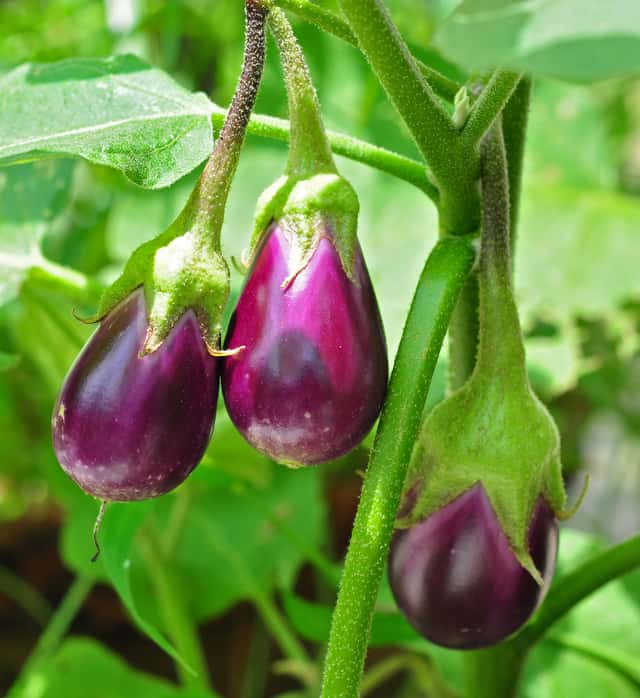
Eggplant (Solanum melongena) is a tropical and subtropical vegetable crop in the Solanaceae family, prized for its large, glossy, purple fruit. Native to India and Southeast Asia, it is now cultivated worldwide in warm climates. A bushy perennial grown as an annual, it reaches up to 1.8 m tall with star-shaped lavender flowers and fleshy fruit ranging from deep purple to white.
How to Propagate Eggplant?
Seed Sowing
Start seeds indoors 8-12 weeks before last frost date. Do not transplant outdoors until nighttime temperatures stay above 60°F (15°C).
- 1 Sow seeds in seed trays or small containers filled with moist potting mix
- 2 Keep in a warm location (20-25°C) until germination
- 3 When seedlings have 5-6 true leaves, transplant to final location
- 4 Space plants 70-100 cm apart in rows 1.0-1.5 m apart
Materials needed:
How Big Does Eggplant Grow?
TLDR: Eggplant can reach up to 1.8m tall with Fast growth rate.
Max height
1.8m
Spread
1.0m
Growth rate
Fast
Foliage
Deciduous
Warning: Toxic Plant
This plant can be toxic if ingested. Keep out of reach of:
Plant Uses
Edible
Can be consumed
Culinary Uses
- Roasted, grilled, sautéed, or pickled fruit
- Key ingredient in baba ganoush, ratatouille, and moussaka
- Excellent meat substitute in vegetarian and vegan dishes
Is your plant showing symptoms?
Click on the symptom to discover possible causes:
What Diseases Commonly Affect Eggplant?
TLDR: Eggplant is susceptible to 12 known diseases. Monitor regularly for early detection.
Verticillium Wilt
Verticillium wilt is a soil-borne fungal disease caused primarily by the fungi Verticillium dahliae and V. albo-atrum. These pathogens infect plant roots and grow within the vascular tissues, blocking water and nutrient transport, resulting in wilting and eventual plant death. The disease affects over 350 plant species including vegetables, fruits, ornamental flowers, and trees. The fungi can survive in soil for more than 10 years as resistant structures called microsclerotia.
Anthracnose
Anthracnose is a fungal disease caused by fungi in the genus Colletotrichum that affects many plants, including vegetables, fruits, and trees. The disease thrives in cool, wet conditions, causing dark, sunken lesions on leaves, stems, flowers, and fruits.
Powdery Mildew
Powdery mildew is a common fungal disease caused by various fungi species including Erysiphe, Podosphaera, Oïdium, and Leveillula. It affects over 10,000 plant species worldwide. The disease thrives in warm, dry climates with high humidity and appears as a distinctive white powdery coating on plant surfaces.
Aphids
Aphids are small, soft-bodied, pear-shaped insects (1/16 to 1/8 inch long) that feed by sucking nutrient-rich sap from plants. They reproduce rapidly and can quickly weaken plants, causing distorted growth and transmitting plant viruses. Aphids come in various colors including green, black, red, yellow, brown, and gray. They secrete honeydew, a sticky substance that attracts ants and encourages sooty mold growth.
Meaning & Symbolism
Eggplant symbolizes abundance, nourishment, and culinary creativity — a staple ingredient in kitchens across cultures.
Fun Facts
Eggplant originated in India and was introduced to Europe by Arab traders during the Middle Ages
The name 'eggplant' comes from small white or yellow varieties that resemble eggs
Botanically, the eggplant fruit is a berry — just like a tomato
Eggplant is closely related to tomatoes, potatoes, and peppers, all in the Solanaceae family
Frequently asked questions
How often should I water eggplant?
Is eggplant toxic to pets?
How much sun does eggplant need?
When should I harvest eggplant?
Can I grow eggplant in a container?
Compare with similar plants
| Attribute | Difficulty | Light | Watering | Pet Safe |
|---|---|---|---|---|
| Azalea | Medium | Partial shade | 3d | ⚠️ |
| Wild Lettuce | Medium | Direct sun | 7d | ⚠️ |
| Cape Primrose | Medium | Partial shade | 7d | ✓ |
| Honey Locust | Medium | Direct sun | 14d | ✓ |