Rosaceae
Maule's Quince: Edible Plant
Chaenomeles japonica
A low-maintenance plant ideal for outdoor gardens. Thrives in full sun with well-drained, slightly acidic to neutral soil. Water regularly but avoid waterlogging. Light pruning after flowering maintains a compact shape. Extremely cold-hardy, tolerating temperatures down to -15 °C (5 °F).
Every 7 days
Bright indirect
-15° - 25°C
30% - 50%
Categories
What is Maule's Quince?
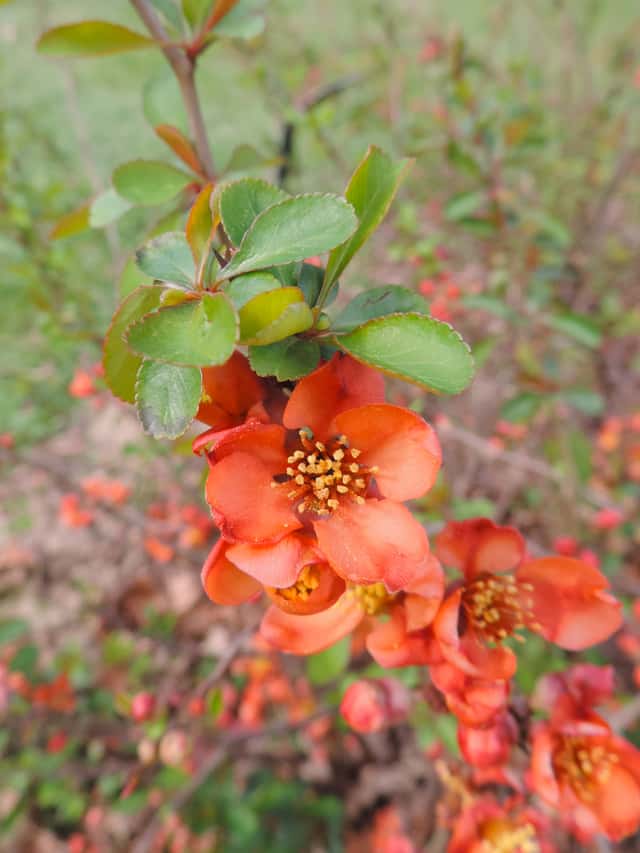
Maule's Quince (Chaenomeles japonica) is a easy-care plant from the Rosaceae family. Maule's Quince (Chaenomeles japonica) is a thorny, deciduous shrub native to Japan and South Korea, belonging to the Rosaceae family. It is prized as an ornamental plant for its spectacular early spring blooms in shades of red, orange, pink, and white, which appear on bare branches before the leaves...
Maule's Quince grows up to 90cm, spread of 180cm, watering every 7 days, -15°C – 25°C, 30–50% humidity. It is not suitable for indoor environments and safe for pets.
Unlike many tropical plants, Maule's Quince tolerates watering mistakes. Best for beginners. Unlike many popular species, Maule's Quince is safe to keep around pets.
How to Care for Maule's Quince?
TLDR: Maule's Quince needs Bright indirect, watering every 7 days, and temperatures between -15-25°C with 30-50% humidity.
How Often Should You Water Maule's Quince?
Water every 7 days on average, keeping the soil evenly moist but never waterlogged. Avoid overhead watering to reduce the risk of fungal diseases. In winter, reduce watering frequency as the plant enters dormancy.
How Much Light Does Maule's Quince Need?
Requires at least 6 hours of direct sunlight per day for abundant flowering. Can tolerate partial shade, but flowering will be less prolific. Position in a spot with good sun exposure, especially in the morning.
What Is the Best Soil for Maule's Quince?
Prefers well-drained soil with a pH of 6.1–7.5 (slightly acidic to neutral). Tolerates sandy and clay soils as long as drainage is adequate. Incorporate organic compost at planting to enrich the substrate and improve moisture retention without waterlogging.
What Pot Should You Use for Maule's Quince?
For container growing, use ceramic or terracotta pots with generous drainage holes. Shallow, wide containers work well for bonsai cultivation. Ensure the container accommodates the plant's naturally spreading growth habit.
Care Schedule
Fertilize
Every 14 days
Misting
Every 3 days
Rotate
Every 7 days
Repot
Every 365 days
What Is Maule's Quince and Where Does It Come From?
Maule's Quince (Chaenomeles japonica) is a thorny, deciduous shrub native to Japan and South Korea, belonging to the Rosaceae family. It is prized as an ornamental plant for its spectacular early spring blooms in shades of red, orange, pink, and white, which appear on bare branches before the leaves emerge. The small, yellow-green fruits are aromatic and edible, commonly used in jellies, preserves, and liqueurs. Highly cold-hardy (USDA zones 5a–9b), it is widely used in borders, hedges, erosion control, and bonsai cultivation.
How Big Does Maule's Quince Grow?
TLDR: Maule's Quince can reach up to 90cm tall with Medium growth rate.
Max height
90cm
Spread
1.8m
Growth rate
Medium
Foliage
Deciduous
Plant Uses
Ornamental
Great for decoration
Edible
Can be consumed
Medicinal Uses
- The fruits are rich in vitamin C and antioxidants. In Eastern European and East Asian folk medicine, fruit extracts are used to relieve cold symptoms and boost immunity. Not a substitute for medical treatment.
Culinary Uses
- Ripe fruits are used to make jellies, marmalades, and homemade liqueurs. Too sour and astringent for fresh consumption, but excellent when cooked with sugar. Can also be used to flavor vinegars and teas.
Is your plant showing symptoms?
Click on the symptom to discover possible causes:
What Diseases Commonly Affect Maule's Quince?
TLDR: Maule's Quince is susceptible to 7 known diseases. Monitor regularly for early detection.
Fire Blight
Fire blight is a highly destructive and contagious bacterial disease caused by Erwinia amylovora. It primarily affects plants in the Rosaceae family, including apple, pear, quince trees, and various ornamental plants. The disease can destroy an entire orchard in a single growing season under ideal conditions, with the bacterium moving approximately 11 inches per week in new growth.
Leaf Spot
Leaf spot is a common fungal disease caused by various pathogens including Alternaria, Ascochyta, Colletotrichum, Septoria, and Venturia. It primarily affects leaves, causing discolored spots that can lead to premature leaf drop if left untreated.
Gray Mold (Botrytis Blight)
Gray mold, caused by the fungus Botrytis cinerea, is a widespread necrotrophic pathogen affecting over 1,400 plant species. It thrives in cool, humid conditions and attacks weakened or aging plant tissues, causing soft rot and characteristic gray fuzzy growth.
Botrytis
Meaning & Symbolism
In East Asian culture, Chaenomeles japonica symbolizes longevity, renewal, and the arrival of spring. Its early blooms, appearing before the leaves, are associated with hope and perseverance through winter.
Compare with similar plants
| Attribute | Difficulty | Light | Watering | Pet Safe |
|---|---|---|---|---|
| Field Maple | Easy | Bright indirect | 14d | ✓ |
| Silver Birch | Easy | Direct sun | 14d | ✓ |
| Cushion Bush | Easy | Direct sun | 14d | ✓ |
| Peruvian peppertree | Easy | Direct sun | 14d | ⚠️ |





