Ranunculaceae
Japanese Anemone: Perfect Plant for Beginners
Eriocapitella hupehensis
The Japanese Anemone thrives best in partial shade to sunny locations with consistently moist, humus-rich loamy soil. It is largely low-maintenance, requiring regular watering during dry spells and pruning only in spring. As a winter-hardy perennial (down to -23 °C), it does not require extensive frost protection.
Every 7 days
Partial shade
-23° - 35°C
40% - 60%
Categories
What is Japanese Anemone?
Japanese Anemone (Eriocapitella hupehensis) is a easy-care plant from the Ranunculaceae family. The Japanese Anemone (Eriocapitella hupehensis) is a perennial plant from the buttercup family (Ranunculaceae), originally from the mountainous regions of Central China. It forms upright, branched flower stems 80 to 120 cm tall and delights from July to October with delicate, cup-shaped flowers in s...
Japanese Anemone grows up to 1.2m, spread of 50cm, watering every 7 days, -23°C – 35°C, 40–60% humidity. It is not suitable for indoor environments and not safe for pets.
Unlike many tropical plants, Japanese Anemone tolerates watering mistakes. Best for beginners. Without precautions, ingestion can cause irritation in pets. Keep out of reach of cats and dogs.
How to Care for Japanese Anemone?
TLDR: Japanese Anemone needs Partial shade, watering every 7 days, and temperatures between -23-35°C with 40-60% humidity.
How Often Should You Water Japanese Anemone?
Keep consistently moist, but absolutely avoid waterlogging. During prolonged dry periods, water thoroughly weekly, taking care not to wet the leaves if possible to prevent fungal diseases. Water more sparingly in winter.
How Much Light Does Japanese Anemone Need?
An ideal location is partial shade with morning sun and protection from intense midday sun. It also tolerates full sun if the soil remains sufficiently moist. Too much shade can lead to unstable stems and reduced flowering.
What Is the Best Soil for Japanese Anemone?
Loose, loamy-sandy soil with good drainage and high humus content is ideal. Incorporate compost or well-rotted manure when planting. Loosen heavy clay soils with sand; enrich light sandy soils with compost.
What Pot Should You Use for Japanese Anemone?
Selected more compact varieties are suitable for container cultivation. The container should have a diameter of at least 30–40 cm, possess a drainage hole, and be filled with nutrient-rich, well-draining substrate. Frost-free storage or wrapping with fleece is recommended in winter.
Care Schedule
Fertilize
Every 365 days
What Is Japanese Anemone and Where Does It Come From?
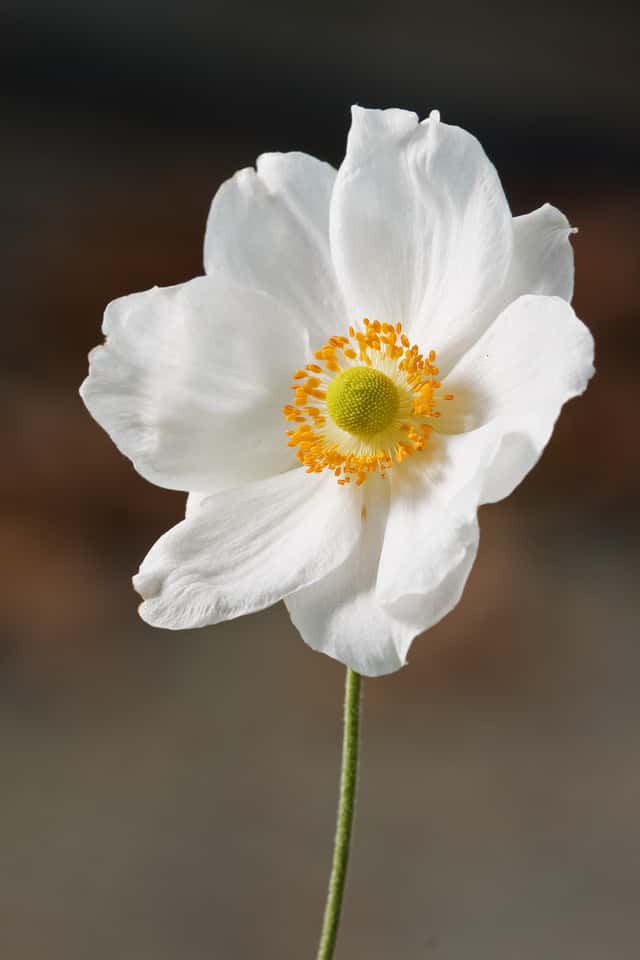
The Japanese Anemone (Eriocapitella hupehensis) is a perennial plant from the buttercup family (Ranunculaceae), originally from the mountainous regions of Central China. It forms upright, branched flower stems 80 to 120 cm tall and delights from July to October with delicate, cup-shaped flowers in shades of pink, white, and purple. Its dark green, three-lobed basal leaves form dense clumps. As one of the few perennials that bloom profusely in late summer and autumn, it is an indispensable eye-catcher in a naturalistic garden.
How to Propagate Japanese Anemone?
How Big Does Japanese Anemone Grow?
TLDR: Japanese Anemone can reach up to 1.2m tall with Medium growth rate.
Max height
1.2m
Spread
50cm
Growth rate
Medium
Foliage
Deciduous
Warning: Toxic Plant
This plant can be toxic if ingested. Keep out of reach of:
Plant Uses
Ornamental
Great for decoration
Is your plant showing symptoms?
Click on the symptom to discover possible causes:
What Diseases Commonly Affect Japanese Anemone?
TLDR: Japanese Anemone is susceptible to 7 known diseases. Monitor regularly for early detection.
Root Rot
Root rot is a serious fungal disease that affects the root system of plants, causing them to decay and die. It is primarily caused by overwatering, poor drainage, or soil-borne fungi such as Pythium, Phytophthora, Rhizoctonia, and Fusarium. The disease thrives in waterlogged conditions where roots are deprived of oxygen, making them susceptible to fungal infection.
Powdery Mildew
Powdery mildew is a common fungal disease caused by various fungi species including Erysiphe, Podosphaera, Oïdium, and Leveillula. It affects over 10,000 plant species worldwide. The disease thrives in warm, dry climates with high humidity and appears as a distinctive white powdery coating on plant surfaces.
Leaf Spot
Leaf spot is a common fungal disease caused by various pathogens including Alternaria, Ascochyta, Colletotrichum, Septoria, and Venturia. It primarily affects leaves, causing discolored spots that can lead to premature leaf drop if left untreated.
Rust
Rust is a common fungal disease caused by fungi in the order Pucciniales that affects a wide variety of plants. The disease gets its name from the characteristic orange, yellow, or reddish-brown pustules that appear on leaves, resembling metal rust. This obligate fungal parasite requires living plants to survive and can cause significant economic losses in agricultural crops.
Meaning & Symbolism
In the language of flowers, the Anemone symbolizes transience, abandoned hope, and delicate affection. In Asian culture, it is considered a symbol of transition – between summer and winter, between bloom and dormancy. Its Greek name is derived from 'anemos' (wind), which earned it the nickname 'Windflower'.
Compare with similar plants
| Attribute | Difficulty | Light | Watering | Pet Safe |
|---|---|---|---|---|
| Field Maple | Easy | Bright indirect | 14d | ✓ |
| Silver Birch | Easy | Direct sun | 14d | ✓ |
| Common Blanketflower | Easy | Direct sun | 10d | ✓ |
| Cushion Bush | Easy | Direct sun | 14d | ✓ |





