Taxaceae
Japanese Yew (Taxus cuspidata)
Taxus cuspidata
Japanese yew is a low-maintenance, easy-to-grow evergreen once established. Give it full sun to part shade, water regularly the first year, then rely on its established drought tolerance, and plant it only in well-drained soil since it cannot tolerate waterlogged roots. Prune annually to keep its shape, and keep it away from pets, grazing animals, and children due to its severe toxicity.
Every 10 days
Partial shade
° - °C
% - %
Categories
What is Japanese Yew?
Japanese Yew (Taxus cuspidata) is a easy-care plant from the Taxaceae family. Taxus cuspidata, the Japanese yew, is a slow-to-moderate growing evergreen conifer native to Japan, Korea, northeastern China, and the Russian Far East. It typically appears as a dense shrub or small tree with flattened, dark green needles and reddish-brown, peeling bark. Female plants produce small...
Japanese Yew grows up to 18.0m, spread of 750cm, watering every 10 days. It is not suitable for indoor environments and not safe for pets.
Unlike many tropical plants, Japanese Yew tolerates watering mistakes. Best for beginners. Without precautions, ingestion can cause irritation in pets. Keep out of reach of cats and dogs.
How to Care for Japanese Yew?
TLDR: Japanese Yew needs Partial shade, watering every 10 days, and temperatures between 15-30°C with 40-70% humidity.
How Often Should You Water Japanese Yew?
Water deeply and regularly during the first growing season to help roots establish, keeping the soil moist but never soggy. Once established, Japanese yew is fairly drought tolerant and only needs supplemental water during extended dry spells - overwatering and poor drainage are the leading causes of root rot in this species.
How Much Light Does Japanese Yew Need?
Japanese yew thrives in full sun to partial shade and is one of the most shade-tolerant needled evergreens available, though a few hours of daily sun keeps the foliage denser and richer green. Protect it from harsh winter wind and sun exposure, which can cause winter burn on exposed foliage.
What Is the Best Soil for Japanese Yew?
Plant in sandy or loamy soil that is acidic to neutral (pH about 5.0-7.5) with excellent drainage. This species has almost no tolerance for wet, compacted, or poorly drained soil, which quickly leads to root rot.
What Pot Should You Use for Japanese Yew?
Best grown in open ground, but when container-grown (including bonsai) use a wide, sturdy pot with multiple drainage holes and a fast-draining sandy or loamy mix to prevent waterlogging.
What Is Japanese Yew and Where Does It Come From?
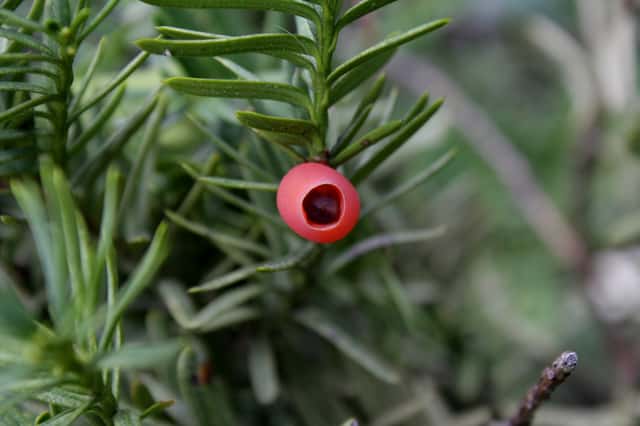
Taxus cuspidata, the Japanese yew, is a slow-to-moderate growing evergreen conifer native to Japan, Korea, northeastern China, and the Russian Far East. It typically appears as a dense shrub or small tree with flattened, dark green needles and reddish-brown, peeling bark. Female plants produce small, bright red, fleshy arils in fall - the only part of the entire plant that is not toxic. Every other tissue (bark, needles, and especially the seed inside the aril) contains taxine alkaloids that are severely toxic to humans, cats, dogs, and horses. Because of its extreme cold hardiness (USDA zones 4-7), dense evergreen habit, and excellent tolerance of pruning and shade, Japanese yew is one of the most widely planted hedge and foundation shrubs in temperate landscapes.
How to Propagate Japanese Yew?
Semi-hardwood stem cutting
Use clean, sharp tools and always wear gloves when handling cuttings since all plant tissue except the aril flesh is toxic; wash hands thoroughly afterward.
- 1 Take 10-15 cm (4-6 in) semi-hardwood cuttings from healthy shoots, pulling with a slight heel of bark where possible
- 2 Strip needles from the lower two-thirds of the cutting
- 3 Dip the cut end in rooting hormone powder or gel
- 4 Insert the cutting into a well-draining mix of sand and perlite in a small pot
- 5 Cover with a clear plastic bag or propagation dome to maintain humidity and place in bright, indirect light
- 6 Keep the medium lightly moist and check for root resistance after 8-10 weeks
Materials needed:
How Big Does Japanese Yew Grow?
TLDR: Japanese Yew can reach up to 18.0m tall with Fast growth rate.
Max height
18.0m
Spread
7.5m
Growth rate
Fast
Foliage
Evergreen
Warning: Toxic Plant
This plant can be toxic if ingested. Keep out of reach of:
Plant Uses
Ornamental
Great for decoration
Medicinal
Medicinal properties
Medicinal Uses
- Twigs and needles are an industrial source of taxane compounds (including paclitaxel precursors) used in pharmaceutical chemotherapy production - not a home remedy, as the whole plant is severely toxic if ingested.
Is your plant showing symptoms?
Click on the symptom to discover possible causes:
What Diseases Commonly Affect Japanese Yew?
TLDR: Japanese Yew is susceptible to 6 known diseases. Monitor regularly for early detection.
Root Rot
Root rot is a serious fungal disease that affects the root system of plants, causing them to decay and die. It is primarily caused by overwatering, poor drainage, or soil-borne fungi such as Pythium, Phytophthora, Rhizoctonia, and Fusarium. The disease thrives in waterlogged conditions where roots are deprived of oxygen, making them susceptible to fungal infection.
Cold Damage
Cold damage, also known as frost injury, occurs when plants are exposed to freezing or near-freezing temperatures. This environmental stress can cause cellular damage as ice crystals form within plant tissues, rupturing cells and disrupting normal plant functions. Chilling injury can also occur in sensitive species at temperatures between 32-55°F (0-10°C), even without actual freezing.
Phomopsis Tip Blight
A disease caused by the Phomopsis fungus that kills young shoots and causes brown spots on leaves. It thrives in humid conditions and spreads through water splashes.
Mealybugs
Mealybugs are small, soft-bodied insects covered with a white, waxy, cottony material. They are common pests of houseplants and outdoor plants in mild climates. These sap-sucking insects feed on plant tissue, causing damage, stunted growth, and can lead to plant death if left untreated. They produce sticky honeydew which attracts sooty mold.
Meaning & Symbolism
In Japan this conifer is called ichi'i (一位, "first rank"), because ceremonial shaku scepters carried by first-rank Imperial court officials were traditionally carved from its wood, linking the tree to prestige, rank, and reverence.
Fun Facts
The plant's Japanese name, ichi'i, means "first rank" because Imperial court scepters (shaku) were traditionally carved from its wood.
The bright red aril is the only non-toxic part of the entire plant, yet the single seed inside it is intensely poisonous.
Taxus cuspidata is one of the most cold-hardy needled evergreens, surviving USDA zone 4 winters.
Its needles and twigs are harvested industrially as a source of taxane compounds used to manufacture chemotherapy drugs.
Frequently asked questions
Is Japanese yew poisonous to cats and dogs?
How much sun does Taxus cuspidata need?
Why are my yew's needles turning brown?
How often should I water a Japanese yew?
Compare with similar plants
| Attribute | Difficulty | Light | Watering | Pet Safe |
|---|---|---|---|---|
| Field Maple | Easy | Bright indirect | 14d | ✓ |
| Silver Birch | Easy | Direct sun | 14d | ✓ |
| Common Blanketflower | Easy | Direct sun | 10d | ✓ |
| Cushion Bush | Easy | Direct sun | 14d | ✓ |
Choose & Compare
Sources & References
- Taxus cuspidata (Japanese Yew) - NC State Extension Gardener Plant Toolbox
- Taxus cuspidata - Missouri Botanical Garden Plant Finder
- Taxus cuspidata - Wikipedia
- Taxus spp Toxicosis - Cornell University College of Veterinary Medicine
- Veterinary Medicine Toxicology Brief: Yew Poisoning - ASPCA Pro
- Guide to Poisonous Plants - Taxus - Colorado State University CVMBS
- Yew Pests and Diseases - Horticulture For Home Gardeners
- Propagating Yew from Cuttings - Elisabeth C. Miller Library
- Methyl jasmonate responsive ESTs in paclitaxel producing Taxus cuspidata suspension culture cells - PMC





