Aspleniaceae
Japanese Painted Fern: Ground Cover Plant
Athyrium niponicum
Japanese painted fern thrives in partial to full shade with consistently moist, humus-rich, well-drained acidic soil. Keep soil evenly moist but never waterlogged — crown rot can occur in persistently wet conditions. Fertilize lightly once a month in spring and summer with a balanced liquid fertilizer; stop feeding by late summer. The plant is deciduous and requires a cold winter dormancy, making it unsuitable as a permanent houseplant. Divide clumps every 4–5 years in early spring. Deer, rabbit, and slug pressure is generally low; watch for botrytis in poor air circulation.
Every 5 days
Low light
-29° - 26°C
50% - 80%
Categories
What is Japanese Painted Fern?
Japanese Painted Fern (Athyrium niponicum) is a easy-care plant from the Aspleniaceae family. Athyrium niponicum, commonly known as Japanese painted fern, is a deciduous herbaceous fern native to eastern Asia, valued as one of the most ornamental and striking shade garden plants available. Its arching, triangular fronds reach up to 50 cm long and display a remarkable tricolor pattern: silver...
Japanese Painted Fern grows up to 50cm, spread of 60cm, watering every 5 days, -29°C – 26°C, 50–80% humidity. It is not suitable for indoor environments and safe for pets.
Unlike many tropical plants, Japanese Painted Fern tolerates watering mistakes. Best for beginners. Unlike many popular species, Japanese Painted Fern is safe to keep around pets.
How to Care for Japanese Painted Fern?
TLDR: Japanese Painted Fern needs Low light, watering every 5 days, and temperatures between -29-26°C with 50-80% humidity.
How Often Should You Water Japanese Painted Fern?
Water deeply whenever the top 2–3 cm of soil begins to feel barely dry, typically every 4–6 days in warm weather. Japanese painted fern tolerates neither prolonged drought nor standing water — drought causes frond browning and tip die-back while soggy soil invites crown and root rot. Water early in the day so foliage dries before nightfall, reducing botrytis risk. Reduce watering significantly once the plant dies back in autumn; the dormant crown needs only occasional moisture to prevent complete desiccation.
How Much Light Does Japanese Painted Fern Need?
Provide partial shade to full shade — ideally 2–4 hours of filtered or dappled light per day (1,000–5,000 lux). The most vibrant silver and maroon frond coloration develops in light shade; deep shade produces larger, greener fronds with less silver contrast. Avoid direct afternoon sun, which scorches and bleaches the delicate fronds. In northern gardens it can tolerate a little more morning sun; in hot southern climates err toward deeper shade.
What Is the Best Soil for Japanese Painted Fern?
Plant in humus-rich, organically amended, well-drained soil with a slightly acidic pH of 5.5–6.5. Work in generous amounts of leaf mold, compost, or aged manure before planting to replicate the rich woodland floor conditions this fern naturally inhabits. Good drainage is essential — the plant thrives in damp soil, not waterlogged soil. Top-dress annually with shredded leaves or compost to maintain organic content and retain moisture.
Care Schedule
Fertilize
Every 30 days
What Is Japanese Painted Fern and Where Does It Come From?
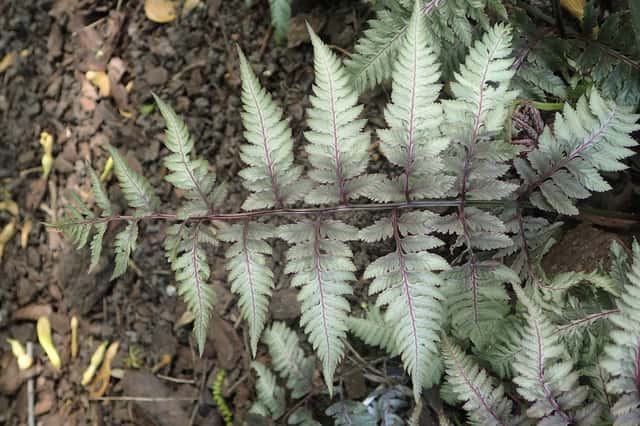
Athyrium niponicum, commonly known as Japanese painted fern, is a deciduous herbaceous fern native to eastern Asia, valued as one of the most ornamental and striking shade garden plants available. Its arching, triangular fronds reach up to 50 cm long and display a remarkable tricolor pattern: silvery-gray overlaid on soft green leaflets with a bold dark maroon midrib that runs the full length of each frond. The silvering is most intense on newly emerged spring fronds and softens to a deeper green as summer heat builds. Plants form a graceful, vase-shaped clump that spreads slowly through branching underground rhizomes, creating a lush colony effect over time without becoming invasive. Deer and rabbit resistant, it was named Perennial Plant of the Year by the Perennial Plant Association, confirming its exceptional landscape value.
How to Propagate Japanese Painted Fern?
Division
Spore
How Big Does Japanese Painted Fern Grow?
TLDR: Japanese Painted Fern can reach up to 50cm tall with Slow growth rate.
Max height
50cm
Spread
60cm
Growth rate
Slow
Foliage
Deciduous
Plant Uses
Ornamental
Great for decoration
Ground Cover
Soil coverage
Is your plant showing symptoms?
Click on the symptom to discover possible causes:
What Diseases Commonly Affect Japanese Painted Fern?
TLDR: Japanese Painted Fern is susceptible to 6 known diseases. Monitor regularly for early detection.
Slugs and Snails
Slugs and snails are mollusks that feed on plant tissue, causing irregular holes in leaves and damage to young seedlings. They are most active at night and in moist conditions, leaving characteristic silvery slime trails. These pests can quickly devastate gardens, especially during wet seasons.
Botrytis
Root Rot
Root rot is a serious fungal disease that affects the root system of plants, causing them to decay and die. It is primarily caused by overwatering, poor drainage, or soil-borne fungi such as Pythium, Phytophthora, Rhizoctonia, and Fusarium. The disease thrives in waterlogged conditions where roots are deprived of oxygen, making them susceptible to fungal infection.
Pythium Root Rot
Pythium root rot is a serious fungal disease caused by various Pythium species including P. aphanidermatum, P. ultimum, and P. irregulare. These water molds are present in practically all cultivated soils and attack plant roots under wet conditions, causing rapid wet rot that can extend into the stem. The disease is favored by poor drainage, overwatering, and specific temperatures depending on the species.
Meaning & Symbolism
In Japanese culture, ferns represent endurance, new beginnings, and the quiet elegance of the forest understory. The Japanese painted fern in particular, with its dramatic silver and maroon coloring, has become a symbol of refined beauty, mystery, and the artful contrast between shadow and light. It is often used in garden design to evoke a sense of tranquil, woodland grace.
Compare with similar plants
| Attribute | Difficulty | Light | Watering | Pet Safe |
|---|---|---|---|---|
| Field Maple | Easy | Bright indirect | 14d | ✓ |
| Silver Birch | Easy | Direct sun | 14d | ✓ |
| Cushion Bush | Easy | Direct sun | 14d | ✓ |
| Peruvian peppertree | Easy | Direct sun | 14d | ⚠️ |
Choose & Compare
Sources & References
- Japanese Painted Fern Care: All About Growing Athyrium Niponicum
- Athyrium niponicum var. pictum - Missouri Botanical Garden Plant Finder
- Athyrium niponicum - NC State Extension Gardener Plant Toolbox
- Japanese Painted Fern: A Hardy Perennial for Shady Gardens - Savvy Gardening
- Athyrium nipponicum Pictum - Greenhouse Product News





