Hydrangeaceae
Lewis' Mock Orange (Philadelphus lewisii) Care Guide
Philadelphus lewisii
An easygoing, cold-hardy shrub that thrives with minimal fuss once established. Give it full sun to light afternoon shade, well-draining soil, and deep watering during its first year. After that, it tolerates drought and needs little attention beyond an annual post-bloom prune.
Every 7 days
Bright indirect
-23° - °C
% - %
Categories
What is Lewis' Mock Orange?
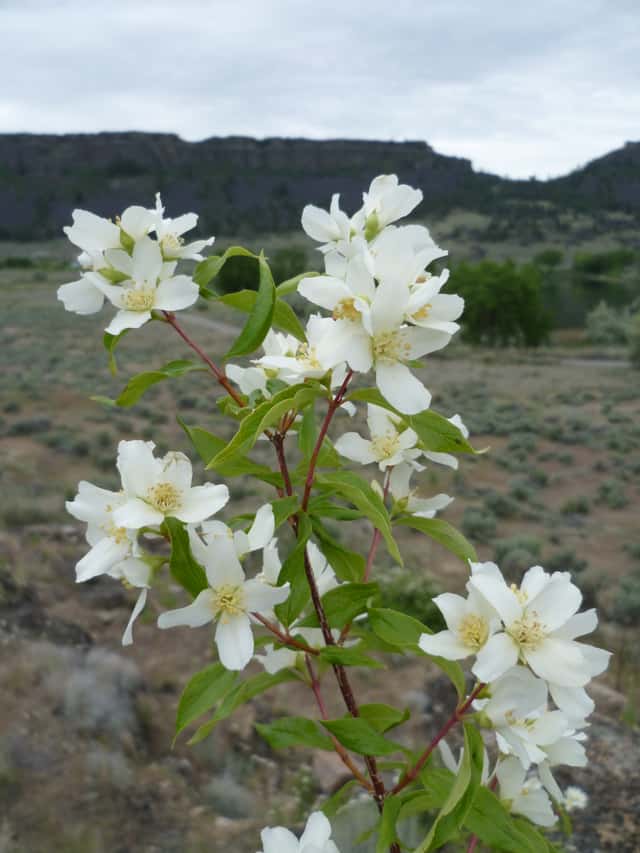
Lewis' Mock Orange (Philadelphus lewisii) is a easy-care plant from the Hydrangeaceae family. Philadelphus lewisii is a deciduous, multi-stemmed shrub native to the Pacific Northwest and Rocky Mountain regions of North America. It produces masses of fragrant, four-petaled white flowers with yellow centers in late spring to summer, held in clusters along arching branches. Known locally as 'Sy...
Lewis' Mock Orange grows up to 3.0m, spread of 183cm, watering every 7 days. It is not suitable for indoor environments and not safe for pets.
Unlike many tropical plants, Lewis' Mock Orange tolerates watering mistakes. Best for beginners. Without precautions, ingestion can cause irritation in pets. Keep out of reach of cats and dogs.
How to Care for Lewis' Mock Orange?
TLDR: Lewis' Mock Orange needs Bright indirect, watering every 7 days, and temperatures between -23-30°C with 40-70% humidity.
How Often Should You Water Lewis' Mock Orange?
Water deeply and regularly during the first growing season to establish roots, checking that the top 1 inch of soil is dry before watering again. Once mature, water only during extended dry spells - this shrub is quite drought-tolerant and dislikes soggy soil.
How Much Light Does Lewis' Mock Orange Need?
Plant in full sun for the heaviest bloom, or give it light afternoon shade in hot climates. At least 6 hours of direct sun daily produces the best flowering.
What Is the Best Soil for Lewis' Mock Orange?
Grows in sandy, loamy, or clay soils as long as drainage is good. Amend heavy clay with compost before planting, and aim for a mildly acidic to neutral pH.
What Pot Should You Use for Lewis' Mock Orange?
Best planted directly in the ground where its roots can spread; if container growing is necessary, use a large (40+ liter) pot with excellent drainage and plan to transplant it to the ground within a couple of years.
Care Schedule
Fertilize
Every 365 days
What Is Lewis' Mock Orange and Where Does It Come From?
Philadelphus lewisii is a deciduous, multi-stemmed shrub native to the Pacific Northwest and Rocky Mountain regions of North America. It produces masses of fragrant, four-petaled white flowers with yellow centers in late spring to summer, held in clusters along arching branches. Known locally as 'Syringa,' it is the official state flower of Idaho and was first collected for science by explorer Meriwether Lewis in 1806.
How to Propagate Lewis' Mock Orange?
Softwood stem cuttings
Take cuttings early in the morning when stems are fully hydrated, and keep humidity high until roots establish.
- 1 Take a 10-15 cm softwood cutting from a healthy, non-flowering stem in late spring.
- 2 Remove the lower leaves and dip the cut end in rooting hormone.
- 3 Insert into a moist, well-draining propagation mix and cover with a humidity dome.
- 4 Keep in bright, indirect light and mist regularly until roots form.
Materials needed:
Sucker division
Divide suckers during dormancy in fall or early spring to reduce transplant shock.
- 1 Locate a rooted sucker growing near the base of an established shrub.
- 2 Dig around the sucker carefully to expose its own root system.
- 3 Sever it from the parent plant with a clean spade or pruning saw.
- 4 Transplant immediately into a prepared, well-draining planting hole.
Materials needed:
How Big Does Lewis' Mock Orange Grow?
TLDR: Lewis' Mock Orange can reach up to 3.0m tall with Medium growth rate.
Max height
3.0m
Spread
1.8m
Growth rate
Medium
Foliage
Deciduous
Warning: Toxic Plant
This plant can be toxic if ingested. Keep out of reach of:
Plant Uses
Ornamental
Great for decoration
Aromatic
Pleasant fragrance
Culinary Uses
- Flowers historically steeped by Indigenous peoples of the Pacific Northwest to make a fragrant tea
Is your plant showing symptoms?
Click on the symptom to discover possible causes:
What Diseases Commonly Affect Lewis' Mock Orange?
TLDR: Lewis' Mock Orange is susceptible to 7 known diseases. Monitor regularly for early detection.
Powdery Mildew
Powdery mildew is a common fungal disease caused by various fungi species including Erysiphe, Podosphaera, Oïdium, and Leveillula. It affects over 10,000 plant species worldwide. The disease thrives in warm, dry climates with high humidity and appears as a distinctive white powdery coating on plant surfaces.
Aphids
Aphids are small, soft-bodied, pear-shaped insects (1/16 to 1/8 inch long) that feed by sucking nutrient-rich sap from plants. They reproduce rapidly and can quickly weaken plants, causing distorted growth and transmitting plant viruses. Aphids come in various colors including green, black, red, yellow, brown, and gray. They secrete honeydew, a sticky substance that attracts ants and encourages sooty mold growth.
Spider Mites
Spider mites are tiny arachnids (less than 1/20 inch long) related to spiders and ticks that feed on plant sap. They thrive in hot, dry conditions and can cause significant damage to ornamental and vegetable plants. During severe infestations, crop losses can reach 14% or higher as these pests disrupt vital plant processes including photosynthesis, carbon dioxide absorption, and transpiration.
Scale Insects
Scale insects are small sap-sucking pests that appear as brown, shell-like bumps on plant stems and leaves. There are over 25 species, divided into armored (hard) and unarmored (soft) scales. They feed by piercing plant tissue and extracting sap, which weakens the plant and can lead to yellowing, stunted growth, and even death if left untreated. They also excrete honeydew, which attracts ants and promotes sooty mold growth.
Meaning & Symbolism
Idaho's state flower and a symbol of frontier discovery, Philadelphus lewisii carries the legacy of Meriwether Lewis, who first documented the species in 1806. Its genus name, from the Greek for 'brotherly love,' and its sweet orange-blossom fragrance have made it an emblem of purity and remembrance in gardens.
Fun Facts
Its fragrant white flowers smell like a blend of orange blossom and pineapple.
It was first collected for science by Meriwether Lewis during the 1806 return leg of the Lewis and Clark Expedition.
Indigenous peoples used its strong, straight wood to make arrows, tools, and snowshoes.
Frequently asked questions
Is Lewis' Mock Orange toxic to pets?
How much sun does Philadelphus lewisii need?
When should I prune Lewis' Mock Orange?
Why is it called Syringa in Idaho?
Compare with similar plants
| Attribute | Difficulty | Light | Watering | Pet Safe |
|---|---|---|---|---|
| Field Maple | Easy | Bright indirect | 14d | ✓ |
| Silver Birch | Easy | Direct sun | 14d | ✓ |
| Cushion Bush | Easy | Direct sun | 14d | ✓ |
| Peruvian peppertree | Easy | Direct sun | 14d | ⚠️ |





