Fabaceae
Judas tree: Edible Plant
Cercis siliquastrum
The Judas tree is easy to grow and very hardy (USDA zones 6a-9b, resistant down to -15 °C / 5 °F). It thrives in full sun in well-drained soil, ranging from slightly acidic to alkaline. Once established, it is drought-tolerant and requires little maintenance. Avoid heavy, waterlogged soils that promote root rot. Plant it young in its permanent location as it does not tolerate transplantation well.
Every 14 days
Direct sun
-15° - 38°C
30% - 50%
Categories
What is Judas tree?
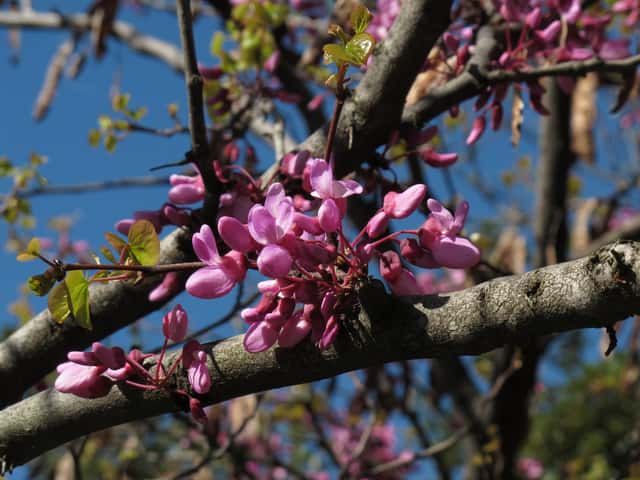
Judas tree (Cercis siliquastrum) is a easy-care plant from the Fabaceae family. The Judas tree (Cercis siliquastrum) is a deciduous ornamental tree native to the Mediterranean region and the Near East. Renowned for its spectacular spring bloom, it produces clusters of pink-purple flowers directly on its branches and trunk (cauliflory) before the heart-shaped leaves appear. It r...
Judas tree grows up to 8.0m, spread of 760cm, watering every 14 days, -15°C – 38°C, 30–50% humidity. It is not suitable for indoor environments and safe for pets.
Unlike many tropical plants, Judas tree tolerates watering mistakes. Best for beginners. Unlike many popular species, Judas tree is safe to keep around pets.
How to Care for Judas tree?
TLDR: Judas tree needs Direct sun, watering every 14 days, and temperatures between -15-38°C with 30-50% humidity.
How Often Should You Water Judas tree?
Water moderately during establishment (the first two years), then space out waterings to approximately every two weeks. The Judas tree is drought-tolerant once established and dislikes excess water. Allow the soil to dry out between waterings and ensure excellent drainage.
How Much Light Does Judas tree Need?
Plant the Judas tree in full sun to achieve maximum flowering. It tolerates partial shade, especially in hot climates, but flowering will be less abundant. A sunny location sheltered from cold winds is ideal.
What Is the Best Soil for Judas tree?
Prefer deep, well-drained soil, ranging from slightly sandy to loamy. The ideal pH is between 6.0 and 8.0 (neutral to slightly alkaline). The tree adapts to chalk and limestone but dislikes compacted clay or waterlogged soils. Adding compost at planting improves root establishment.
Care Schedule
Fertilize
Every 90 days
What Is Judas tree and Where Does It Come From?
The Judas tree (Cercis siliquastrum) is a deciduous ornamental tree native to the Mediterranean region and the Near East. Renowned for its spectacular spring bloom, it produces clusters of pink-purple flowers directly on its branches and trunk (cauliflory) before the heart-shaped leaves appear. It reaches 6 to 8 meters in height with a similar spread, and also features decorative purple seed pods in summer and golden foliage in autumn.
How to Propagate Judas tree?
Seed sowing
- 1 Harvest seeds in autumn from dry pods.
- 2 Scarify the seeds with sandpaper or soak them in hot water for 24 hours to break dormancy.
- 3 Sow in starter pots indoors in spring under 1 cm of well-draining substrate.
- 4 Maintain at 20-22 °C (68-72 °F) until germination (3-6 weeks).
- 5 Transplant into the ground at the permanent location as soon as the seedling is robust.
Semi-hardwood cuttings
- 1 Take 10-12 cm cuttings in summer from semi-hardwood.
- 2 Dip the base in rooting hormone.
- 3 Plant in a well-draining sand/potting soil mix (50/50).
- 4 Maintain in a humid environment until rooting (6-8 weeks).
How Big Does Judas tree Grow?
TLDR: Judas tree can reach up to 8.0m tall with Medium growth rate.
Max height
8.0m
Spread
7.6m
Growth rate
Medium
Foliage
Deciduous
Plant Uses
Ornamental
Great for decoration
Edible
Can be consumed
Culinary Uses
- Fresh flowers have a sweet-tart flavor and can be eaten raw in salads or used to decorate dishes.
- Flower buds are sometimes pickled as a condiment.
- Young pods are edible raw.
Is your plant showing symptoms?
Click on the symptom to discover possible causes:
What Diseases Commonly Affect Judas tree?
TLDR: Judas tree is susceptible to 10 known diseases. Monitor regularly for early detection.
Canker
Canker is a disease caused by various fungi and bacteria that create necrotic, sunken areas on bark of branches, stems, and trunks. Pathogens enter through wounds and natural openings, especially when plants are stressed. Canker can gradually weaken or kill branches by disrupting water and nutrient flow.
Verticillium Wilt
Verticillium wilt is a soil-borne fungal disease caused primarily by the fungi Verticillium dahliae and V. albo-atrum. These pathogens infect plant roots and grow within the vascular tissues, blocking water and nutrient transport, resulting in wilting and eventual plant death. The disease affects over 350 plant species including vegetables, fruits, ornamental flowers, and trees. The fungi can survive in soil for more than 10 years as resistant structures called microsclerotia.
Powdery Mildew
Powdery mildew is a common fungal disease caused by various fungi species including Erysiphe, Podosphaera, Oïdium, and Leveillula. It affects over 10,000 plant species worldwide. The disease thrives in warm, dry climates with high humidity and appears as a distinctive white powdery coating on plant surfaces.
Leaf Spot
Leaf spot is a common fungal disease caused by various pathogens including Alternaria, Ascochyta, Colletotrichum, Septoria, and Venturia. It primarily affects leaves, causing discolored spots that can lead to premature leaf drop if left untreated.
Meaning & Symbolism
According to Christian tradition, Judas Iscariot is said to have hanged himself from a Judas tree after his betrayal. The vibrant pink-purple bloom that emerges directly on the trunk in spring symbolizes resurrection, renewal, and redemption. In some Mediterranean cultures, it is also associated with love and ephemeral beauty.
Compare with similar plants
| Attribute | Difficulty | Light | Watering | Pet Safe |
|---|---|---|---|---|
| Field Maple | Easy | Bright indirect | 14d | ✓ |
| Silver Birch | Easy | Direct sun | 14d | ✓ |
| Cushion Bush | Easy | Direct sun | 14d | ✓ |
| Peruvian peppertree | Easy | Direct sun | 14d | ⚠️ |





