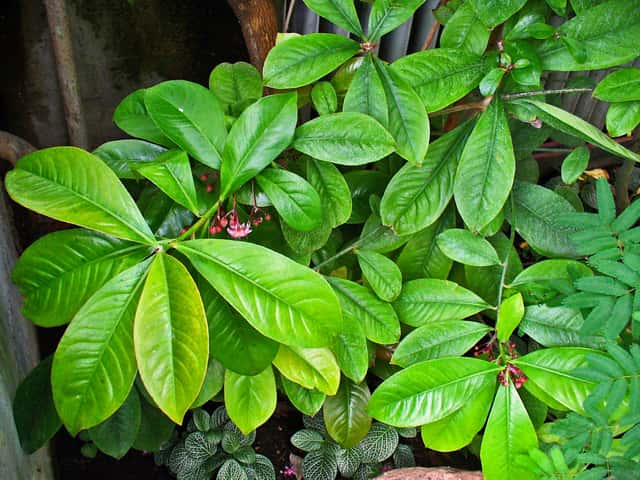
Primulaceae
Coralberry: Perfect Plant for Beginners
Ardisia
Give it bright, indirect light, evenly moist but well-drained rich soil, and average to high humidity. Ardisia tolerates typical indoor temperatures but dislikes cold drafts and harsh midday sun.
Every 7 days
Partial shade
15° - 27°C
50% - 70%
Categories
What is Coralberry?
Coralberry (Ardisia) is a easy-care plant from the Primulaceae family. Ardisia is a genus of evergreen shrubs prized for their glossy, leathery foliage and clusters of red or coral berries that persist through winter. Slow-growing and long-lived, these plants make excellent houseplants as well as shade-garden shrubs in warmer climates, offering a striking contrast betw...
Coralberry grows up to 1.8m, spread of 90cm, watering every 7 days, 15°C – 27°C, 50–70% humidity. It is suitable for indoor environments and not safe for pets.
Unlike many tropical plants, Coralberry tolerates watering mistakes. Best for beginners. Without precautions, ingestion can cause irritation in pets. Keep out of reach of cats and dogs. Without adequate drainage, root rot can develop within 14 days.
How to Care for Coralberry?
TLDR: Coralberry needs Partial shade, watering every 7 days, and temperatures between 15-27°C with 50-70% humidity.
How Often Should You Water Coralberry?
Water once the top inch of soil dries out, keeping it consistently moist without letting water sit in the saucer, which invites root rot.
How Much Light Does Coralberry Need?
Provide bright, indirect light; direct sun can scorch the leaves, while too little light reduces flowering and berry production.
What Is the Best Soil for Coralberry?
Plant in a rich, porous, well-draining mix that is slightly acidic (pH 5.5-6.5) — a blend of potting soil, compost, and perlite or peat works well.
What Pot Should You Use for Coralberry?
Terracotta or ceramic pot with good drainage holes, sized to the plant's compact root system
Care Schedule
Fertilize
Every 30 days
Misting
Every 7 days
Repot
Every 730 days
What Is Coralberry and Where Does It Come From?
Ardisia is a genus of evergreen shrubs prized for their glossy, leathery foliage and clusters of red or coral berries that persist through winter. Slow-growing and long-lived, these plants make excellent houseplants as well as shade-garden shrubs in warmer climates, offering a striking contrast between delicate white or pink blooms and their showy fruit.
How to Propagate Coralberry?
Stem cuttings
- Take 4-6 inch cuttings from healthy stems
- Strip lower leaves before planting
- 1 Take the cutting
Cut a 4-6 inch segment from a healthy stem just below a leaf node.
- 2 Prepare and plant
Remove lower leaves, dip the cut end in rooting hormone (optional), and insert into moist, light potting mix.
- 3 Wait for roots
Keep in bright indirect light and high humidity until roots form, usually 4-6 weeks.
Materials needed:
Seeds
- Use fresh, ripe berries
- Germination can be slow and uneven
- 1 Extract seeds
Remove seeds from ripe berry pulp and rinse clean.
- 2 Sow
Sow in a light, moist seed-starting mix and cover lightly.
- 3 Wait for germination
Keep warm and moist; germination takes 1-3 months.
Materials needed:
How Big Does Coralberry Grow?
TLDR: Coralberry can reach up to 1.8m tall with Slow growth rate.
Max height
1.8m
Spread
90cm
Growth rate
Slow
Foliage
Evergreen
Warning: Toxic Plant
This plant can be toxic if ingested. Keep out of reach of:
Plant Uses
Ornamental
Great for decoration
Is your plant showing symptoms?
Click on the symptom to discover possible causes:
What Diseases Commonly Affect Coralberry?
TLDR: Coralberry is susceptible to 6 known diseases. Monitor regularly for early detection.
Overwatering
Overwatering occurs when plants receive too much water, depriving roots of oxygen and causing root rot. This environmental stress is one of the most common causes of houseplant death, as waterlogged soil prevents roots from breathing and functioning properly.
Root Rot
Root rot is a serious fungal disease that affects the root system of plants, causing them to decay and die. It is primarily caused by overwatering, poor drainage, or soil-borne fungi such as Pythium, Phytophthora, Rhizoctonia, and Fusarium. The disease thrives in waterlogged conditions where roots are deprived of oxygen, making them susceptible to fungal infection.
Mealybugs
Mealybugs are small, soft-bodied insects covered with a white, waxy, cottony material. They are common pests of houseplants and outdoor plants in mild climates. These sap-sucking insects feed on plant tissue, causing damage, stunted growth, and can lead to plant death if left untreated. They produce sticky honeydew which attracts sooty mold.
Scale Insects
Scale insects are small sap-sucking pests that appear as brown, shell-like bumps on plant stems and leaves. There are over 25 species, divided into armored (hard) and unarmored (soft) scales. They feed by piercing plant tissue and extracting sap, which weakens the plant and can lead to yellowing, stunted growth, and even death if left untreated. They also excrete honeydew, which attracts ants and promotes sooty mold growth.
Meaning & Symbolism
In parts of Asia, Ardisia crenata is a popular Lunar New Year plant, its long-lasting coral-red berries symbolizing prosperity, good fortune, and longevity.
Compare with similar plants
| Attribute | Difficulty | Light | Watering | Pet Safe |
|---|---|---|---|---|
| Field Maple | Easy | Bright indirect | 14d | ✓ |
| Silver Birch | Easy | Direct sun | 14d | ✓ |
| Cushion Bush | Easy | Direct sun | 14d | ✓ |
| Peruvian peppertree | Easy | Direct sun | 14d | ⚠️ |





