Solanaceae
Granular Nightshade (Solanum granulosoleprosum): Complete Growing Guide
Solanum granulosoleprosum
A hardy, low-maintenance plant that adapts well to poor, well-drained soils. Prefers full sun and tolerates dry spells. Best suited for outdoor cultivation in tropical and subtropical climates. Water moderately and allow soil to dry between waterings.
Every 7 days
Bright indirect
5° - 35°C
50% - 80%
Categories
What is Granular Nightshade?
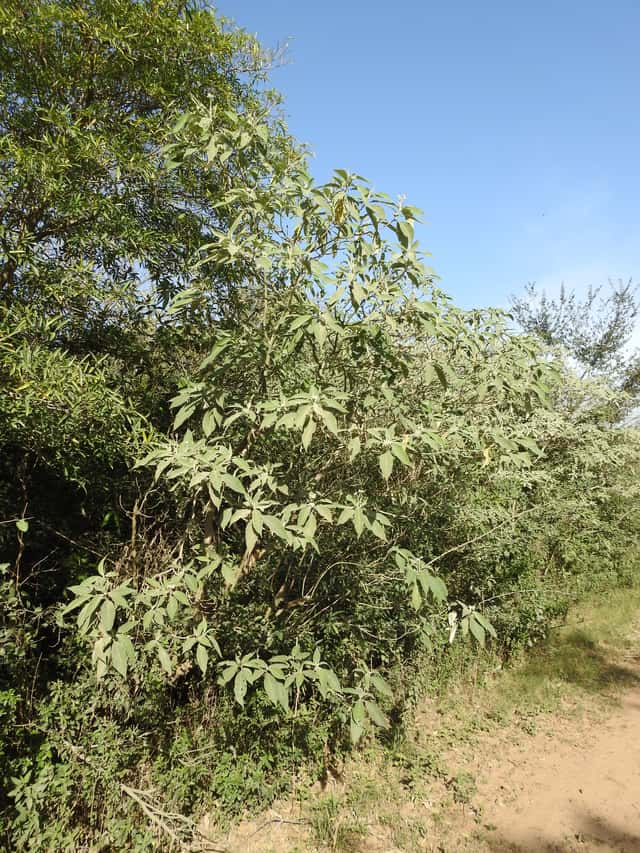
Granular Nightshade (Solanum granulosoleprosum) is a medium-care plant from the Solanaceae family. Solanum granulosoleprosum is a fast-growing shrub or small tree native to southern Brazil, Paraguay, Uruguay, and northern Argentina. A member of the Solanaceae family, it is a pioneer species that thrives in disturbed soils, forest edges, and arid terrain. Its cylindrical, granular stems are covere...
Granular Nightshade grows up to 8.0m, spread of 300cm, watering every 7 days, 5°C – 35°C, 50–80% humidity. It is not suitable for indoor environments and not safe for pets.
Without precautions, ingestion can cause irritation in pets. Keep out of reach of cats and dogs.
How to Care for Granular Nightshade?
TLDR: Granular Nightshade needs Bright indirect, watering every 7 days, and temperatures between 5-35°C with 50-80% humidity.
How Often Should You Water Granular Nightshade?
Water every 7 days on average. Allow the soil to partially dry between waterings. Drought-tolerant but sensitive to waterlogging.
How Much Light Does Granular Nightshade Need?
Requires full sun (6+ hours daily). Not suitable for indoor cultivation due to high light requirements.
What Is the Best Soil for Granular Nightshade?
Prefers well-drained, slightly acidic to neutral soil (pH 5.5–7.0). Tolerates poor soils. Avoid compacted clay soils.
What Pot Should You Use for Granular Nightshade?
Large terracotta pot or direct garden planting; suitable for large containers of 20+ liters.
Care Schedule
Fertilize
Every 30 days
What Is Granular Nightshade and Where Does It Come From?
Solanum granulosoleprosum is a fast-growing shrub or small tree native to southern Brazil, Paraguay, Uruguay, and northern Argentina. A member of the Solanaceae family, it is a pioneer species that thrives in disturbed soils, forest edges, and arid terrain. Its cylindrical, granular stems are covered with dense hairs, and it produces white to pale purple flowers in terminal clusters, followed by globose yellow berries at maturity.
How to Propagate Granular Nightshade?
Seed Propagation
Seeds germinate readily without special pre-treatment. Keep substrate slightly moist but not waterlogged.
- 1 Collect seeds from ripe yellow berries
- 2 Wash and briefly dry the seeds
- 3 Sow in moist, well-drained germination mix
- 4 Keep in a warm, bright location
- 5 Transplant when seedlings reach 10-15 cm
Materials needed:
Stem Cutting
Use current season growth. Keep substrate slightly moist until rooting occurs.
- 1 Cut semi-hardwood stems 15-20 cm long
- 2 Remove leaves from the lower half
- 3 Apply rooting hormone to the base
- 4 Insert in moist, well-drained substrate
- 5 Keep in a sheltered location with good light
Materials needed:
How Big Does Granular Nightshade Grow?
TLDR: Granular Nightshade can reach up to 8.0m tall with Fast growth rate.
Max height
8.0m
Spread
3.0m
Growth rate
Fast
Foliage
Semi-evergreen
Warning: Toxic Plant
This plant can be toxic if ingested. Keep out of reach of:
Plant Uses
Ornamental
Great for decoration
Medicinal
Medicinal properties
Medicinal Uses
- Traditional Brazilian folk medicine: leaves and roots used to stop bleeding and heal wounds
- Used as a mild sedative in southern Brazilian folk medicine
Is your plant showing symptoms?
Click on the symptom to discover possible causes:
What Diseases Commonly Affect Granular Nightshade?
TLDR: Granular Nightshade is susceptible to 7 known diseases. Monitor regularly for early detection.
Powdery Mildew
Powdery mildew is a common fungal disease caused by various fungi species including Erysiphe, Podosphaera, Oïdium, and Leveillula. It affects over 10,000 plant species worldwide. The disease thrives in warm, dry climates with high humidity and appears as a distinctive white powdery coating on plant surfaces.
Root Rot
Root rot is a serious fungal disease that affects the root system of plants, causing them to decay and die. It is primarily caused by overwatering, poor drainage, or soil-borne fungi such as Pythium, Phytophthora, Rhizoctonia, and Fusarium. The disease thrives in waterlogged conditions where roots are deprived of oxygen, making them susceptible to fungal infection.
Aphids
Aphids are small, soft-bodied, pear-shaped insects (1/16 to 1/8 inch long) that feed by sucking nutrient-rich sap from plants. They reproduce rapidly and can quickly weaken plants, causing distorted growth and transmitting plant viruses. Aphids come in various colors including green, black, red, yellow, brown, and gray. They secrete honeydew, a sticky substance that attracts ants and encourages sooty mold growth.
Whiteflies
Whiteflies are small, soft-bodied, winged insects closely related to aphids and mealybugs. They are moth-like in appearance, about 1/16 inch long, triangular in shape, and gray-white in color. These sap-sucking pests feed on plant tissue, causing yellowing, stunted growth, and wilting. They also excrete honeydew, which attracts ants and promotes sooty mold growth. Whiteflies can transmit serious plant viruses.
Meaning & Symbolism
Symbolizes pioneering spirit and resilience — one of the first plants to colonize degraded lands, preparing the soil for other species.
Fun Facts
Can reach up to 8 meters tall in the wild
It is a pioneer species: colonizes degraded land and prepares the soil for other plants
Despite its name, it is not the true jurubeba (Solanum paniculatum) and its berries are not edible
Belongs to the Solanaceae family — the same family as tomatoes, peppers, and potatoes
Frequently asked questions
Is Granular Nightshade edible?
How often should I water it?
Is it toxic to pets?
Where should I plant it?
How fast does it grow?
Compare with similar plants
| Attribute | Difficulty | Light | Watering | Pet Safe |
|---|---|---|---|---|
| Dark Fieldcap | Medium | Low light | 2d | ⚠️ |
| Azalea | Medium | Partial shade | 3d | ⚠️ |
| Bougainvillea | Medium | Direct sun | 7d | ⚠️ |
| Wild Lettuce | Medium | Direct sun | 7d | ⚠️ |



