Onagraceae
Mexican Primrose-Willow: Edible Plant
Ludwigia octovalvis
A robust and fast-growing semi-aquatic plant. It prefers full sun and constantly moist or waterlogged soil. Requires frequent watering (every 2–3 days) to keep the substrate wet, mimicking its natural habitat in riparian zones. Fertilize every two weeks with a balanced fertilizer during the growing season. Prune dry or excessively long parts monthly to maintain shape. Ideal for water gardens, pond edges, pots with water saucers, or damp outdoor beds.
Every 3 days
Direct sun
10° - 38°C
40% - 70%
Categories
What is Mexican Primrose-Willow?
Mexican Primrose-Willow (Ludwigia octovalvis) is a easy-care plant from the Onagraceae family. Ludwigia octovalvis, commonly known as the Mexican primrose-willow, is a perennial plant in the Onagraceae family, native to tropical and subtropical regions worldwide. It grows naturally along riverbanks, marshes, rice paddies, ditches, and wetlands, reaching up to 3 meters in height. Its erect, br...
Mexican Primrose-Willow grows up to 3.0m, spread of 100cm, watering every 3 days, 10°C – 38°C, 40–70% humidity. It is not suitable for indoor environments and safe for pets.
Unlike many tropical plants, Mexican Primrose-Willow tolerates watering mistakes. Best for beginners. Unlike many popular species, Mexican Primrose-Willow is safe to keep around pets.
How to Care for Mexican Primrose-Willow?
TLDR: Mexican Primrose-Willow needs Direct sun, watering every 3 days, and temperatures between 10-38°C with 40-70% humidity.
How Often Should You Water Mexican Primrose-Willow?
Keep the soil constantly moist or slightly waterlogged—this species tolerates and even thrives in flooded soils. Water every 2–3 days or whenever the substrate surface begins to dry. In water gardens, it can be grown with roots permanently submerged in up to 15 cm of water. Avoid long periods of drought, as the leaves wilt quickly.
How Much Light Does Mexican Primrose-Willow Need?
Requires full sun for vigorous development and abundant flowering—ideally 6 to 8 hours of direct sunlight per day. Tolerates partial shade, but with fewer flowers and slower growth. It is one of the most light-demanding plants in the Onagraceae family; it is not suitable for indoor environments without intense artificial lighting.
What Is the Best Soil for Mexican Primrose-Willow?
Prefers soils rich in organic matter, fertile, and with good moisture retention. In water gardens, use clay substrate or heavy soil mixed with organic compost. The ideal pH ranges from 6.0 to 7.5. Avoid poor sandy soils, as the plant requires constant nutrients to sustain its rapid growth.
What Pot Should You Use for Mexican Primrose-Willow?
For container cultivation, prefer heavy ceramic or plastic pots without drainage holes, or with a saucer always filled with water. Pots 20–30 cm deep are sufficient. In water gardens, plant in submerged perforated baskets or directly into the muddy banks of the pond.
Care Schedule
Fertilize
Every 14 days
What Is Mexican Primrose-Willow and Where Does It Come From?
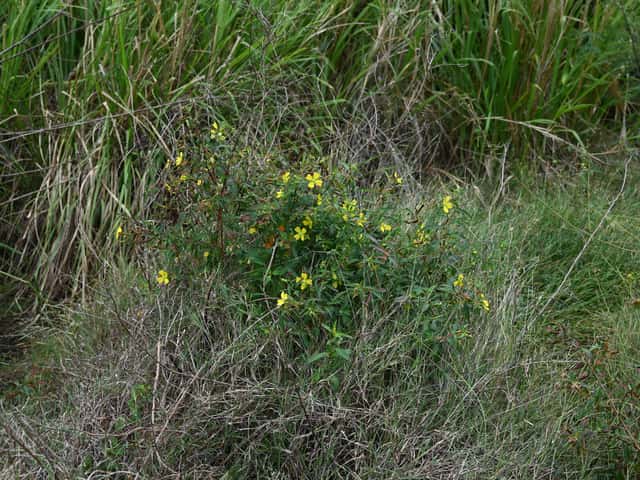
Ludwigia octovalvis, commonly known as the Mexican primrose-willow, is a perennial plant in the Onagraceae family, native to tropical and subtropical regions worldwide. It grows naturally along riverbanks, marshes, rice paddies, ditches, and wetlands, reaching up to 3 meters in height. Its erect, branched stems become woody at the base, while the lanceolate, glossy leaves add elegance to the plant's stature. The four-petaled yellow flowers are numerous and appear along the branches during spring and summer, attracting pollinators such as bees and insects. It is widely used in ethnomedicine by Asian, African, and American communities to treat gastrointestinal conditions, rheumatism, diabetes, and skin problems.
How to Propagate Mexican Primrose-Willow?
How Big Does Mexican Primrose-Willow Grow?
TLDR: Mexican Primrose-Willow can reach up to 3.0m tall with Fast growth rate.
Max height
3.0m
Spread
1.0m
Growth rate
Fast
Foliage
Evergreen
Plant Uses
Ornamental
Great for decoration
Medicinal
Medicinal properties
Edible
Can be consumed
Medicinal Uses
- Treatment of diarrhea and dysentery in traditional Asian and Caribbean medicine
- Decocction of leaves as a carminative, vermifuge, and for nervous disorders
- Poultice of mucilaginous leaves for headaches, orchitis, and swollen glands
- Traditional use in India for eczema, coughs, and rheumatic pains
- Whole plant extract used by Indian and Mexican healers in the treatment of diabetes, edema, nephritis, and hypertension
- Potential inhibitor of digestive enzymes (amylase, lipase) investigated in scientific studies
Culinary Uses
- Young leaves and tender shoots consumed as a vegetable in Southeast Asian cuisine
- Tea prepared with the leaves—used medicinally and as a beverage in some local traditions
Is your plant showing symptoms?
Click on the symptom to discover possible causes:
What Diseases Commonly Affect Mexican Primrose-Willow?
TLDR: Mexican Primrose-Willow is susceptible to 7 known diseases. Monitor regularly for early detection.
Aphids
Aphids are small, soft-bodied, pear-shaped insects (1/16 to 1/8 inch long) that feed by sucking nutrient-rich sap from plants. They reproduce rapidly and can quickly weaken plants, causing distorted growth and transmitting plant viruses. Aphids come in various colors including green, black, red, yellow, brown, and gray. They secrete honeydew, a sticky substance that attracts ants and encourages sooty mold growth.
Spider Mites
Spider mites are tiny arachnids (less than 1/20 inch long) related to spiders and ticks that feed on plant sap. They thrive in hot, dry conditions and can cause significant damage to ornamental and vegetable plants. During severe infestations, crop losses can reach 14% or higher as these pests disrupt vital plant processes including photosynthesis, carbon dioxide absorption, and transpiration.
Mealybugs
Mealybugs are small, soft-bodied insects covered with a white, waxy, cottony material. They are common pests of houseplants and outdoor plants in mild climates. These sap-sucking insects feed on plant tissue, causing damage, stunted growth, and can lead to plant death if left untreated. They produce sticky honeydew which attracts sooty mold.
Scale Insects
Scale insects are small sap-sucking pests that appear as brown, shell-like bumps on plant stems and leaves. There are over 25 species, divided into armored (hard) and unarmored (soft) scales. They feed by piercing plant tissue and extracting sap, which weakens the plant and can lead to yellowing, stunted growth, and even death if left untreated. They also excrete honeydew, which attracts ants and promotes sooty mold growth.
Compare with similar plants
| Attribute | Difficulty | Light | Watering | Pet Safe |
|---|---|---|---|---|
| Small Scabious | Easy | Direct sun | 7d | ✓ |
| Field Maple | Easy | Bright indirect | 14d | ✓ |
| Silver Birch | Easy | Direct sun | 14d | ✓ |
| Red valerian | Easy | Direct sun | 10d | ✓ |



