Ebenaceae
Japanese Persimmon: Complete Growing & Care Guide
Diospyros kaki
Japanese persimmon is a relatively adaptable and long-lived tree that thrives in full sun with well-drained, fertile soil. Once established, it tolerates moderate drought but benefits from regular watering during the fruiting season. Annual light pruning in late winter helps maintain structure and encourages good fruit production. Fertilize three times a year with a balanced fertilizer and protect young trees from late frosts.
Every 14 days
Direct sun
-12° - 38°C
40% - 70%
Categories
What is Japanese Persimmon?
Japanese Persimmon (Diospyros kaki) is a medium-care plant from the Ebenaceae family. The Japanese persimmon (Diospyros kaki) is a deciduous fruit tree native to China and Japan, widely cultivated across temperate regions worldwide. Belonging to the family Ebenaceae, it can grow up to 9 meters tall and is prized for its spectacular autumn foliage in shades of gold, orange, red and bu...
Japanese Persimmon grows up to 9.0m, spread of 760cm, watering every 14 days, -12°C – 38°C, 40–70% humidity. It is not suitable for indoor environments and safe for pets.
Unlike many popular species, Japanese Persimmon is safe to keep around pets.
How to Care for Japanese Persimmon?
TLDR: Japanese Persimmon needs Direct sun, watering every 14 days, and temperatures between -12-38°C with 40-70% humidity.
How Often Should You Water Japanese Persimmon?
Water regularly during spring and summer, especially during fruit development, keeping soil evenly moist but never waterlogged. Watering every 14 days is adequate in temperate climates. Reduce irrigation in autumn and withhold almost entirely in winter during dormancy. Established trees tolerate moderate drought, but poorly drained soils cause root rot.
How Much Light Does Japanese Persimmon Need?
Japanese persimmon requires full sun to produce large, flavorful fruit — at least 6 to 8 hours of direct sunlight daily. In partial shade, the tree survives but fruit production is significantly reduced. Plant in an open, sheltered position where it receives intense light throughout the day, protected from strong winds.
What Is the Best Soil for Japanese Persimmon?
Prefers deep, fertile, well-drained soil with a loamy texture. Ideal pH range is 6.0 to 7.5. Avoid compacted or waterlogged soils, as poor drainage promotes fungal root diseases. Amend with organic compost before planting to ensure good water retention and nutrient availability.
What Pot Should You Use for Japanese Persimmon?
Large terracotta or glazed ceramic container with minimum 60 cm diameter and ample drainage holes for container growing; best cultivated directly in the ground in garden or orchard settings for mature, productive trees.
Care Schedule
Fertilize
Every 60 days
What Is Japanese Persimmon and Where Does It Come From?
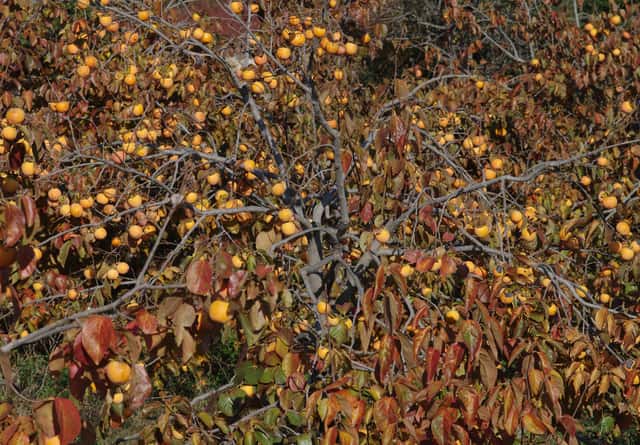
The Japanese persimmon (Diospyros kaki) is a deciduous fruit tree native to China and Japan, widely cultivated across temperate regions worldwide. Belonging to the family Ebenaceae, it can grow up to 9 meters tall and is prized for its spectacular autumn foliage in shades of gold, orange, red and burgundy, as well as its glossy orange-red fruits that cling to the bare branches well into winter. The persimmon fruit, with its honeyed, floral flavor reminiscent of mango and apricot, is one of the oldest cultivated fruits in East Asia, with records of its cultivation dating back over 2,000 years.
How to Propagate Japanese Persimmon?
Grafting
Grafting is the standard commercial method as it ensures fruit identical to the parent cultivar and earlier production. Always use sterilized tools.
- 1 Select a compatible rootstock such as Diospyros virginiana or Diospyros lotus
- 2 Prepare a scion of the desired cultivar with clean cuts
- 3 Join the scion to the rootstock ensuring cambium alignment
- 4 Wrap with grafting tape and keep in a shaded, humid location
- 5 Remove tape after 4-6 weeks when new growth appears
Materials needed:
Seed Propagation
Seed-grown trees take 7-10 years to fruit and may not replicate the parent cultivar characteristics. Grafting is preferred for reliable fruiting.
- 1 Extract seeds from ripe fruit and wash thoroughly
- 2 Stratify seeds in moist sand in the refrigerator for 60-90 days
- 3 Sow in a light, moist seed-starting mix at 2 cm depth
- 4 Maintain temperature at 20-25°C with consistent moisture
- 5 Transplant to a larger pot when seedlings reach 15-20 cm
Materials needed:
How Big Does Japanese Persimmon Grow?
TLDR: Japanese Persimmon can reach up to 9.0m tall with Medium growth rate.
Max height
9.0m
Spread
7.6m
Growth rate
Medium
Foliage
Deciduous
Plant Uses
Edible
Can be consumed
Ornamental
Great for decoration
Medicinal Uses
- Leaf extracts are used in traditional East Asian medicine to support healthy blood pressure and circulation
- Unripe persimmon tannins have been used topically as a natural astringent in some medicinal traditions
- Rich in vitamins A, C, and B6, as well as manganese and dietary fiber
Culinary Uses
- Eaten fresh when ripe — non-astringent varieties like Fuyu can be eaten firm and crisp
- Used in baking: breads, puddings, cookies, and pies
- Prepared as jams, preserves, and dried fruit (hoshigaki)
- Added to smoothies and creamy desserts
- Featured in autumn salads and savory dishes paired with cheese and cured meats
Is your plant showing symptoms?
Click on the symptom to discover possible causes:
What Diseases Commonly Affect Japanese Persimmon?
TLDR: Japanese Persimmon is susceptible to 10 known diseases. Monitor regularly for early detection.
Root Rot
Root rot is a serious fungal disease that affects the root system of plants, causing them to decay and die. It is primarily caused by overwatering, poor drainage, or soil-borne fungi such as Pythium, Phytophthora, Rhizoctonia, and Fusarium. The disease thrives in waterlogged conditions where roots are deprived of oxygen, making them susceptible to fungal infection.
Phytophthora Root Rot
Disease caused by fungus-like organisms (oomycetes) that live in soil and can survive for years. It affects roots, stem, and crown of plants, being especially severe in waterlogged or poorly drained soils. It is the second most common cause of root rot in trees and shrubs.
Anthracnose
Anthracnose is a fungal disease caused by fungi in the genus Colletotrichum that affects many plants, including vegetables, fruits, and trees. The disease thrives in cool, wet conditions, causing dark, sunken lesions on leaves, stems, flowers, and fruits.
Powdery Mildew
Powdery mildew is a common fungal disease caused by various fungi species including Erysiphe, Podosphaera, Oïdium, and Leveillula. It affects over 10,000 plant species worldwide. The disease thrives in warm, dry climates with high humidity and appears as a distinctive white powdery coating on plant surfaces.
Meaning & Symbolism
In East Asian cultures, the Japanese persimmon symbolizes good fortune, joy, longevity, and prosperity. The bright orange fruits are considered auspicious gifts in autumn, associated with abundance and gratitude.
Fun Facts
Japanese persimmon trees can live for over 100 years, making them one of the longest-lived fruit trees in the temperate garden
The fruits remain on the bare branches after leaf drop, creating a striking ornamental display through winter
Hoshigaki, the Japanese art of hand-massaged dried persimmon, is a centuries-old craft that concentrates the fruit natural sugars into a sweet, jewel-like delicacy
Persimmon wood (known as ebony-like in texture) has been used in fine woodworking and the manufacture of golf club heads
Frequently asked questions
How often should I water a Japanese persimmon tree?
Can Japanese persimmon be grown in a container?
When do Japanese persimmons produce fruit?
Does Japanese persimmon need much pruning?
Is Japanese persimmon toxic to pets?
Compare with similar plants
| Attribute | Difficulty | Light | Watering | Pet Safe |
|---|---|---|---|---|
| Dark Fieldcap | Medium | Low light | 2d | ⚠️ |
| Azalea | Medium | Partial shade | 3d | ⚠️ |
| Bougainvillea | Medium | Direct sun | 7d | ⚠️ |
| Wild Lettuce | Medium | Direct sun | 7d | ⚠️ |



