Bignoniaceae
Calabash Tree: Edible Plant
Crescentia cujete
Plant in full sun (at least 6 hours of direct sunlight daily) in well-draining, fertile soil. Water every 10 days for established trees, allowing the topsoil to dry slightly between waterings; young trees need consistently moist conditions. Feed with a balanced slow-release fertilizer every 30 days during the growing season. The calabash tree is drought-tolerant once established and requires minimal pruning — trim dead or crossing branches once a year after fruiting. Not suitable for indoor cultivation.
Every 10 days
Direct sun
10° - 35°C
60% - 90%
Categories
What is Calabash Tree?
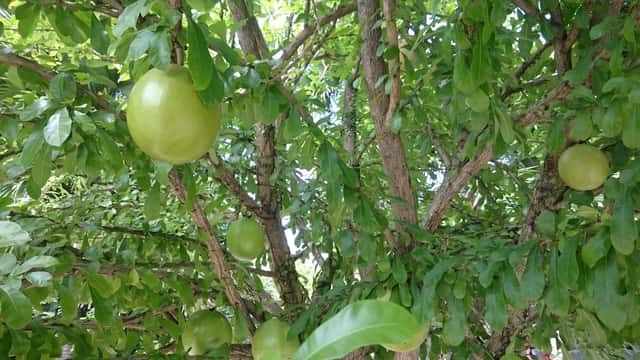
Calabash Tree (Crescentia cujete) is a medium-care plant from the Bignoniaceae family. Crescentia cujete, the calabash tree, is a small to medium-sized tropical evergreen tree native to Mexico, Central America, and the Caribbean, reaching up to 9 m in height with a broad, spreading canopy. It is instantly recognizable by its cauliflorous habit — large, hard-shelled spherical fruits an...
Calabash Tree grows up to 9.0m, spread of 700cm, watering every 10 days, 10°C – 35°C, 60–90% humidity. It is not suitable for indoor environments and not safe for pets.
Without precautions, ingestion can cause irritation in pets. Keep out of reach of cats and dogs.
How to Care for Calabash Tree?
TLDR: Calabash Tree needs Direct sun, watering every 10 days, and temperatures between 10-35°C with 60-90% humidity.
How Often Should You Water Calabash Tree?
Established calabash trees are drought-tolerant; water deeply every 10–14 days and allow the top layer of soil to dry out slightly between waterings. Container-grown specimens need more frequent checks — water when the top 2–3 cm of substrate feel dry. Avoid waterlogging, which promotes root rot. During fruiting (6-month cycle), maintain consistent soil moisture to support fruit development.
How Much Light Does Calabash Tree Need?
Crescentia cujete requires full sun — a minimum of 6 hours of direct sunlight per day. It will tolerate partial shade but produces fewer flowers and fruits. In regions with extremely intense afternoon heat, light afternoon shade can prevent leaf scorch on young trees.
What Is the Best Soil for Calabash Tree?
Plant in well-draining soil with good fertility. Sandy-loam or loam-based mixes enriched with organic matter work best. The tree tolerates a wide pH range from 6.0 to 8.5. Avoid heavy clay soils that stay waterlogged. For container growing, mix equal parts potting soil, coarse perlite, and aged compost.
What Pot Should You Use for Calabash Tree?
For container growing, choose a large terracotta or ceramic pot at least 60 cm wide and 60 cm deep with drainage holes. The weight of terracotta helps stabilize this top-heavy tree. Start young plants in 30–40 cm containers and upsize every 2–3 years. Ground planting is strongly preferred for long-term growth and fruiting.
Care Schedule
Fertilize
Every 30 days
What Is Calabash Tree and Where Does It Come From?
Crescentia cujete, the calabash tree, is a small to medium-sized tropical evergreen tree native to Mexico, Central America, and the Caribbean, reaching up to 9 m in height with a broad, spreading canopy. It is instantly recognizable by its cauliflorous habit — large, hard-shelled spherical fruits and yellow-green flowers with purple striping emerge directly from the trunk and older branches. Bat-pollinated and night-flowering, it thrives in full sun and well-draining soils across USDA zones 10b–12b. The calabash has been inseparable from human culture for millennia: its gourd shells have served as bowls, water vessels, musical instruments (maracas, Haitian Vodou asson rattles), and ceremonial containers. In traditional medicine across Latin America and the Caribbean, preparations from bark, leaves, and fruit pulp are used for respiratory ailments, hypertension, wound healing, and as expectorants.
How to Propagate Calabash Tree?
How Big Does Calabash Tree Grow?
TLDR: Calabash Tree can reach up to 9.0m tall with Medium growth rate.
Max height
9.0m
Spread
7.0m
Growth rate
Medium
Foliage
Evergreen
Warning: Toxic Plant
This plant can be toxic if ingested. Keep out of reach of:
Plant Uses
Ornamental
Great for decoration
Medicinal
Medicinal properties
Edible
Can be consumed
Medicinal Uses
- Expectorant for respiratory ailments and coughs (leaf and bark preparations)
- Anti-inflammatory bark and leaf extracts (triterpenoids)
- Traditional treatment for hypertension and digestive issues
- Wound healing topical application from fruit pulp (properly processed)
- Antipyretic and antidiarrheal uses in Caribbean folk medicine
Culinary Uses
- Processed fruit pulp used as a base for traditional drinks and syrups after detoxification
- Seeds ground into protein-rich flour for beverages
- Gourd shell used as a food bowl and serving vessel in Day of the Dead offerings
- Sacred saka' and balche' ceremonial drinks served in calabash bowls
Is your plant showing symptoms?
Click on the symptom to discover possible causes:
What Diseases Commonly Affect Calabash Tree?
TLDR: Calabash Tree is susceptible to 10 known diseases. Monitor regularly for early detection.
Root Rot
Root rot is a serious fungal disease that affects the root system of plants, causing them to decay and die. It is primarily caused by overwatering, poor drainage, or soil-borne fungi such as Pythium, Phytophthora, Rhizoctonia, and Fusarium. The disease thrives in waterlogged conditions where roots are deprived of oxygen, making them susceptible to fungal infection.
Leaf Spot
Leaf spot is a common fungal disease caused by various pathogens including Alternaria, Ascochyta, Colletotrichum, Septoria, and Venturia. It primarily affects leaves, causing discolored spots that can lead to premature leaf drop if left untreated.
Aphids
Aphids are small, soft-bodied, pear-shaped insects (1/16 to 1/8 inch long) that feed by sucking nutrient-rich sap from plants. They reproduce rapidly and can quickly weaken plants, causing distorted growth and transmitting plant viruses. Aphids come in various colors including green, black, red, yellow, brown, and gray. They secrete honeydew, a sticky substance that attracts ants and encourages sooty mold growth.
Mealybugs
Mealybugs are small, soft-bodied insects covered with a white, waxy, cottony material. They are common pests of houseplants and outdoor plants in mild climates. These sap-sucking insects feed on plant tissue, causing damage, stunted growth, and can lead to plant death if left untreated. They produce sticky honeydew which attracts sooty mold.
Meaning & Symbolism
The calabash tree is a symbol of wisdom, creativity, and self-sufficiency throughout Latin America and the Caribbean. Its hollow gourd shell forms the sacred asson rattle used in Haitian Vodou ceremonies, and in Mesoamerican cultures the calabash bowl held offerings in Day of the Dead and agricultural rituals. Across indigenous traditions, it represents the cosmic container — a vessel bridging the living world and the ancestral spirit realm — and embodies fertility, abundance, and the enduring bond between nature and humanity.
Compare with similar plants
| Attribute | Difficulty | Light | Watering | Pet Safe |
|---|---|---|---|---|
| Dark Fieldcap | Medium | Low light | 2d | ⚠️ |
| Azalea | Medium | Partial shade | 3d | ⚠️ |
| Bougainvillea | Medium | Direct sun | 7d | ⚠️ |
| Wild Lettuce | Medium | Direct sun | 7d | ⚠️ |
Choose & Compare
Sources & References
- How to Grow and Care for Crescentia Cujete - Biology Insights
- Growing Gourd Tree in a Pot - Cultivating Flora
- Crescentia cujete - Missouri Botanical Garden
- Crescentia cujete: uses, benefits, cultivation - JardineriaOn
- Phytochemistry, Ethnobotany, Toxicology of Crescentia cujete - PMC/NCBI
- Como cultivar y cuidar una Totumo - PictureThis



