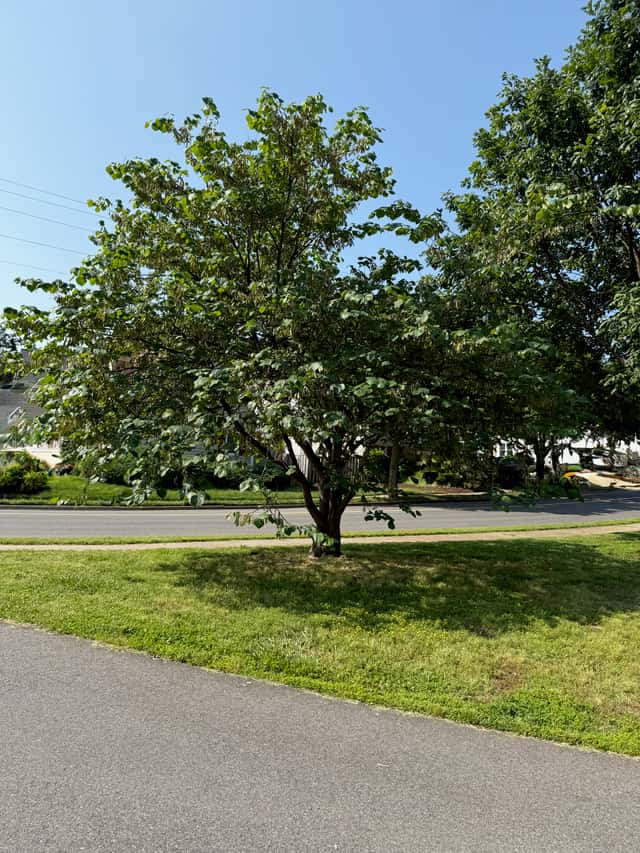
Fabaceae
Eastern Redbud (Cercis canadensis)
Cercis canadensis
Eastern Redbud is a low-maintenance deciduous tree best suited for outdoor landscapes. Water regularly during establishment; once mature it tolerates moderate drought. Plant in full sun to partial shade in well-drained loamy soil. Prune after flowering to shape. Fertilize once a year in early spring.
Every 10 days
Bright indirect
-23° - 35°C
40% - 70%
Categories
What is Eastern Redbud?
Eastern Redbud (Cercis canadensis) is a easy-care plant from the Fabaceae family. Cercis canadensis, commonly known as the Eastern Redbud, is a small to medium-sized deciduous tree native to eastern North America. It is celebrated for its spectacular early-spring display of rosy-pink, pea-like flowers that erupt in dense clusters along bare branches and even the trunk before the...
Eastern Redbud grows up to 9.2m, spread of 1065cm, watering every 10 days, -23°C – 35°C, 40–70% humidity. It is not suitable for indoor environments and safe for pets.
Unlike many tropical plants, Eastern Redbud tolerates watering mistakes. Best for beginners. Unlike many popular species, Eastern Redbud is safe to keep around pets.
How to Care for Eastern Redbud?
TLDR: Eastern Redbud needs Bright indirect, watering every 10 days, and temperatures between -23-35°C with 40-70% humidity.
How Often Should You Water Eastern Redbud?
Water deeply every 7–14 days during the first two growing seasons to establish roots. Once established, water every 10–14 days during dry spells; the tree is moderately drought-tolerant but performs best with consistent moisture. Avoid waterlogged or poorly drained soils.
How Much Light Does Eastern Redbud Need?
Grows best in full sun (6+ hours daily), which maximizes flower production. Tolerates partial shade, especially beneficial in hot-summer climates. Avoid dense shade, which reduces blooming.
What Is the Best Soil for Eastern Redbud?
Prefers loamy, well-drained, moderately fertile soil with a pH of 5.5–7.5. Adaptable to clay and sandy soils as long as drainage is adequate. Avoid sites with standing water or compacted soil.
What Pot Should You Use for Eastern Redbud?
Not applicable (outdoor tree; does not require pots under normal conditions)
Care Schedule
Fertilize
Every 60 days
What Is Eastern Redbud and Where Does It Come From?
Cercis canadensis, commonly known as the Eastern Redbud, is a small to medium-sized deciduous tree native to eastern North America. It is celebrated for its spectacular early-spring display of rosy-pink, pea-like flowers that erupt in dense clusters along bare branches and even the trunk before the heart-shaped leaves emerge. Growing 20–30 feet tall and wide, it thrives as an understory tree and is one of the first trees to herald the arrival of spring.
How Big Does Eastern Redbud Grow?
TLDR: Eastern Redbud can reach up to 9.2m tall with Medium growth rate.
Max height
9.2m
Spread
10.7m
Growth rate
Medium
Foliage
Deciduous
Plant Uses
Ornamental
Great for decoration
Edible
Can be consumed
Culinary Uses
- Flowers are edible raw or cooked, with a mildly sweet, slightly tart flavor. Used in salads, fritters, and as a garnish.
Is your plant showing symptoms?
Click on the symptom to discover possible causes:
What Diseases Commonly Affect Eastern Redbud?
TLDR: Eastern Redbud is susceptible to 8 known diseases. Monitor regularly for early detection.
Canker
Canker is a disease caused by various fungi and bacteria that create necrotic, sunken areas on bark of branches, stems, and trunks. Pathogens enter through wounds and natural openings, especially when plants are stressed. Canker can gradually weaken or kill branches by disrupting water and nutrient flow.
Verticillium Wilt
Verticillium wilt is a soil-borne fungal disease caused primarily by the fungi Verticillium dahliae and V. albo-atrum. These pathogens infect plant roots and grow within the vascular tissues, blocking water and nutrient transport, resulting in wilting and eventual plant death. The disease affects over 350 plant species including vegetables, fruits, ornamental flowers, and trees. The fungi can survive in soil for more than 10 years as resistant structures called microsclerotia.
Leaf Spot
Leaf spot is a common fungal disease caused by various pathogens including Alternaria, Ascochyta, Colletotrichum, Septoria, and Venturia. It primarily affects leaves, causing discolored spots that can lead to premature leaf drop if left untreated.
Powdery Mildew
Powdery mildew is a common fungal disease caused by various fungi species including Erysiphe, Podosphaera, Oïdium, and Leveillula. It affects over 10,000 plant species worldwide. The disease thrives in warm, dry climates with high humidity and appears as a distinctive white powdery coating on plant surfaces.
Meaning & Symbolism
A symbol of spring's arrival, renewal, and hope. The Eastern Redbud is one of the first trees to bloom each year, making it a living announcement of warmer days ahead.
Fun Facts
Cercis canadensis flowers before its leaves emerge — bare branches covered entirely in rosy-pink blooms in early spring.
The flowers are edible and have been used by Indigenous peoples in salads and as a cooked vegetable.
It is the state tree of Oklahoma.
Eastern Redbud is a host plant for the Henry's Elfin butterfly, supporting pollinators early in the season.
The seed pods are flat and papery, resembling snow peas, and persist on the tree well into winter.
Compare with similar plants
| Attribute | Difficulty | Light | Watering | Pet Safe |
|---|---|---|---|---|
| Field Maple | Easy | Bright indirect | 14d | ✓ |
| Silver Birch | Easy | Direct sun | 14d | ✓ |
| Cushion Bush | Easy | Direct sun | 14d | ✓ |
| Peruvian peppertree | Easy | Direct sun | 14d | ⚠️ |





