Asteraceae
Cape Marguerite: Full Sun Plant
Dimorphotheca ecklonis
An easy-to-grow plant, ideal for sunny gardens. It requires full sun, moderate watering, and well-drained soil. Drought-tolerant once established. Regularly remove spent flowers to prolong blooming.
Every 7 days
Direct sun
5° - 25°C
30% - 50%
Categories
What is Cape Marguerite?
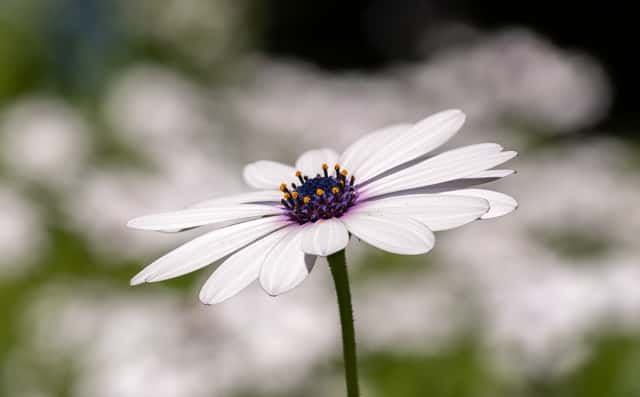
Cape Marguerite (Dimorphotheca ecklonis) is a easy-care plant from the Asteraceae family. The African Daisy (Dimorphotheca ecklonis) is a perennial shrub native to South Africa, famous for its daisy-like flowers with white, pink, or purple petals and an intense dark blue center. Widely cultivated in gardens and pots, it blooms abundantly from spring to fall and is highly appreciated by b...
Cape Marguerite grows up to 1.0m, spread of 100cm, watering every 7 days, 5°C – 25°C, 30–50% humidity. It is not suitable for indoor environments and safe for pets.
Unlike many tropical plants, Cape Marguerite tolerates watering mistakes. Best for beginners. Unlike many popular species, Cape Marguerite is safe to keep around pets.
How to Care for Cape Marguerite?
TLDR: Cape Marguerite needs Direct sun, watering every 7 days, and temperatures between 5-25°C with 30-50% humidity.
How Often Should You Water Cape Marguerite?
Water every 7 days or when the top few inches of soil are dry. Avoid waterlogging the soil and wetting the leaves to prevent fungal diseases. Once established, the plant tolerates periods of drought.
How Much Light Does Cape Marguerite Need?
Requires full sun, at least 6 hours of direct sunlight per day. In shady locations, flowering is drastically reduced. Position in a spot sheltered from cold winds.
What Is the Best Soil for Cape Marguerite?
Prefers well-drained, light soils with medium fertility. Accepts sandy or loamy soils with a pH between 6.0 and 7.0. Avoid heavy or compacted clay soils.
What Pot Should You Use for Cape Marguerite?
Terracotta or clay pot, with a mandatory drainage hole. Avoid dark plastic pots that overheat in the sun.
Care Schedule
Fertilize
Every 30 days
What Is Cape Marguerite and Where Does It Come From?
The African Daisy (Dimorphotheca ecklonis) is a perennial shrub native to South Africa, famous for its daisy-like flowers with white, pink, or purple petals and an intense dark blue center. Widely cultivated in gardens and pots, it blooms abundantly from spring to fall and is highly appreciated by bees and pollinators.
How to Propagate Cape Marguerite?
Stem cuttings
Use clean, sharp tools. Cover the pot with a plastic bag to create humidity. Avoid direct sunlight until rooted.
- 1 Cut a healthy stem about 4 inches (10 cm) long, below a leaf node
- 2 Remove the lower leaves, leaving only 2-3 at the top
- 3 Plant the cutting in well-drained substrate (a mix of sand and peat)
- 4 Keep slightly moist and in a spot with indirect light
- 5 Transplant after rooting, when new leaves appear
Materials needed:
Seed propagation
Sow in a warm place with good light. Seeds germinate in 10-14 days.
- 1 Sow seeds in March/April in a germination tray
- 2 Lightly cover with fine substrate
- 3 Maintain temperature between 64-68°F (18-20°C) and keep soil moist
- 4 Transplant seedlings into individual pots after 4-6 weeks
Materials needed:
How Big Does Cape Marguerite Grow?
TLDR: Cape Marguerite can reach up to 1.0m tall with Medium growth rate.
Max height
1.0m
Spread
1.0m
Growth rate
Medium
Foliage
Evergreen
Plant Uses
Ornamental
Great for decoration
Is your plant showing symptoms?
Click on the symptom to discover possible causes:
What Diseases Commonly Affect Cape Marguerite?
TLDR: Cape Marguerite is susceptible to 7 known diseases. Monitor regularly for early detection.
Powdery Mildew
Powdery mildew is a common fungal disease caused by various fungi species including Erysiphe, Podosphaera, Oïdium, and Leveillula. It affects over 10,000 plant species worldwide. The disease thrives in warm, dry climates with high humidity and appears as a distinctive white powdery coating on plant surfaces.
Downy Mildew
Downy mildew is a fungal-like disease caused by oomycetes (water molds) that thrives in cool, wet conditions. It affects a wide range of plants, causing yellowing leaves with fuzzy white-gray growth underneath, leading to defoliation and reduced yields if left untreated.
Verticillium Wilt
Verticillium wilt is a soil-borne fungal disease caused primarily by the fungi Verticillium dahliae and V. albo-atrum. These pathogens infect plant roots and grow within the vascular tissues, blocking water and nutrient transport, resulting in wilting and eventual plant death. The disease affects over 350 plant species including vegetables, fruits, ornamental flowers, and trees. The fungi can survive in soil for more than 10 years as resistant structures called microsclerotia.
Aphids
Aphids are small, soft-bodied, pear-shaped insects (1/16 to 1/8 inch long) that feed by sucking nutrient-rich sap from plants. They reproduce rapidly and can quickly weaken plants, causing distorted growth and transmitting plant viruses. Aphids come in various colors including green, black, red, yellow, brown, and gray. They secrete honeydew, a sticky substance that attracts ants and encourages sooty mold growth.
Meaning & Symbolism
The African Daisy symbolizes joy, excitement, and resilience, representing the sunny spirit of South Africa and new beginnings.
Compare with similar plants
| Attribute | Difficulty | Light | Watering | Pet Safe |
|---|---|---|---|---|
| Field Maple | Easy | Bright indirect | 14d | ✓ |
| Silver Birch | Easy | Direct sun | 14d | ✓ |
| Cushion Bush | Easy | Direct sun | 14d | ✓ |
| Wild Lettuce | Medium | Direct sun | 7d | ⚠️ |





