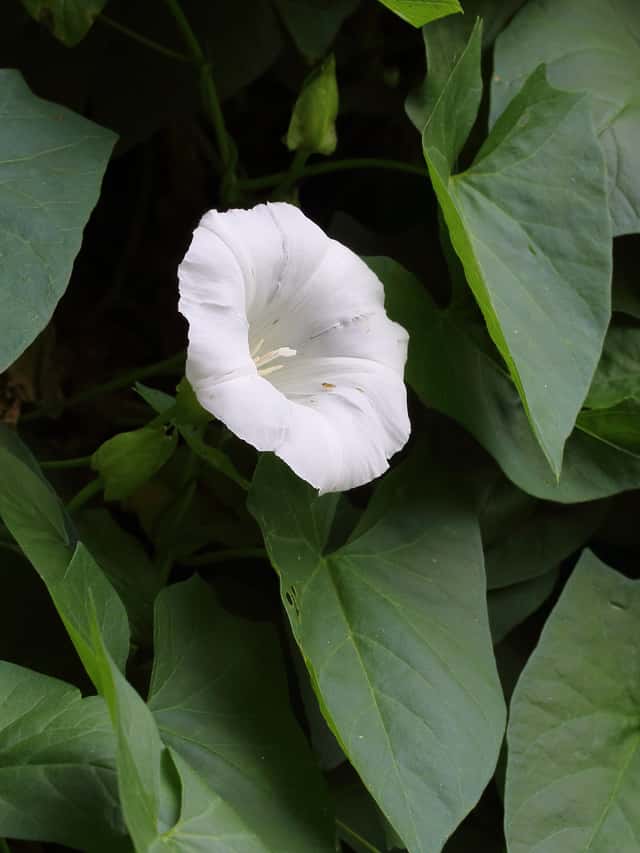
Convolvulaceae
Hedge Bindweed (Calystegia sepium)
Calystegia sepium
Plant in a location with full sun or partial shade. Water every 7 days, keeping the soil moist but not waterlogged. It can tolerate various soil types but prefers well-drained loamy soils. Prune regularly to control its vigorous growth.
Every 7 days
Bright indirect
-20° - 35°C
30% - 50%
Categories
What is Hedge Bindweed?
Hedge Bindweed (Calystegia sepium) is a medium-care plant from the Convolvulaceae family. Calystegia sepium, commonly known as hedge bindweed, is a vigorous perennial climber in the Convolvulaceae family. It grows rapidly by twining around fences, hedges, and other plants, reaching up to 3 meters in length. It produces white to pink trumpet-shaped flowers during the summer, similar to mo...
Hedge Bindweed grows up to 3.0m, spread of 300cm, watering every 7 days, -20°C – 35°C, 30–50% humidity. It is not suitable for indoor environments and not safe for pets.
Without precautions, ingestion can cause irritation in pets. Keep out of reach of cats and dogs.
How to Care for Hedge Bindweed?
TLDR: Hedge Bindweed needs Bright indirect, watering every 7 days, and temperatures between -20-35°C with 30-50% humidity.
How Often Should You Water Hedge Bindweed?
Water every 7 days, more frequently during periods of intense heat. Ensure the soil drains well to prevent root rot. Water at the base of the plant, preferably in the morning.
How Much Light Does Hedge Bindweed Need?
Prefers full sun (more than 6 hours of direct light) but tolerates partial shade. In heavy shade conditions, flowering is reduced.
What Is the Best Soil for Hedge Bindweed?
Prefers moist, well-drained soils, slightly acidic to neutral (pH 6.0–7.5). It tolerates sandy, clay, and silty soils. Adding organic compost improves growth.
What Pot Should You Use for Hedge Bindweed?
Trellis, fence, or wire mesh for climbing support. Ideal for quickly covering garden structures.
Care Schedule
Fertilize
Every 30 days
What Is Hedge Bindweed and Where Does It Come From?
Calystegia sepium, commonly known as hedge bindweed, is a vigorous perennial climber in the Convolvulaceae family. It grows rapidly by twining around fences, hedges, and other plants, reaching up to 3 meters in length. It produces white to pink trumpet-shaped flowers during the summer, similar to morning glories. It is considered invasive in many temperate regions.
How to Propagate Hedge Bindweed?
Stem Cutting
Use clean tools. Keep the substrate moist but not soggy during rooting.
- 1 Cut a healthy stem with 2-3 nodes
- 2 Remove lower leaves and dip in rooting hormone
- 3 Plant in moist, well-drained propagation mix
- 4 Keep in a warm location with indirect light until rooted
Materials needed:
Root Division
Root division is highly effective as the plant regenerates easily from any root fragment.
- 1 Dig up the parent plant in early spring
- 2 Separate root sections with at least one growth point
- 3 Replant immediately in moist, prepared soil
Materials needed:
How Big Does Hedge Bindweed Grow?
TLDR: Hedge Bindweed can reach up to 3.0m tall with Fast growth rate.
Max height
3.0m
Spread
3.0m
Growth rate
Fast
Foliage
Deciduous
Warning: Toxic Plant
This plant can be toxic if ingested. Keep out of reach of:
Plant Uses
Ornamental
Great for decoration
Medicinal
Medicinal properties
Medicinal Uses
- Root used historically as a diuretic, febrifuge, and strong purgative in folk medicine. Use with caution due to strong laxative effect.
Culinary Uses
- Young roots and shoots edible when cooked; rich in starch and sugars.
Is your plant showing symptoms?
Click on the symptom to discover possible causes:
What Diseases Commonly Affect Hedge Bindweed?
TLDR: Hedge Bindweed is susceptible to 3 known diseases. Monitor regularly for early detection.
Aphids
Aphids are small, soft-bodied, pear-shaped insects (1/16 to 1/8 inch long) that feed by sucking nutrient-rich sap from plants. They reproduce rapidly and can quickly weaken plants, causing distorted growth and transmitting plant viruses. Aphids come in various colors including green, black, red, yellow, brown, and gray. They secrete honeydew, a sticky substance that attracts ants and encourages sooty mold growth.
Powdery Mildew
Powdery mildew is a common fungal disease caused by various fungi species including Erysiphe, Podosphaera, Oïdium, and Leveillula. It affects over 10,000 plant species worldwide. The disease thrives in warm, dry climates with high humidity and appears as a distinctive white powdery coating on plant surfaces.
Root Rot
Root rot is a serious fungal disease that affects the root system of plants, causing them to decay and die. It is primarily caused by overwatering, poor drainage, or soil-borne fungi such as Pythium, Phytophthora, Rhizoctonia, and Fusarium. The disease thrives in waterlogged conditions where roots are deprived of oxygen, making them susceptible to fungal infection.
Meaning & Symbolism
Hedge Bindweed symbolizes persistence and tenacity through its relentless, unstoppable growth. In some folk traditions it represents binding and connection.
Fun Facts
Hedge Bindweed can grow over 3 meters in a single growing season.
Its roots can reach several meters deep, making it extremely difficult to eradicate once established.
The flowers open in the morning and close in the afternoon, just like morning glories.
It has been used in folk medicine for centuries across European and Asian cultures.
Frequently asked questions
How often should I water Hedge Bindweed?
Is Hedge Bindweed toxic?
How do I control Hedge Bindweed from spreading?
Can Hedge Bindweed grow indoors?
Compare with similar plants
| Attribute | Difficulty | Light | Watering | Pet Safe |
|---|---|---|---|---|
| Dark Fieldcap | Medium | Low light | 2d | ⚠️ |
| Azalea | Medium | Partial shade | 3d | ⚠️ |
| Bougainvillea | Medium | Direct sun | 7d | ⚠️ |
| Wild Lettuce | Medium | Direct sun | 7d | ⚠️ |



