Pinaceae
Dwarf Alberta Spruce: Pet-Safe Plant
Picea glauca 'Conica'
Plant in full sun in well-drained acidic soil (pH 5.0–6.5). Water moderately—allow the top layer of soil to dry out between waterings. Extremely cold-hardy (zones 2a–6b). Requires infrequent fertilization; an annual application of slow-release fertilizer in spring is sufficient. Monitor for spider mite damage, especially during hot and dry weather.
Every 10 days
Bright indirect
-40° - 25°C
20% - 50%
Categories
What is Dwarf Alberta Spruce?
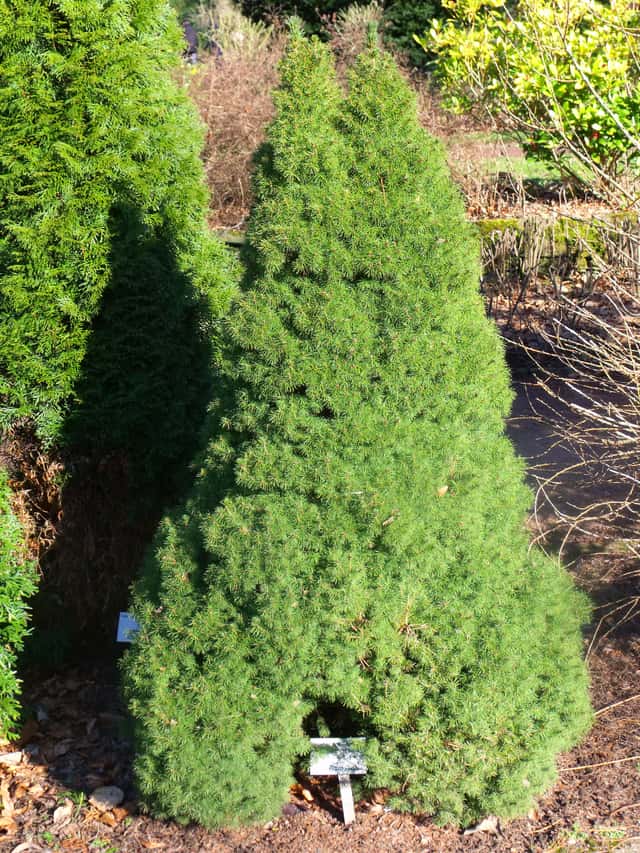
Dwarf Alberta Spruce (Picea glauca 'Conica') is a easy-care plant from the Pinaceae family. Picea glauca 'Conica', or the Dwarf Alberta Spruce, is a slow-growing evergreen conifer derived from the native white spruce (Picea glauca) and discovered in Alberta, Canada, in 1904. This cultivar is renowned for its perfect, symmetrical conical shape—growing only 2 to 4 inches (5–10 cm) per year,...
Dwarf Alberta Spruce grows up to 4.0m, spread of 300cm, watering every 10 days, -40°C – 25°C, 20–50% humidity. It is not suitable for indoor environments and safe for pets.
Unlike many tropical plants, Dwarf Alberta Spruce tolerates watering mistakes. Best for beginners. Unlike many popular species, Dwarf Alberta Spruce is safe to keep around pets.
How to Care for Dwarf Alberta Spruce?
TLDR: Dwarf Alberta Spruce needs Bright indirect, watering every 10 days, and temperatures between -40-25°C with 20-50% humidity.
How Often Should You Water Dwarf Alberta Spruce?
Water every 7–10 days, allowing the top 2 inches (5 cm) of soil to dry out between waterings. Overwatering is dangerous—roots rot quickly in soggy soil. Container-grown plants require more frequent watering than those planted in the ground. Avoid watering the foliage and needles, as moisture promotes fungal diseases.
How Much Light Does Dwarf Alberta Spruce Need?
Requires at least 6 hours of direct sunlight per day. Tolerates partial shade, especially protection from hot summer afternoon sun. A north- or east-facing planting site protects against intense sun and hot winds. Avoid proximity to reflective surfaces, which can scorch the needles.
What Is the Best Soil for Dwarf Alberta Spruce?
Prefers slightly acidic (pH 5.0–6.5), well-draining loamy or sandy-loam soil. Add perlite or organic matter composted from plant waste to the soil to improve drainage. Pine bark can be used to maintain soil acidity. Avoid heavy clay soil, which keeps roots wet.
What Pot Should You Use for Dwarf Alberta Spruce?
Use a terracotta or wooden container with large drainage holes, at least 20 inches (50 cm) deep and wide. Clay or wood containers regulate moisture better than plastic. In winter, protect container roots from freezing by wrapping the pot with wood chips or burlap.
Care Schedule
Fertilize
Every 180 days
Repot
Every 1095 days
What Is Dwarf Alberta Spruce and Where Does It Come From?
Picea glauca 'Conica', or the Dwarf Alberta Spruce, is a slow-growing evergreen conifer derived from the native white spruce (Picea glauca) and discovered in Alberta, Canada, in 1904. This cultivar is renowned for its perfect, symmetrical conical shape—growing only 2 to 4 inches (5–10 cm) per year, making it ideal for small gardens, rockeries, and containers. Its short, soft, bright green needles are densely packed on the stems, giving the plant an elegant, compact appearance. This variety is very cold-hardy (down to -40 °F/-40 °C) and requires minimal maintenance, but it is highly susceptible to spider mites and does not tolerate high humidity or hot summers.
How to Propagate Dwarf Alberta Spruce?
Cuttings
- 1 Take a 3–5 inch (8–12 cm) semi-hardwood cutting in summer (July–August).
- 2 Remove the lower needles, leaving the top 1–1.5 inches (3–4 cm) with needles.
- 3 Dip the base of the cutting into rooting hormone (IBA 3000–8000 ppm).
- 4 Plant in a moist, well-draining growth substrate (perlite + peat 1:1).
- 5 Maintain at 64–72 °F (18–22 °C) with high humidity (greenhouse or cover).
- 6 Roots in 8–12 weeks; the success rate is low (~20–30%).
How Big Does Dwarf Alberta Spruce Grow?
TLDR: Dwarf Alberta Spruce can reach up to 4.0m tall with Slow growth rate.
Max height
4.0m
Spread
3.0m
Growth rate
Slow
Foliage
Evergreen
Plant Uses
Ornamental
Great for decoration
Is your plant showing symptoms?
Click on the symptom to discover possible causes:
What Diseases Commonly Affect Dwarf Alberta Spruce?
TLDR: Dwarf Alberta Spruce is susceptible to 6 known diseases. Monitor regularly for early detection.
Spider Mites
Spider mites are tiny arachnids (less than 1/20 inch long) related to spiders and ticks that feed on plant sap. They thrive in hot, dry conditions and can cause significant damage to ornamental and vegetable plants. During severe infestations, crop losses can reach 14% or higher as these pests disrupt vital plant processes including photosynthesis, carbon dioxide absorption, and transpiration.
Aphids
Aphids are small, soft-bodied, pear-shaped insects (1/16 to 1/8 inch long) that feed by sucking nutrient-rich sap from plants. They reproduce rapidly and can quickly weaken plants, causing distorted growth and transmitting plant viruses. Aphids come in various colors including green, black, red, yellow, brown, and gray. They secrete honeydew, a sticky substance that attracts ants and encourages sooty mold growth.
Rust
Rust is a common fungal disease caused by fungi in the order Pucciniales that affects a wide variety of plants. The disease gets its name from the characteristic orange, yellow, or reddish-brown pustules that appear on leaves, resembling metal rust. This obligate fungal parasite requires living plants to survive and can cause significant economic losses in agricultural crops.
Canker
Canker is a disease caused by various fungi and bacteria that create necrotic, sunken areas on bark of branches, stems, and trunks. Pathogens enter through wounds and natural openings, especially when plants are stressed. Canker can gradually weaken or kill branches by disrupting water and nutrient flow.
Meaning & Symbolism
Carries the symbolism of patience, resilience, and longevity. The evergreen nature of its foliage throughout the year symbolizes hope and vitality even during harsh winter months. In North American forest culture, the spruce is associated with protection and endurance.
Compare with similar plants
| Attribute | Difficulty | Light | Watering | Pet Safe |
|---|---|---|---|---|
| Field Maple | Easy | Bright indirect | 14d | ✓ |
| Silver Birch | Easy | Direct sun | 14d | ✓ |
| Cushion Bush | Easy | Direct sun | 14d | ✓ |
| Peruvian peppertree | Easy | Direct sun | 14d | ⚠️ |





