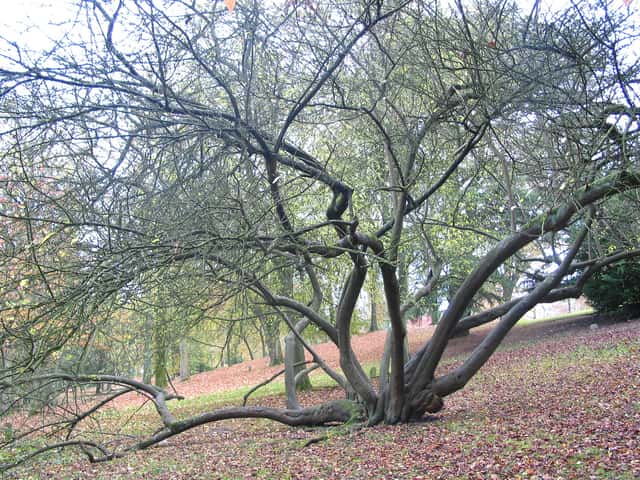
Roseaceae
Cherry Plum (Prunus cerasifera)
Prunus cerasifera
Cherry Plum is an easy-care, sun-loving deciduous tree. Water deeply every 7–14 days when young; established trees need less frequent irrigation. Plant in full sun with well-draining soil. Prune after flowering to shape. Tolerates a wide range of soil types but dislikes waterlogged conditions.
Every 10 days
Direct sun
-20° - 35°C
40% - 70%
Categories
What is Cherry Plum?
Cherry Plum (Prunus cerasifera) is a easy-care plant from the Roseaceae family. Cherry Plum (Prunus cerasifera) is a deciduous ornamental tree in the Roseaceae family, native to Southwest Asia and the Balkans. Renowned for its spectacular early spring flowering before the leaves emerge, it produces masses of small white to pale pink fragrant blossoms. Many popular cultivars fea...
Cherry Plum grows up to 9.0m, spread of 760cm, watering every 10 days, -20°C – 35°C, 40–70% humidity. It is not suitable for indoor environments and not safe for pets.
Unlike many tropical plants, Cherry Plum tolerates watering mistakes. Best for beginners. Without precautions, ingestion can cause irritation in pets. Keep out of reach of cats and dogs.
How to Care for Cherry Plum?
TLDR: Cherry Plum needs Direct sun, watering every 10 days, and temperatures between -20-35°C with 40-70% humidity.
How Often Should You Water Cherry Plum?
Water deeply once every 7–14 days during the first 1–2 growing seasons to establish a strong root system. Mature trees are relatively drought-tolerant; water during prolonged dry spells. Avoid waterlogged soil to prevent root rot.
How Much Light Does Cherry Plum Need?
Requires full sun — at least 6 hours of direct sunlight per day — for best flowering and foliage color. Tolerates partial shade but flowering and leaf color will be reduced.
What Is the Best Soil for Cherry Plum?
Prefers well-draining loamy or sandy loam soil enriched with organic matter. Adaptable to clay, silt, and sandy soils. Ideal pH between 6.0 and 7.5. Avoid heavy, poorly drained soils.
What Pot Should You Use for Cherry Plum?
Not applicable — this is an outdoor landscape tree grown in the ground or large containers.
Care Schedule
Fertilize
Every 90 days
What Is Cherry Plum and Where Does It Come From?
Cherry Plum (Prunus cerasifera) is a deciduous ornamental tree in the Roseaceae family, native to Southwest Asia and the Balkans. Renowned for its spectacular early spring flowering before the leaves emerge, it produces masses of small white to pale pink fragrant blossoms. Many popular cultivars feature striking purple or bronze foliage, making it one of the most ornamental landscape trees in temperate gardens. It also produces small edible plums used in preserves and jellies.
How Big Does Cherry Plum Grow?
TLDR: Cherry Plum can reach up to 9.0m tall with Medium growth rate.
Max height
9.0m
Spread
7.6m
Growth rate
Medium
Foliage
Deciduous
Warning: Toxic Plant
This plant can be toxic if ingested. Keep out of reach of:
Plant Uses
Ornamental
Great for decoration
Edible
Can be consumed
Culinary Uses
- Fruits used to make jams, jellies, compotes, and fruit wines
- Small tart plums can be eaten fresh or used in baking
Is your plant showing symptoms?
Click on the symptom to discover possible causes:
What Diseases Commonly Affect Cherry Plum?
TLDR: Cherry Plum is susceptible to 15 known diseases. Monitor regularly for early detection.
Aphids
Aphids are small, soft-bodied, pear-shaped insects (1/16 to 1/8 inch long) that feed by sucking nutrient-rich sap from plants. They reproduce rapidly and can quickly weaken plants, causing distorted growth and transmitting plant viruses. Aphids come in various colors including green, black, red, yellow, brown, and gray. They secrete honeydew, a sticky substance that attracts ants and encourages sooty mold growth.
Spider Mites
Spider mites are tiny arachnids (less than 1/20 inch long) related to spiders and ticks that feed on plant sap. They thrive in hot, dry conditions and can cause significant damage to ornamental and vegetable plants. During severe infestations, crop losses can reach 14% or higher as these pests disrupt vital plant processes including photosynthesis, carbon dioxide absorption, and transpiration.
Scale Insects
Scale insects are small sap-sucking pests that appear as brown, shell-like bumps on plant stems and leaves. There are over 25 species, divided into armored (hard) and unarmored (soft) scales. They feed by piercing plant tissue and extracting sap, which weakens the plant and can lead to yellowing, stunted growth, and even death if left untreated. They also excrete honeydew, which attracts ants and promotes sooty mold growth.
Caterpillars
Caterpillars are the larval stage of moths and butterflies that feed voraciously on plant foliage, stems, flowers, and fruits. Common species include cabbage loopers, tomato hornworms, armyworms, and cutworms. These pests can cause extensive damage by consuming large amounts of plant tissue in a short time. They vary in size from small (1/4 inch) to large (5 inches), with colors ranging from green to brown, often featuring stripes or spots. Caterpillars are highly mobile and can quickly spread throughout gardens, making them one of the most destructive common pests.
Meaning & Symbolism
In Western cultures, cherry plum blossoms symbolize spring renewal, new beginnings, and fleeting beauty. The tree represents hope and resilience, blooming even in late winter cold.
Fun Facts
Cherry Plum is one of the earliest flowering trees of spring, often blooming while temperatures are still near freezing.
The species was introduced to Western Europe in the 16th century and quickly became a popular ornamental.
The purple-leafed cultivar "Pissardii" was introduced from Persia by the French royal gardener M. Pissard in 1880.
Cherry plum fruits were used in traditional medicine across the Caucasus and Balkans as a digestive aid.
Bees and pollinators rely heavily on Prunus cerasifera as an early-season nectar source before most other plants bloom.
Frequently asked questions
When does Cherry Plum bloom?
Are Cherry Plum fruits edible?
Is Cherry Plum toxic to pets?
How fast does Cherry Plum grow?
Can Cherry Plum be grown in a pot?
Compare with similar plants
| Attribute | Difficulty | Light | Watering | Pet Safe |
|---|---|---|---|---|
| Field Maple | Easy | Bright indirect | 14d | ✓ |
| Silver Birch | Easy | Direct sun | 14d | ✓ |
| Cushion Bush | Easy | Direct sun | 14d | ✓ |
| Peruvian peppertree | Easy | Direct sun | 14d | ⚠️ |





