Ulmaceae
Chinese Elm: Fast Growing
Ulmus parvifolia
Requires a very bright location, preferably in full sun, and consistent watering to keep the substrate moist but not waterlogged.
Every 3 days
Bright indirect
5° - 35°C
50% - 85%
Categories
What is Chinese Elm?
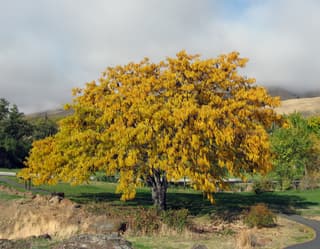
Chinese Elm (Ulmus parvifolia) is a medium-care plant from the Ulmaceae family. Ulmus parvifolia, known as the Chinese Elm, is one of the most popular species for the art of bonsai due to its high resilience, fast growth, and small, serrated leaves. Its bark is distinctive, becoming flaky and mottled with age. Unlike other elms, it blooms in late summer or autumn. It is an extr...
Chinese Elm grows up to 15.0m, spread of 1000cm, watering every 3 days, 5°C – 35°C, 50–85% humidity. It is suitable for indoor environments and safe for pets.
Unlike many popular species, Chinese Elm is safe to keep around pets. Without adequate drainage, root rot can develop within 7 days.
How to Care for Chinese Elm?
TLDR: Chinese Elm needs Bright indirect, watering every 3 days, and temperatures between 5-35°C with 50-85% humidity.
How Often Should You Water Chinese Elm?
Do not allow the root ball to dry out completely. In summer, it may require daily watering if kept in full sun.
How Much Light Does Chinese Elm Need?
Prefers direct sun to maintain dense foliage and small leaves. If grown indoors, it should be placed within three feet of a very sunny window.
What Is the Best Soil for Chinese Elm?
Needs a substrate that retains moisture but drains quickly. A mix of 70% akadama and 30% lava rock is ideal.
What Pot Should You Use for Chinese Elm?
Glazed ceramic pot with good drainage; for large specimens, substrates with a high proportion of akadama are recommended.
Care Schedule
Fertilize
Every 14 days
Misting
Every 2 days
Rotate
Every 7 days
Repot
Every 730 days
What Is Chinese Elm and Where Does It Come From?
Ulmus parvifolia, known as the Chinese Elm, is one of the most popular species for the art of bonsai due to its high resilience, fast growth, and small, serrated leaves. Its bark is distinctive, becoming flaky and mottled with age. Unlike other elms, it blooms in late summer or autumn. It is an extremely versatile tree that can behave as evergreen, semi-evergreen, or deciduous depending on the climate and exposure to cold.
How to Propagate Chinese Elm?
Stem Cuttings
- Keep the substrate consistently moist but not saturated
- Use a propagator to maintain humidity
- 1 Cutting Selection
Cut a semi-mature branch about 4-6 inches (10-15 cm) long during the summer.
- 2 Preparation
Remove the leaves from the bottom half and apply rooting hormone to the base.
- 3 Planting
Insert the cutting into a mix of sand and peat, maintaining high ambient humidity.
Materials needed:
Seed Sowing
- Fresh seeds have a higher germination rate
- Avoid direct sun on the seedbeds
- 1 Collection
Collect the samaras (seeds) in autumn when they are ripe.
- 2 Stratification
Perform cold stratification in the refrigerator for 60 days to break dormancy.
- 3 Sowing
Sow in spring in a light substrate and maintain a constant temperature of 68°F (20°C).
Materials needed:
How Big Does Chinese Elm Grow?
TLDR: Chinese Elm can reach up to 15.0m tall with Fast growth rate.
Max height
15.0m
Spread
10.0m
Growth rate
Fast
Foliage
Semi-evergreen
Plant Uses
Ornamental
Great for decoration
Is your plant showing symptoms?
Click on the symptom to discover possible causes:
Meaning & Symbolism
In Asian culture, the elm symbolizes inner strength, intuition, and protection.
Compare with similar plants
| Attribute | Difficulty | Light | Watering | Pet Safe |
|---|---|---|---|---|
| Azalea | Medium | Partial shade | 3d | ⚠️ |
| Wild Lettuce | Medium | Direct sun | 7d | ⚠️ |
| Cape Primrose | Medium | Partial shade | 7d | ✓ |
| Honey Locust | Medium | Direct sun | 14d | ✓ |