Apiaceae
Ground elder: Ground Cover Plant
Aegopodium podagraria
Ground elder is very hardy and easy to keep alive—the challenge is rather to limit its spread. The plant thrives best in moist, nutrient-rich soil in partial to full shade (2–6 hours of daylight). Water regularly to keep the soil evenly moist, but avoid waterlogging. It tolerates hardiness zones 3–10 and temperatures down to -15 °C (5 °F). Fertilizing once a quarter with a balanced all-purpose fertilizer is sufficient. Prune back twice a year (spring and summer) to keep the plant compact.
Every 7 days
Low light
15° - 24°C
30% - 50%
Categories
What is Ground elder?
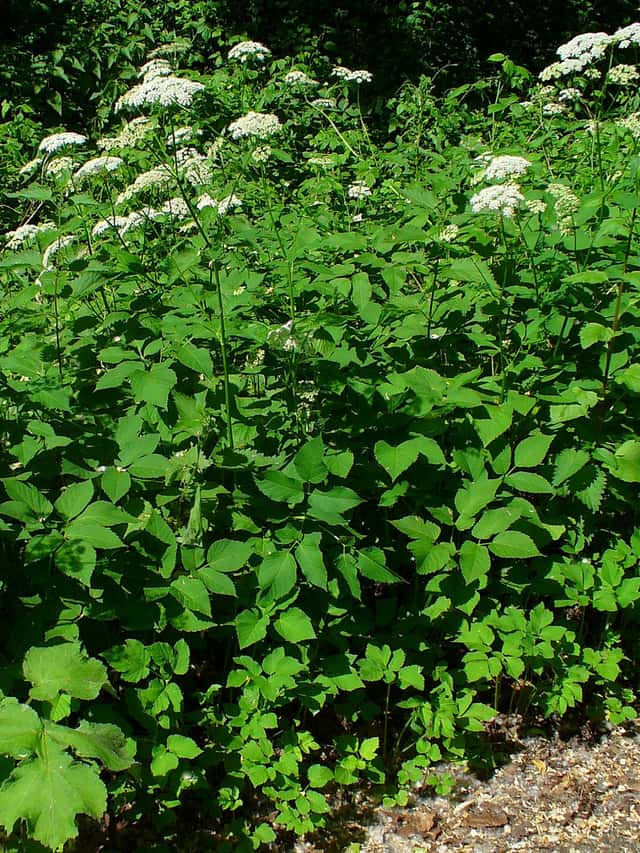
Ground elder (Aegopodium podagraria) is a easy-care plant from the Apiaceae family. Ground elder (Aegopodium podagraria) is a perennial herbaceous plant in the carrot family (Apiaceae), native to Europe and Asia. It is known for its extremely rapid growth and spread via rhizomes, making it one of the most hardy and invasive ground covers in temperate regions. The plant forms dense...
Ground elder grows up to 60cm, spread of 100cm, watering every 7 days, 15°C – 24°C, 30–50% humidity. It is not suitable for indoor environments and safe for pets.
Unlike many tropical plants, Ground elder tolerates watering mistakes. Best for beginners. Unlike many popular species, Ground elder is safe to keep around pets.
How to Care for Ground elder?
TLDR: Ground elder needs Low light, watering every 7 days, and temperatures between 15-24°C with 30-50% humidity.
How Often Should You Water Ground elder?
Water approximately once a week so that the soil remains evenly moist. Ground elder tolerates short-term drought but thrives best in moderately moist conditions. Avoid standing water at the roots, as this can lead to root rot.
How Much Light Does Ground elder Need?
Ground elder is adapted to shade and partial shade and thrives with 2–6 hours of indirect daylight. It can grow in deep shade, but it flowers less frequently there. Avoid strong direct sun, which can burn the leaves.
What Is the Best Soil for Ground elder?
The plant tolerates sandy, clay, and loamy soils, but thrives best in nutrient-rich, well-drained loam with a pH of 6.5–7.5. It is tolerant of soil with moderate moisture and can even withstand some soil compaction.
What Pot Should You Use for Ground elder?
Ground elder is primarily an outdoor plant and is best suited as a ground cover in gardens, preferably in shaded areas. If you wish to grow it in a pot to control its spread, a large, deep plastic container without drainage holes is recommended (to contain the rhizomes).
Care Schedule
Fertilize
Every 90 days
What Is Ground elder and Where Does It Come From?
Ground elder (Aegopodium podagraria) is a perennial herbaceous plant in the carrot family (Apiaceae), native to Europe and Asia. It is known for its extremely rapid growth and spread via rhizomes, making it one of the most hardy and invasive ground covers in temperate regions. The plant forms dense carpets of light green, ternate leaves and bears white umbels (flower clusters) from May to June. It thrives in shade to partial shade and tolerates most soil types. Historically, it was cultivated as a food and medicinal plant during the Middle Ages.
How to Propagate Ground elder?
Root Division
Seed Sowing
How Big Does Ground elder Grow?
TLDR: Ground elder can reach up to 60cm tall with Fast growth rate.
Max height
60cm
Spread
1.0m
Growth rate
Fast
Foliage
Deciduous
Plant Uses
Ornamental
Great for decoration
Edible
Can be consumed
Medicinal
Medicinal properties
Ground Cover
Soil coverage
Medicinal Uses
- Traditionally used for gout: fresh leaves were applied as poultices to inflamed joints
- Used for rheumatism and sciatica in the form of herbal teas and poultices
- Known as a diuretic and sedative
- Modern research shows antioxidant, antibacterial, antifungal, and hepatoprotective properties
- Contains the polyacetylenes falcarinol and falcarindiol with strong anti-inflammatory effects
Culinary Uses
- Young leaves are eaten raw in salads in the spring
- The leaves can be steamed or sautéed as a spinach substitute
- Used in soups and stews
- Can be blended into pesto
- The flowers are used as food decoration
- Historically used as a survival food and source of vitamins
Is your plant showing symptoms?
Click on the symptom to discover possible causes:
What Diseases Commonly Affect Ground elder?
TLDR: Ground elder is susceptible to 4 known diseases. Monitor regularly for early detection.
Root Rot
Root rot is a serious fungal disease that affects the root system of plants, causing them to decay and die. It is primarily caused by overwatering, poor drainage, or soil-borne fungi such as Pythium, Phytophthora, Rhizoctonia, and Fusarium. The disease thrives in waterlogged conditions where roots are deprived of oxygen, making them susceptible to fungal infection.
Leaf Spot
Leaf spot is a common fungal disease caused by various pathogens including Alternaria, Ascochyta, Colletotrichum, Septoria, and Venturia. It primarily affects leaves, causing discolored spots that can lead to premature leaf drop if left untreated.
Powdery Mildew
Powdery mildew is a common fungal disease caused by various fungi species including Erysiphe, Podosphaera, Oïdium, and Leveillula. It affects over 10,000 plant species worldwide. The disease thrives in warm, dry climates with high humidity and appears as a distinctive white powdery coating on plant surfaces.
Aphids
Aphids are small, soft-bodied, pear-shaped insects (1/16 to 1/8 inch long) that feed by sucking nutrient-rich sap from plants. They reproduce rapidly and can quickly weaken plants, causing distorted growth and transmitting plant viruses. Aphids come in various colors including green, black, red, yellow, brown, and gray. They secrete honeydew, a sticky substance that attracts ants and encourages sooty mold growth.
Compare with similar plants
| Attribute | Difficulty | Light | Watering | Pet Safe |
|---|---|---|---|---|
| Field Maple | Easy | Bright indirect | 14d | ✓ |
| Silver Birch | Easy | Direct sun | 14d | ✓ |
| Cushion Bush | Easy | Direct sun | 14d | ✓ |
| Peruvian peppertree | Easy | Direct sun | 14d | ⚠️ |