Sapindaceae
Tatarian Maple: Edible Plant
Acer tataricum
Plant in full sun to part shade in well-drained to moderately moist soil; once established it is highly drought-tolerant and requires only annual light pruning and occasional fertilizing in spring.
Every 7 days
Bright indirect
-30° - 35°C
% - %
Categories
What is Tatarian Maple?
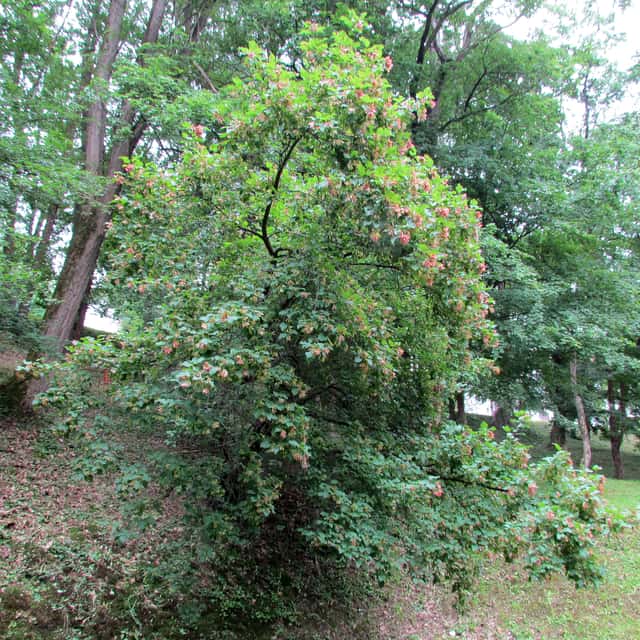
Tatarian Maple (Acer tataricum) is a easy-care plant from the Sapindaceae family. Acer tataricum is a deciduous, multi-stemmed small tree or large shrub native to central and southeastern Europe and temperate Asia, growing 4–9 metres tall with a broad, spreading crown. It produces greenish-white flowers in upright panicles during spring, followed by showy paired red samaras (wing...
Tatarian Maple grows up to 9.0m, spread of 790cm, watering every 7 days, -30°C – 35°C. It is not suitable for indoor environments and safe for pets.
Unlike many tropical plants, Tatarian Maple tolerates watering mistakes. Best for beginners. Unlike many popular species, Tatarian Maple is safe to keep around pets.
How to Care for Tatarian Maple?
TLDR: Tatarian Maple needs Bright indirect, watering every 7 days, and temperatures between -30-35°C with 40-70% humidity.
How Often Should You Water Tatarian Maple?
Water weekly during the first growing season to establish roots; after establishment, supplemental watering is needed only during prolonged drought. Always allow excess water to drain to prevent root rot.
How Much Light Does Tatarian Maple Need?
Thrives in full sun (6–8 hours daily) but tolerates partial shade. Best ornamental coloration on samaras and fall foliage develops in full sun.
What Is the Best Soil for Tatarian Maple?
Prefers moist, organically rich, well-drained soil with a pH of 6.0–7.5, but adapts to sandy, loamy, and clay soils. Avoid consistently waterlogged or strongly alkaline conditions, which may cause chlorosis.
Care Schedule
Fertilize
Every 180 days
What Is Tatarian Maple and Where Does It Come From?
Acer tataricum is a deciduous, multi-stemmed small tree or large shrub native to central and southeastern Europe and temperate Asia, growing 4–9 metres tall with a broad, spreading crown. It produces greenish-white flowers in upright panicles during spring, followed by showy paired red samaras (winged fruits) that persist into autumn, and simple to shallowly-lobed leaves that turn yellow and red in fall. It is exceptionally cold-hardy, tolerating temperatures down to −30 °C, and adapts readily to a wide range of soil types including clay.
How Big Does Tatarian Maple Grow?
TLDR: Tatarian Maple can reach up to 9.0m tall with Medium growth rate.
Max height
9.0m
Spread
7.9m
Growth rate
Medium
Foliage
Deciduous
Plant Uses
Ornamental
Great for decoration
Edible
Can be consumed
Culinary Uses
- Sap can be tapped in early spring and consumed as a sweet drink or reduced into a light syrup
- Seeds (samaras) are edible when wings are removed and seeds are blanched or roasted; historically consumed in food-scarce periods
- Young inner bark can be infused as a mild herbal tea
Is your plant showing symptoms?
Click on the symptom to discover possible causes:
What Diseases Commonly Affect Tatarian Maple?
TLDR: Tatarian Maple is susceptible to 8 known diseases. Monitor regularly for early detection.
Verticillium Wilt
Verticillium wilt is a soil-borne fungal disease caused primarily by the fungi Verticillium dahliae and V. albo-atrum. These pathogens infect plant roots and grow within the vascular tissues, blocking water and nutrient transport, resulting in wilting and eventual plant death. The disease affects over 350 plant species including vegetables, fruits, ornamental flowers, and trees. The fungi can survive in soil for more than 10 years as resistant structures called microsclerotia.
Leaf Spot
Leaf spot is a common fungal disease caused by various pathogens including Alternaria, Ascochyta, Colletotrichum, Septoria, and Venturia. It primarily affects leaves, causing discolored spots that can lead to premature leaf drop if left untreated.
Anthracnose
Anthracnose is a fungal disease caused by fungi in the genus Colletotrichum that affects many plants, including vegetables, fruits, and trees. The disease thrives in cool, wet conditions, causing dark, sunken lesions on leaves, stems, flowers, and fruits.
Aphids
Aphids are small, soft-bodied, pear-shaped insects (1/16 to 1/8 inch long) that feed by sucking nutrient-rich sap from plants. They reproduce rapidly and can quickly weaken plants, causing distorted growth and transmitting plant viruses. Aphids come in various colors including green, black, red, yellow, brown, and gray. They secrete honeydew, a sticky substance that attracts ants and encourages sooty mold growth.
Compare with similar plants
| Attribute | Difficulty | Light | Watering | Pet Safe |
|---|---|---|---|---|
| Field Maple | Easy | Bright indirect | 14d | ✓ |
| Silver Birch | Easy | Direct sun | 14d | ✓ |
| Cushion Bush | Easy | Direct sun | 14d | ✓ |
| Peruvian peppertree | Easy | Direct sun | 14d | ⚠️ |
Choose & Compare
Sources & References
- PFAF Plant Database - Acer tataricum
- NC State Extension - Acer tataricum
- Missouri Botanical Garden - Acer tataricum
- Wikipedia - Acer tataricum
- Useful Temperate Plants - Acer tataricum
- Food Foresting - How to Grow Tatarian Maple
- Oregon State Landscape Plants - Acer tataricum
- ForwardPlant - Tartarian Maple Care Guide
- American Gardener - Tatarian Maple
- Plantiary - Acer tataricum Care Guide





